Why Carnotaurus’s hands were poor tools for grabbing
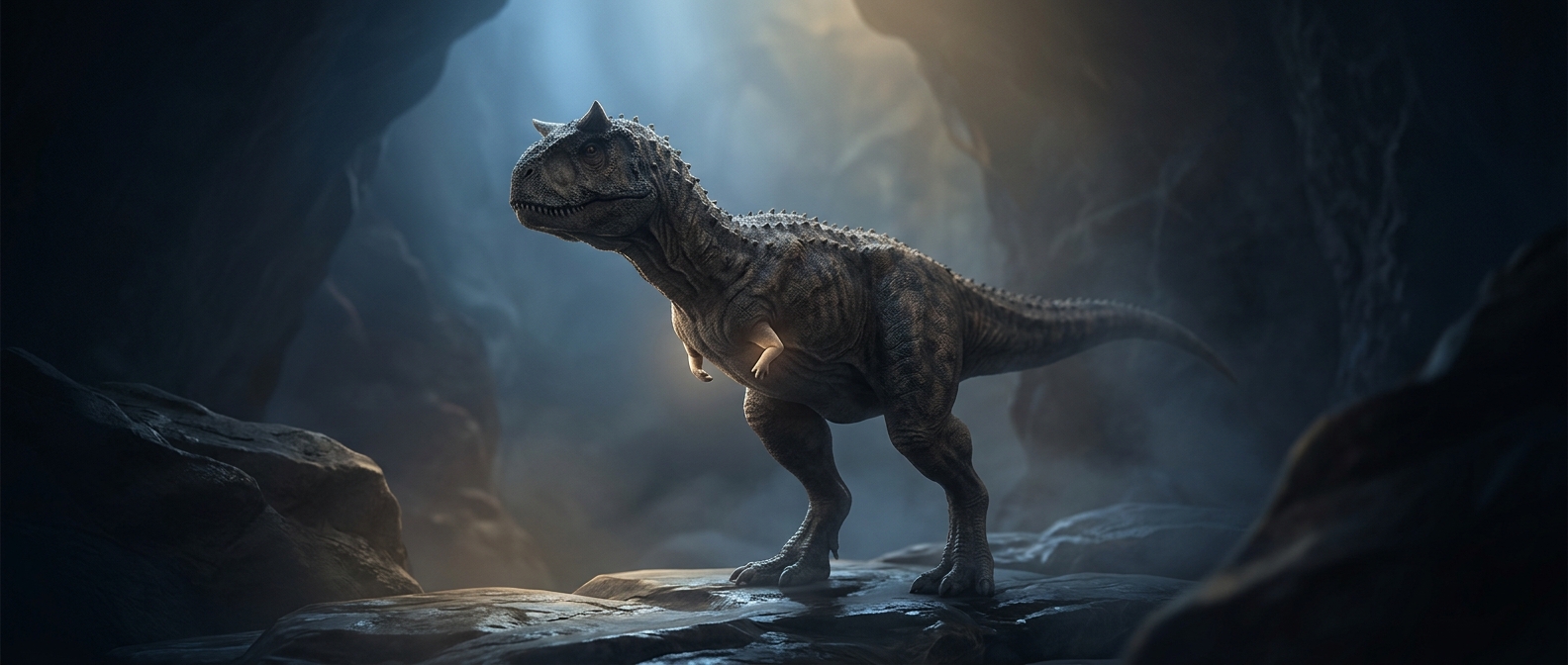
A wrist is not just a hinge: small wrist bones let the hand bend and change angle relative to the forearm. In Carnotaurus, the forelimbs were so reduced that the wrist lacked the flexible arrangement needed for a useful grip. Its short arms ended in small hands, not the powerful, maneuverable grasping tools seen in animals that seize and hold prey.
That matters because grabbing prey usually requires more than having fingers. An animal must be able to reach, bend its wrists, and apply force in a controlled way. Carnotaurus’s anatomy offered little room for that combination. The arms may have had some limited role, but they were poorly equipped to restrain struggling food.
The jaws did the work the arms could not
Carnotaurus was a meat-eating dinosaur with a large head and jaws built for biting. With forelimbs too small and stiff to hold prey effectively, its mouth was the more plausible tool for attacking and handling food. The contrast is striking: the animal’s most visually dramatic features were its horns, while its tiny arms were unlikely to be its main weapons.
The exact purpose of such reduced arms is difficult to establish from bones alone. What the anatomy makes clear is the practical consequence: Carnotaurus did not need to pin dinner down with its hands for its jaws to be central to feeding.