Why hiding your eyes changes the social feeling
In conversation, people do more than listen to words. They watch one another’s eyes for clues about attention, interest, and intention: Are you looking at them, past them, or toward something they might not have noticed? Because gaze helps organize these small exchanges, showing your eyes can make you feel as if your reactions are on display.
Sunglasses interrupt that feedback. Other people can still see your face, but they have a harder time knowing exactly where you are looking. That makes your attention less readable—and can make you feel less scrutinized in return. The effect is not literal invisibility; it is a shift in how exposed you feel during an interaction.
A small barrier, not a disguise
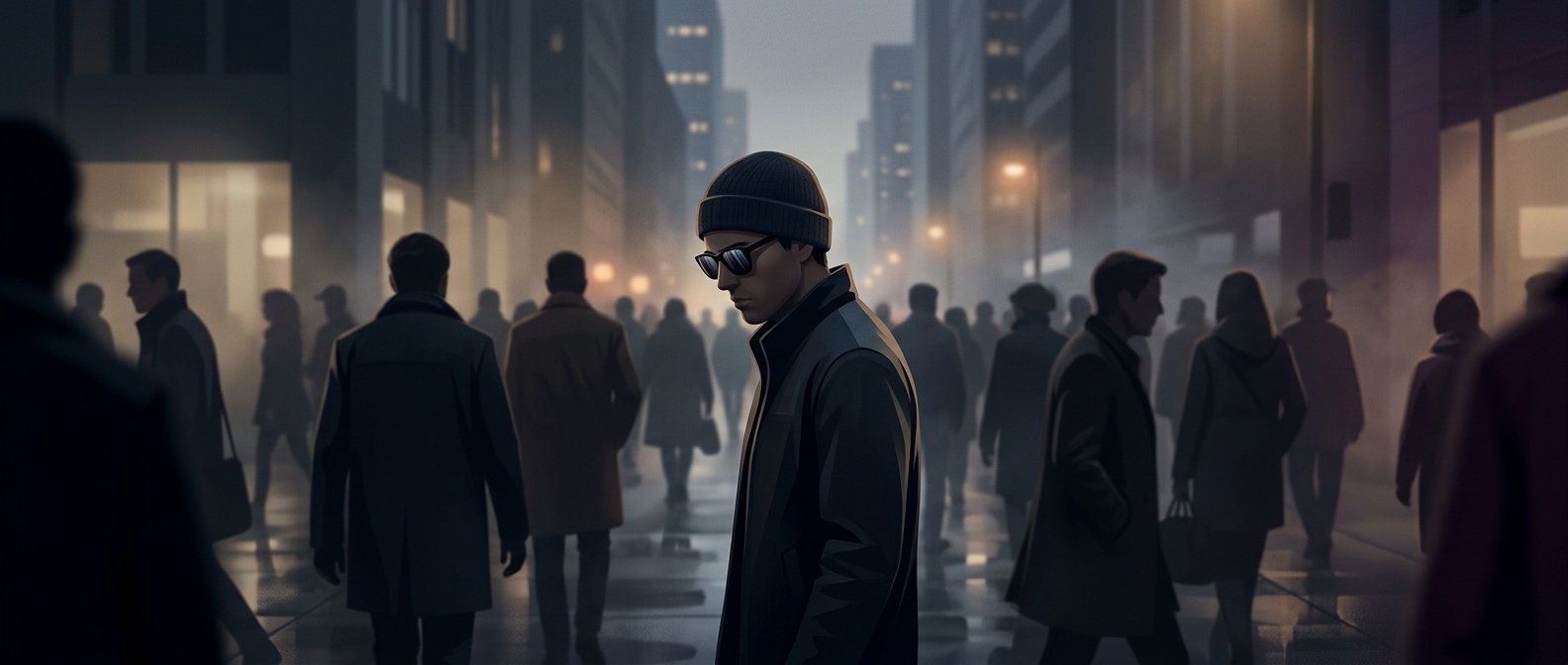
The feeling can show up in ordinary moments: walking through a crowded place, passing someone you know, or sitting where you would rather not make eye contact. With your eyes obscured, you may feel freer to look around without immediately signaling that you have noticed someone. That freedom can be comforting, especially when direct eye contact would otherwise invite a response.
But sunglasses do not remove the social cues carried by your posture, expression, or presence. People can still recognize you, and you may still be expected to greet someone you know. The glasses simply make one especially informative channel harder to read. A little uncertainty about your gaze can feel like a little more privacy—even when everyone can still see you.