How a reactor core became a flowing mass
In a severe reactor accident, fuel does not have to remain in neat rods—or melt into a single pool of pure uranium. As the core overheats, fuel and its metal cladding can break down and mix with materials from the reactor and the building. At Chernobyl, that mixture included sand, concrete, and steel.
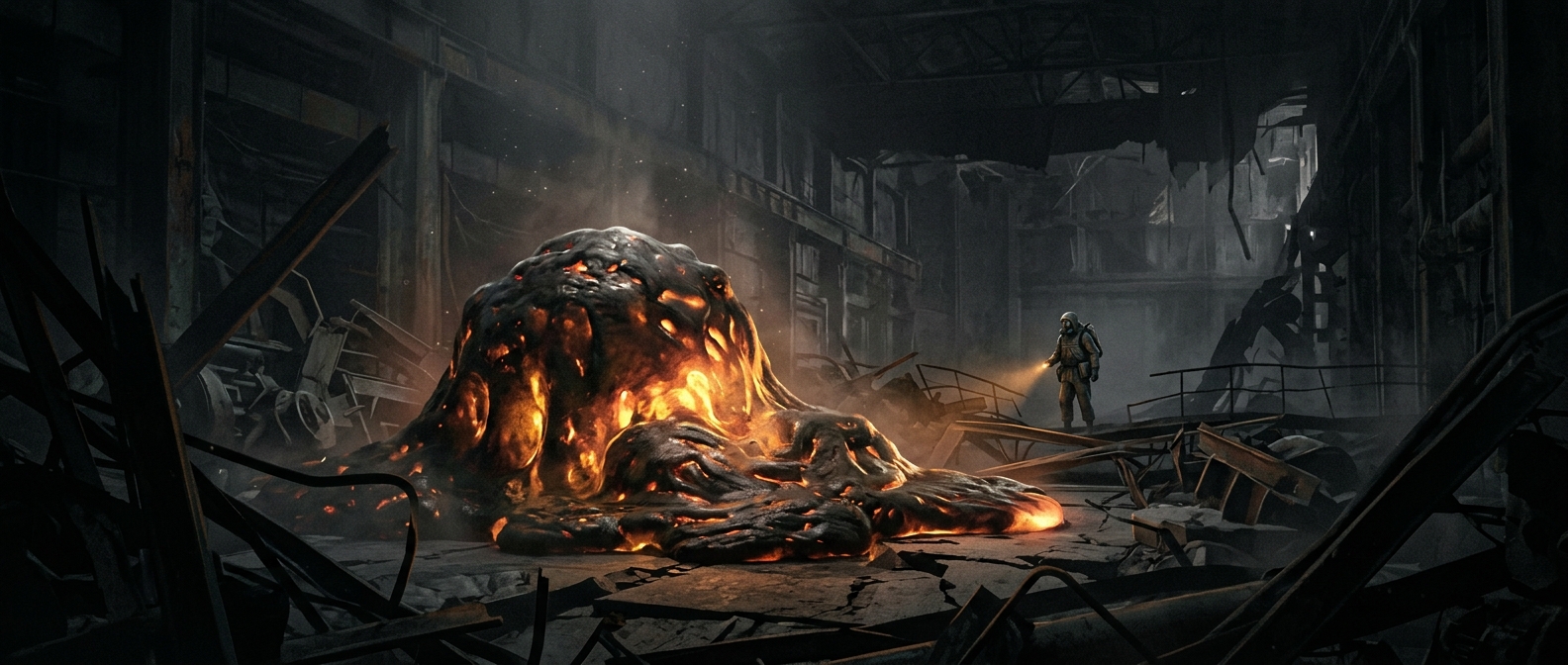
The result, called corium, is a shifting blend of molten or softened nuclear fuel and structural debris. While hot, it can move through openings and along surfaces under gravity. Its path changes as it encounters new materials: some are heated and incorporated, while others cool the mixture. Eventually, the mass solidifies into irregular, rocklike shapes.
Why the shape matters
The Elephant’s Foot formed after this material reached the lower areas beneath the damaged reactor and cooled. Its wrinkled surface records a process that was neither a clean spill nor a simple puddle of melted fuel. It was a destructive flow that gathered pieces of the reactor and surrounding structure as it went.
That mixture also carried radioactive substances from the damaged core. Solidification did not make them harmless; it merely trapped them in a dense mass. The Elephant’s Foot became a striking reminder that, in a meltdown, the reactor’s surroundings can become part of the hazardous material itself.