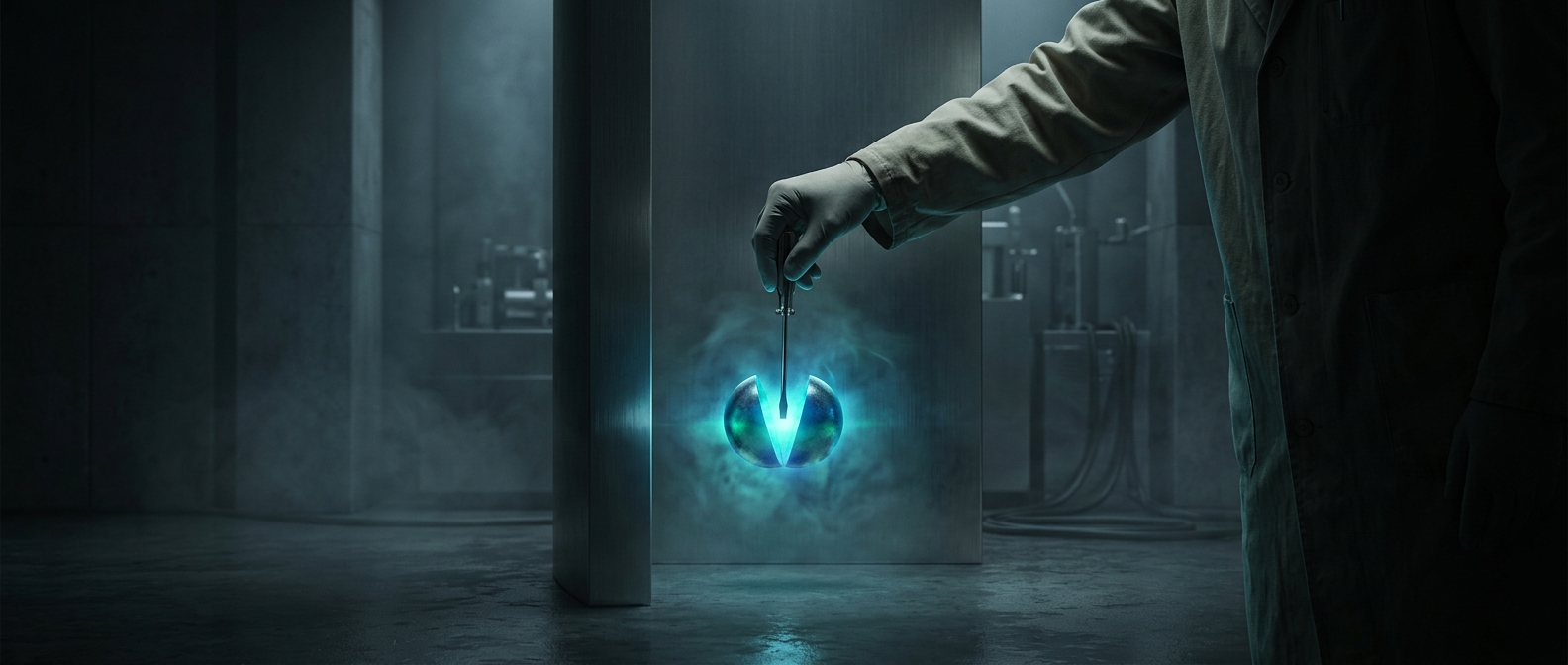
Why a Screwdriver Was Holding Back a Chain Reaction
The plutonium core was being studied in a criticality experiment: researchers brought a neutron-reflecting material close to it to see how readily it could sustain a chain reaction. The reflector was made of beryllium, which sends some escaping neutrons back toward the plutonium. More neutrons returning to the core mean more chances to split plutonium atoms and release further neutrons.
In the setup associated with physicist Louis Slotin, two beryllium hemispheres were brought together around the core. A screwdriver was used to keep them slightly apart. That narrow gap was not a safety barrier in the robust sense; it was a manually maintained margin between a subcritical arrangement and a dangerous one.
A Tiny Change, a Sudden Burst
When the screwdriver slipped, the hemispheres moved closer and reflected more neutrons back into the core. The assembly briefly became prompt-critical: fission-generated neutrons alone were enough to drive a rapidly growing chain reaction, without waiting for the slower processes that normally help make a reactor controllable.
The reaction did not produce a nuclear explosion. Instead, it surged briefly and released an intense burst of radiation. Slotin received a fatal dose and died days later. The other people in the room were also exposed, though to lesser degrees.
The experiment made the danger of hand-controlled criticality tests unmistakable. A screwdriver could change the spacing by only a small amount, but the neutrons did not respond to the scale of the movement; they responded to whether enough of them were returning to keep the chain reaction growing. The tool was a simple object in a setup with almost no room for error.