Why a bootprint can stay on the Moon
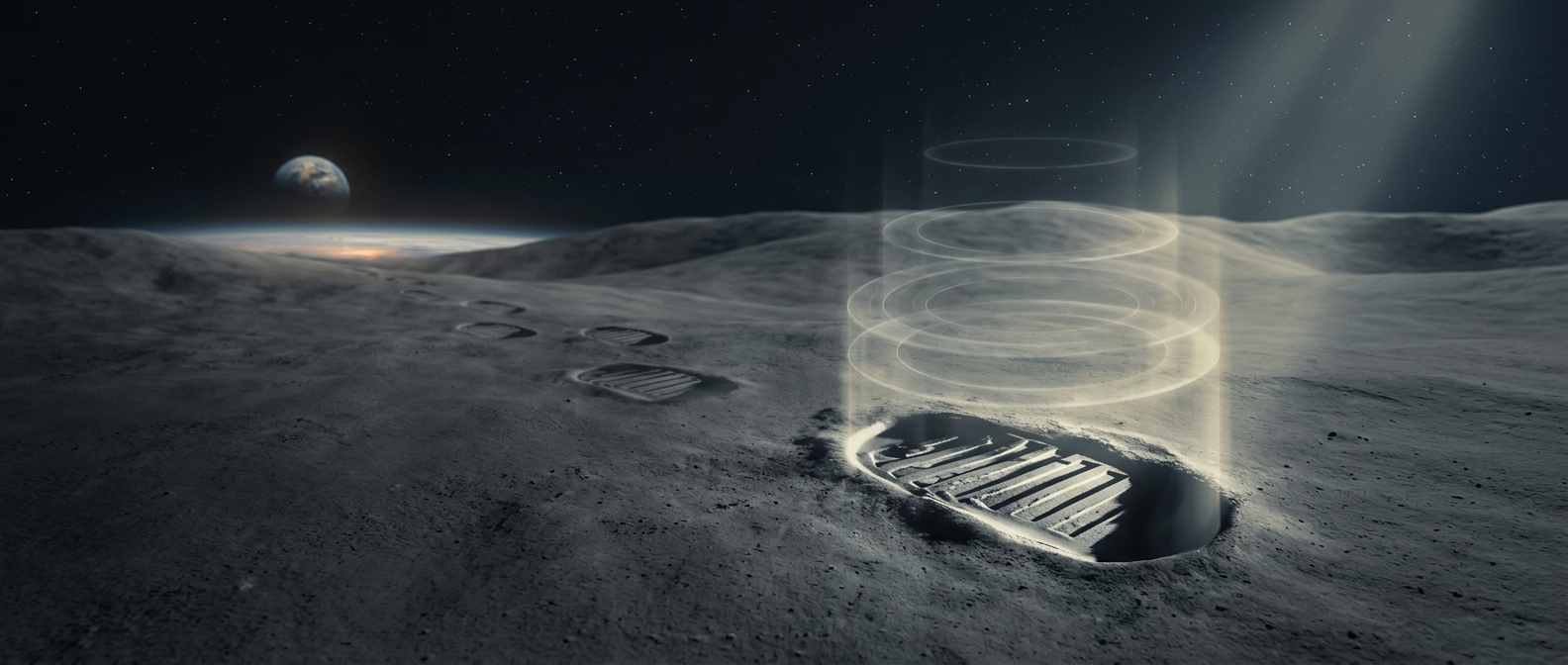
On Earth, a footprint is temporary because wind moves loose grains and rain carries them away. The Moon has no atmosphere thick enough to produce wind or weather, so its surface is not continually swept, soaked, or reshaped. A boot pressing into lunar dust—called regolith, a layer of broken rock and fine particles—can leave a crisp impression with no ordinary weather to erase it.
The slow work of space weathering
The surface is not frozen in place. Tiny meteorites strike the Moon, sometimes kicking dust across nearby ground and sometimes chipping or disturbing the material. Sunlight and charged particles from the Sun also alter exposed grains over time. These processes are far less like a storm that wipes a track clean and more like a very gradual, irregular scuffing.
That distinction matters: a footprint may remain recognizable for an immense span of time, but its edges and fine detail can slowly degrade. “No weather” does not mean “no change”; it means the familiar, fast cleanup agents on Earth are missing.
A mark without a permanent archive
A lunar print is therefore not a perfect record preserved unchanged. Its survival depends on what happens nearby: a later impact could disturb the ground, while quieter stretches allow the impression to persist. The striking consequence is that a human step can outlast the people and institutions that made it—but the Moon’s own slow reshaping will eventually blur even that mark.