stackyFACTS
Science

Herschel discovered Uranus thinking it was a tiny comet

HERE’S THE INTERESTING PART

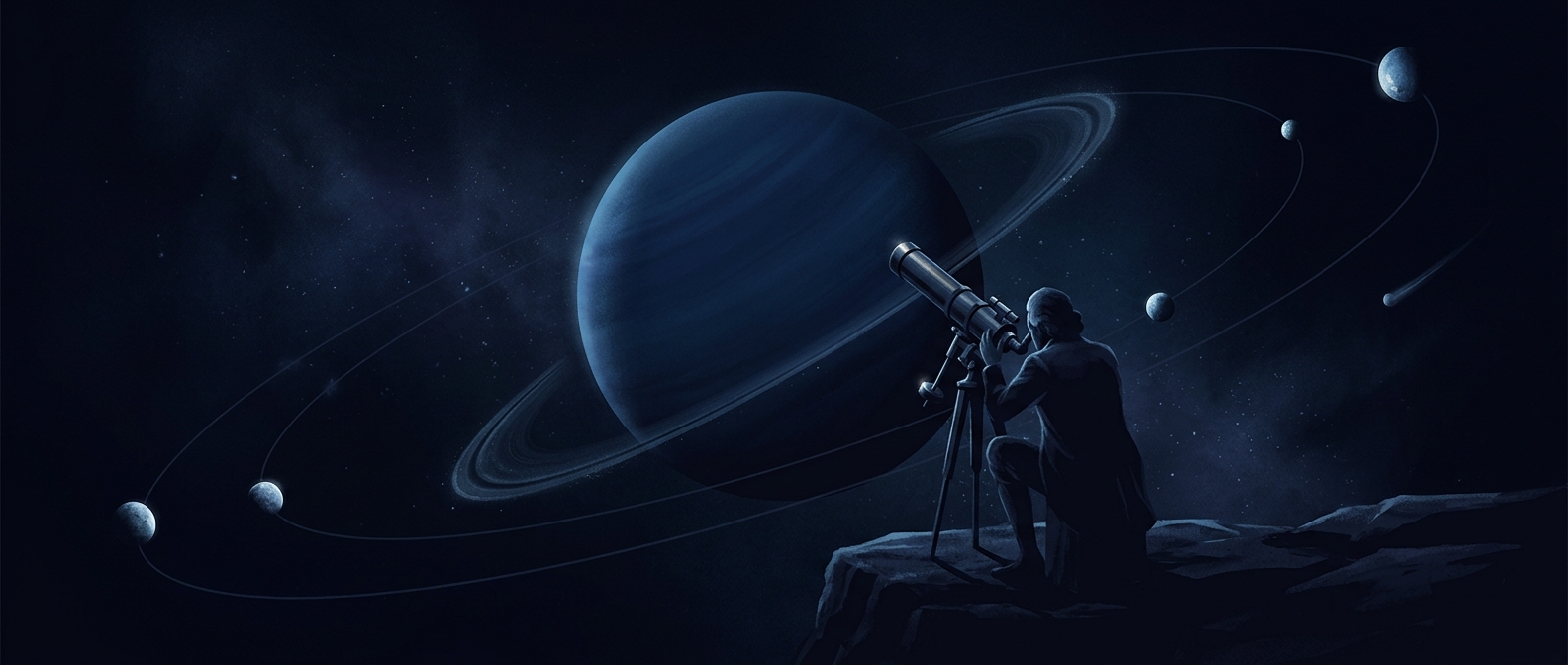
William Herschel was mapping distant stars when he stumbled upon a fuzzy blob that seemed to slowly shift position. He initially reported it as a standard comet, completely failing to realize he had found an entirely massive planet. The astronomical community eventually corrected his paperwork, expanding the solar system by pure happenstance.

Herschel discovered Uranus thinking it was a tiny comet
STACKY / Science
One discovery leads to another.

Keep exploring facts in this topic.

Science →

STACKY FOR IPHONE

A bigger world.
One discovery
at a time.

Keep discovering with Stacky. Interesting facts in an app that is always within reach.

Download on the App Store
ONE MORE DISCOVERY?

Keep exploring

All in this topic →
Uranus has rings that point straight at us
Science

Uranus has rings that point straight at us

Saturn gets all the glory, but Uranus has its own set of rings that run completely vertically. Because the planet is knocked on its side, its ring system…

Discover more
Uranus completely lacks any internal heat source
Science

Uranus completely lacks any internal heat source

It is officially the most boring, dead gas giant in the neighborhood. While Jupiter and Saturn radiate vast amounts of internal energy left over from their…

Discover more
Herschel found two moons around Uranus
Science

Herschel found two moons around Uranus

Not content with just discovering a massive gas giant, William Herschel kept staring at the dim patch of sky to see what else was lurking. He spotted Titania…

Discover more
Uranus genuinely smells like rotten eggs due to the massive concentration of hydrogen sulfide in its upper atmospheric layers.
Science

Uranus genuinely smells like rotten eggs due to the massive concentration of hydrogen sulfide in its upper atmospheric layers.

Uranus genuinely smells like rotten eggs due to the massive concentration of hydrogen sulfide in its upper atmospheric layers. Astronomers used sophisticated…

Discover more
A quasar can outshine the entire galaxy surrounding its feeding black hole
Science

A quasar can outshine the entire galaxy surrounding its feeding black hole

If you want to announce your presence to the entire observable universe, this is how you do it. These intensely luminous objects are powered by massive…

Discover more
Tidal friction caused by the gravitational pull of the moon is slowly dragging on the Earth's rotation, causing the length of a single day to increase by about one point eight milliseconds every century.
Science

Tidal friction caused by the gravitational pull of the moon is slowly dragging on the Earth's rotation, causing the length of a single day to increase by about one point eight milliseconds every century.

Tidal friction caused by the gravitational pull of the moon is slowly dragging on the Earth's rotation, causing the length of a single day to increase by…

Discover more
StackyMore discoveries in the app
Download on the App Store