A new planet, then two faint companions
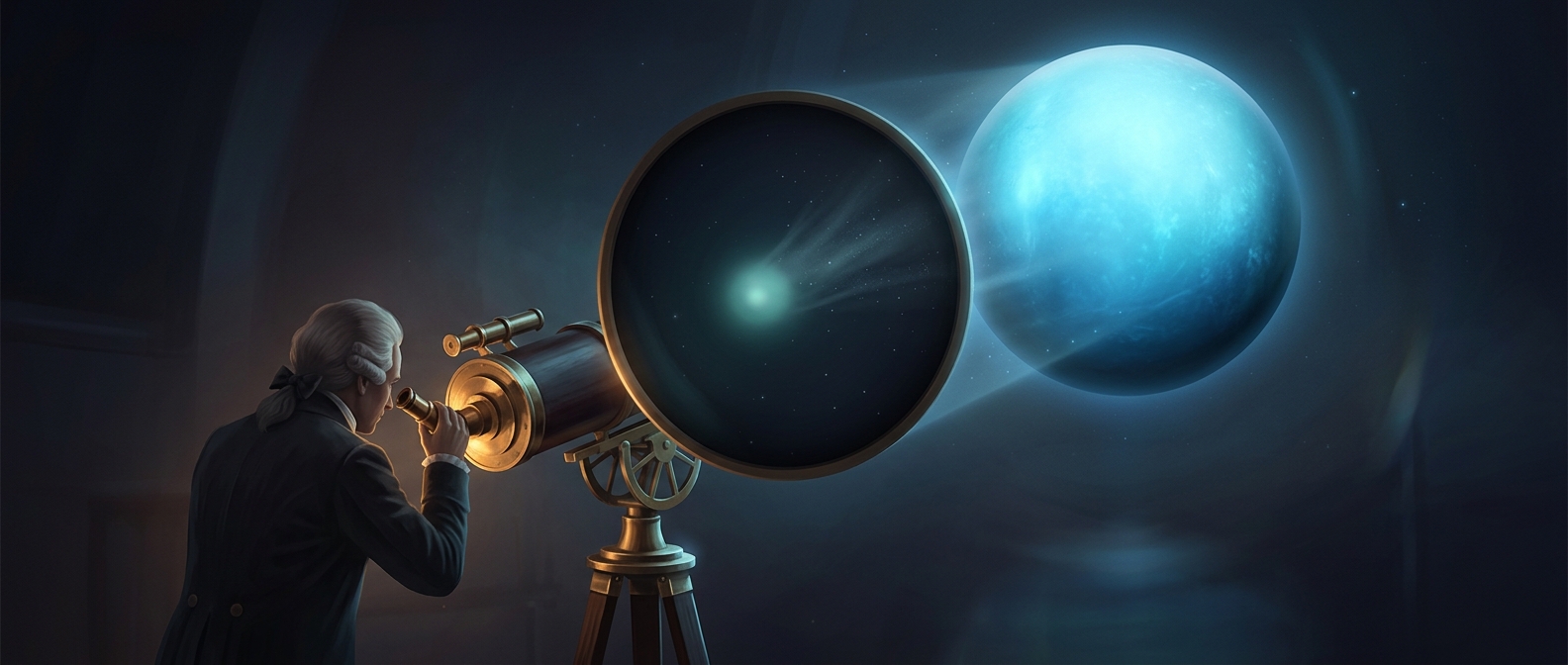
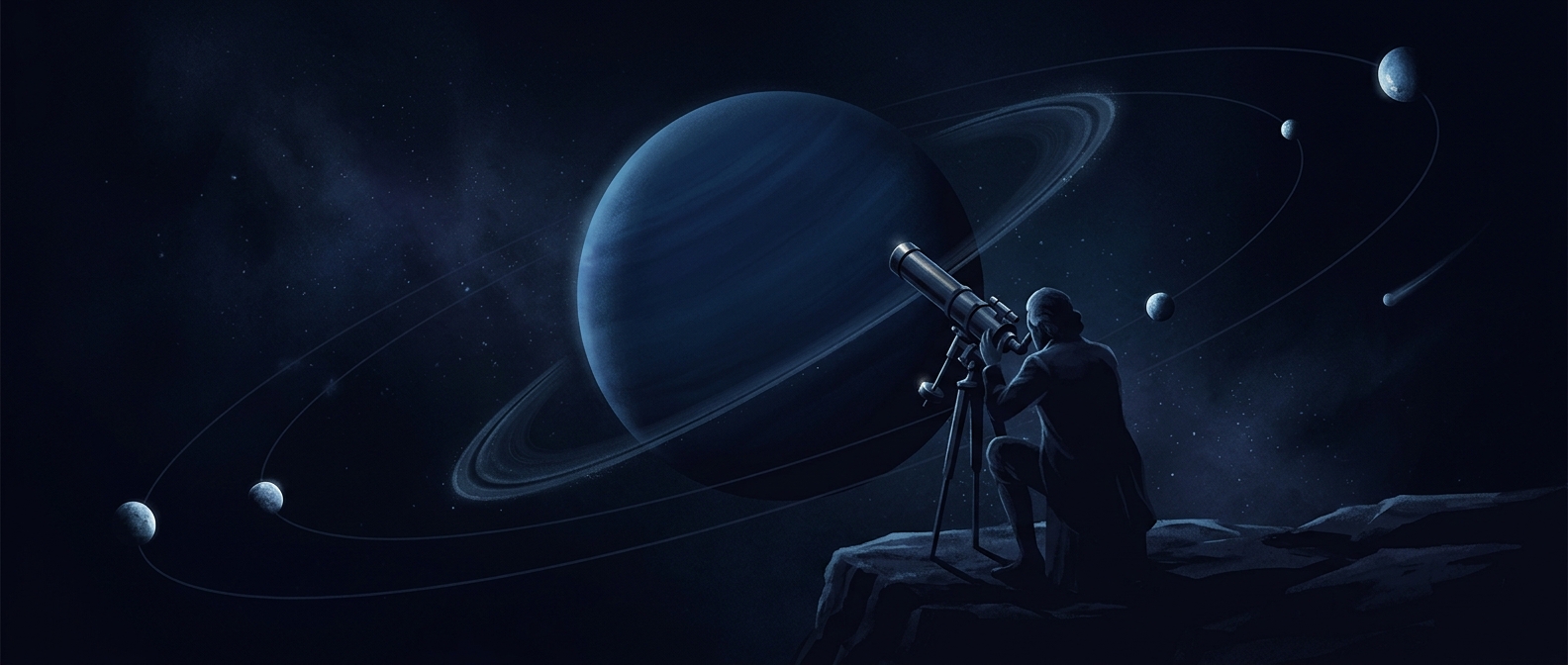
When William Herschel spotted Uranus in 1781, he added a planet to the known solar system. Six years later, he turned his telescope back toward it and saw two much fainter points of light nearby. Repeated observations showed that they changed position with Uranus: they were orbiting it, not fixed stars in the background.
That distinction mattered. A single sighting could not reveal whether a speck was a companion or a chance alignment. Tracking the objects over time made their motion the evidence. The moons became known as Titania and Oberon; their names, drawn from Shakespeare, were proposed decades later by Herschel’s son John.
Their motion reveals a layered system
A moon follows a path around its planet while the planet itself travels around the Sun. Titania and Oberon therefore move through two overlapping motions: each circles Uranus, and both are carried along with Uranus on its much larger solar orbit. The moons are not simply trailing behind the planet; their shared journey comes from being gravitationally bound to it.
The discoveries also showed that Uranus was more than a solitary distant world. It had a family of orbiting bodies, with Titania and Oberon the largest pair. Their faint light made them difficult to distinguish from the surrounding darkness, but their changing positions turned a few points in a telescope into evidence of a planetary system.