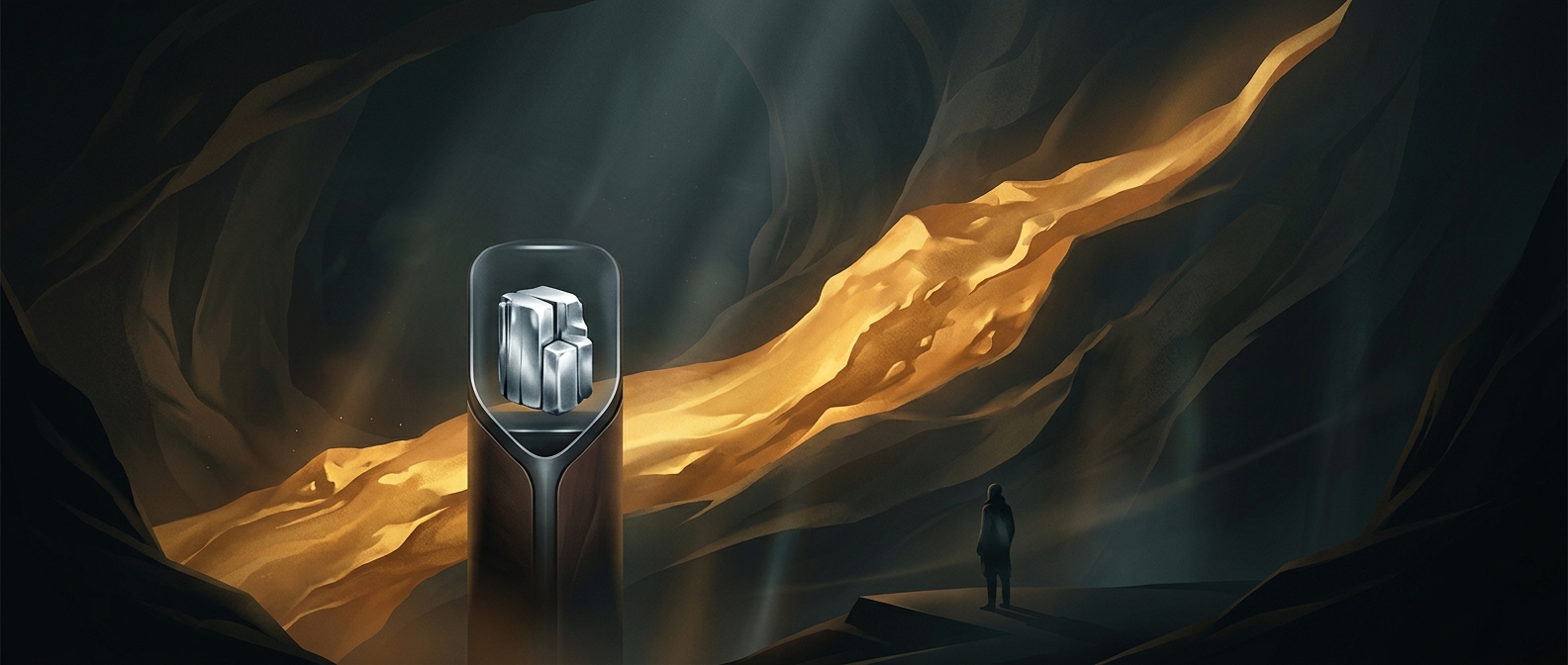
Why a small concentration changes everything
A mine does not extract a metal simply because it exists in the rock. It has to process enough rock to collect a useful amount. The concentration of metal in an ore—often called its grade—therefore matters as much as the metal’s presence underground.
Gold can sometimes become naturally concentrated. As gold-bearing rock breaks down, its dense particles may collect in streambeds or other places where they can be gathered from a smaller volume of material. That kind of concentration can make a deposit easier to work than rock in which valuable metal is scattered thinly.
The work between rock and metal
Platinum is commonly found mixed into complex ores, including some deposits associated with nickel and copper. Recovering it means first crushing and processing large quantities of rock, then separating and refining a small amount of platinum from other materials. Each step takes energy, equipment, and time; the metal’s value has to justify that effort.
So rarity has two practical meanings: how much of a metal exists, and how much is concentrated in deposits that people can economically mine. A metal can be present underground yet remain scarce in usable form if it is spread too thinly to collect efficiently. That is why platinum’s difficult path from ore to refined metal matters as much as its abundance in Earth’s crust.