How a poker hand acquired a murder legend
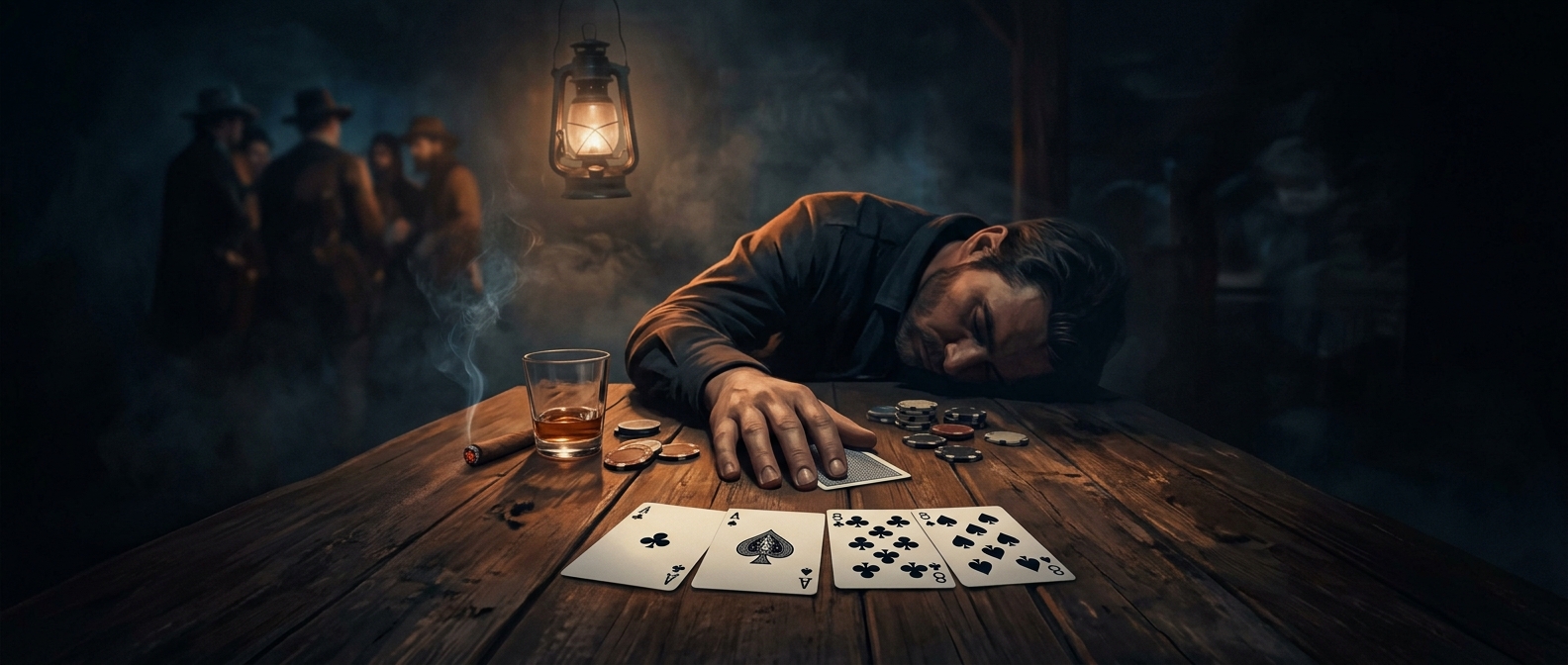
The name “Dead Man’s Hand” is usually attached to a pair of black aces and a pair of black eights. Its story points to Wild Bill Hickok, the frontier figure who was shot while playing poker in Deadwood, Dakota Territory, in 1876. The hand’s grim reputation comes from the claim that he was holding those cards when he died.
The cards are part of the legend
The connection is not as firm as the familiar phrase suggests. Accounts of Hickok’s final hand differ, and the fifth card is especially uncertain. The association with two aces and two eights took hold through later retellings; it is not a securely established record of exactly what was in his hand.
That gap helps explain why the name is better understood as folklore than as a precise piece of poker history. The cards became a compact symbol for a sudden death at the table, even as the details of the hand blurred.
Why the name stuck
In poker, two pairs are a recognizable, ordinary hand—not a combination that predicts anything. The nickname adds its meaning from outside the game: players see the black aces and eights and recall the story attached to them. A disputed final deal became one of poker’s most enduring legends precisely because four cards could make the tale instantly recognizable.