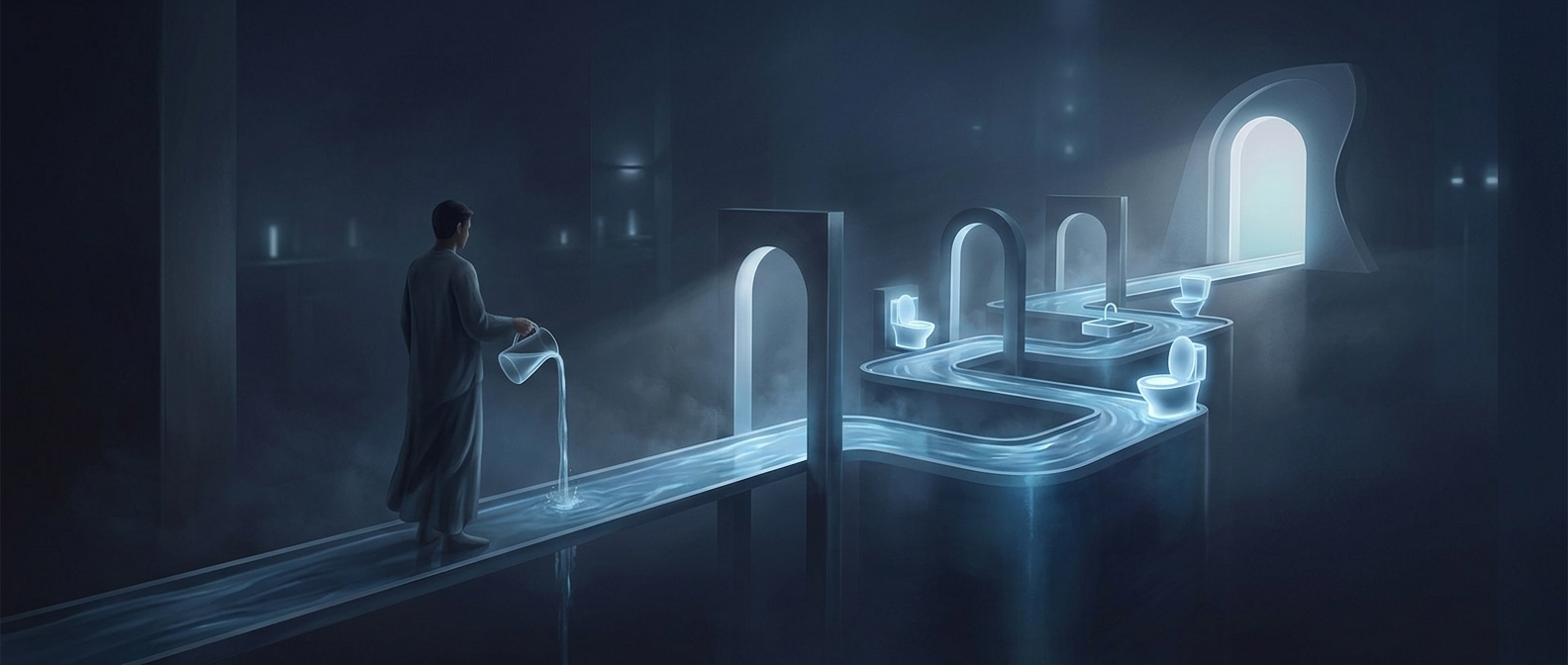
Why dehydration reduces urine output
Your kidneys filter blood, remove wastes, and adjust how much water leaves the body as urine. In severe dehydration, the circulating blood volume falls. With less blood flowing through the kidneys, they receive less fluid to filter, so urine production drops.
At the same time, the body releases hormones that tell the kidneys to hold on to water. The result is concentrated, scant urine—a useful short-term conservation response, but also a sign that the shortage is affecting circulation.
What “shrinking” means
Kidneys contain blood-filled vessels and fluid-rich tissue. When the body loses a great deal of water, reduced blood volume can temporarily reduce the kidneys’ volume as well. This is not the same as permanent loss of kidney tissue: the immediate change reflects depletion and reduced blood flow.
If circulation improves, kidney function can often recover. But if too little blood reaches the kidneys for long enough, the cells that filter and process waste can be injured, causing acute kidney injury. In other words, making less urine helps conserve water at first, but prolonged low flow can turn a protective response into a problem.