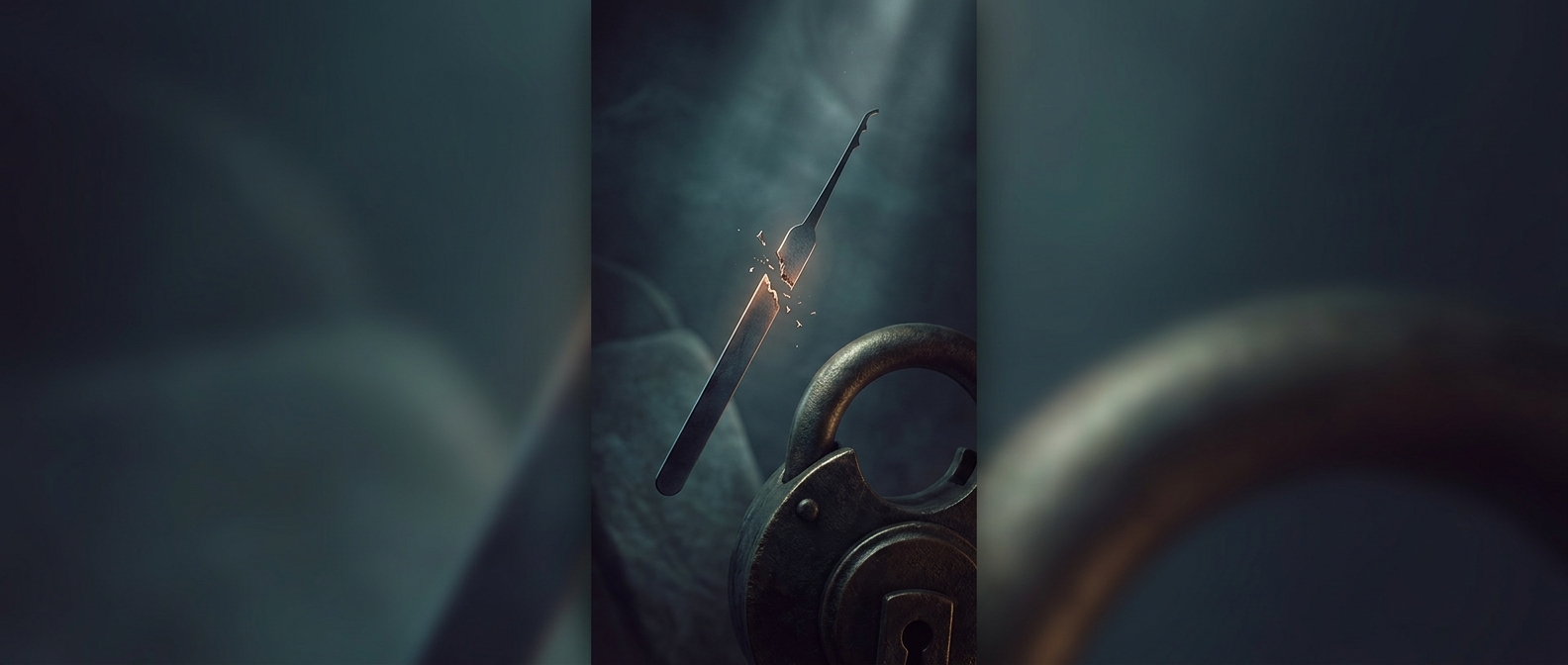
Why a Lockpick Can Fail Inside a Lock
A lockpick has to be thin enough to fit through a keyway—the narrow opening where a key normally goes—and reach small parts inside. That slender shape makes it useful, but leaves little metal to resist twisting or sudden pressure. A pick may flex during careful use; if force rises sharply, it can bend or snap instead.
The Lock Adds Hidden Resistance
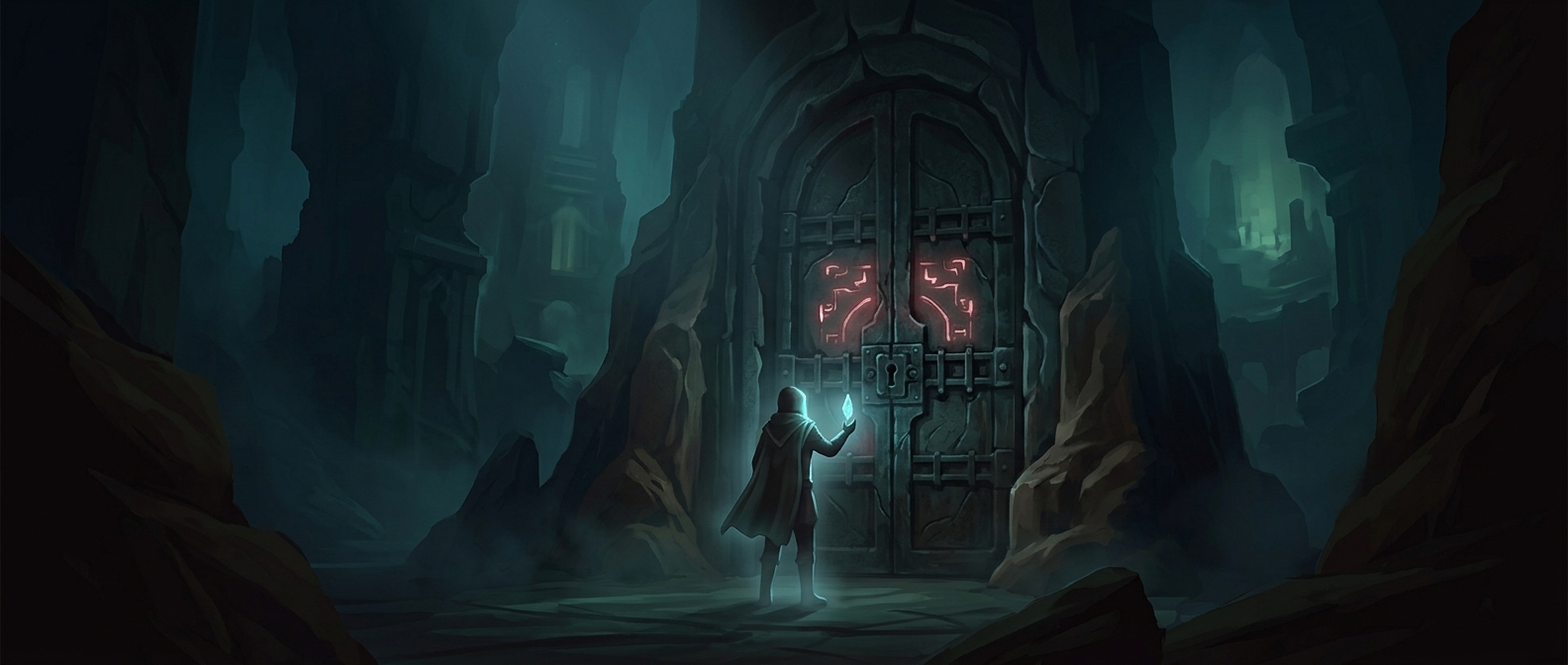
Inside many pin-tumbler locks, spring-loaded pins block the plug, the central part that turns. A pick meets these parts in a cramped space, where contact is difficult to see. If a pin or the pick catches, more pressure does not necessarily make the mechanism move. It can instead concentrate force on one small point, stressing the tool.
That makes the pick’s feel important: resistance can signal that the metal is being strained, not that the lock is nearly open. A thin pick may also be damaged by rough handling before it is ever used, especially if it is bent or nicked.
A Small Break Can Change the Situation
In a game, a fragile pick turns lock opening into a tradeoff: the player may gain access, but careless pressure can consume a limited tool. In real life, a broken piece lodged in a lock can make an already difficult repair harder. The surprising part is that the pick’s weakness and usefulness come from the same design choice: it must be narrow enough to enter, yet strong enough to survive contact with parts it cannot readily see.