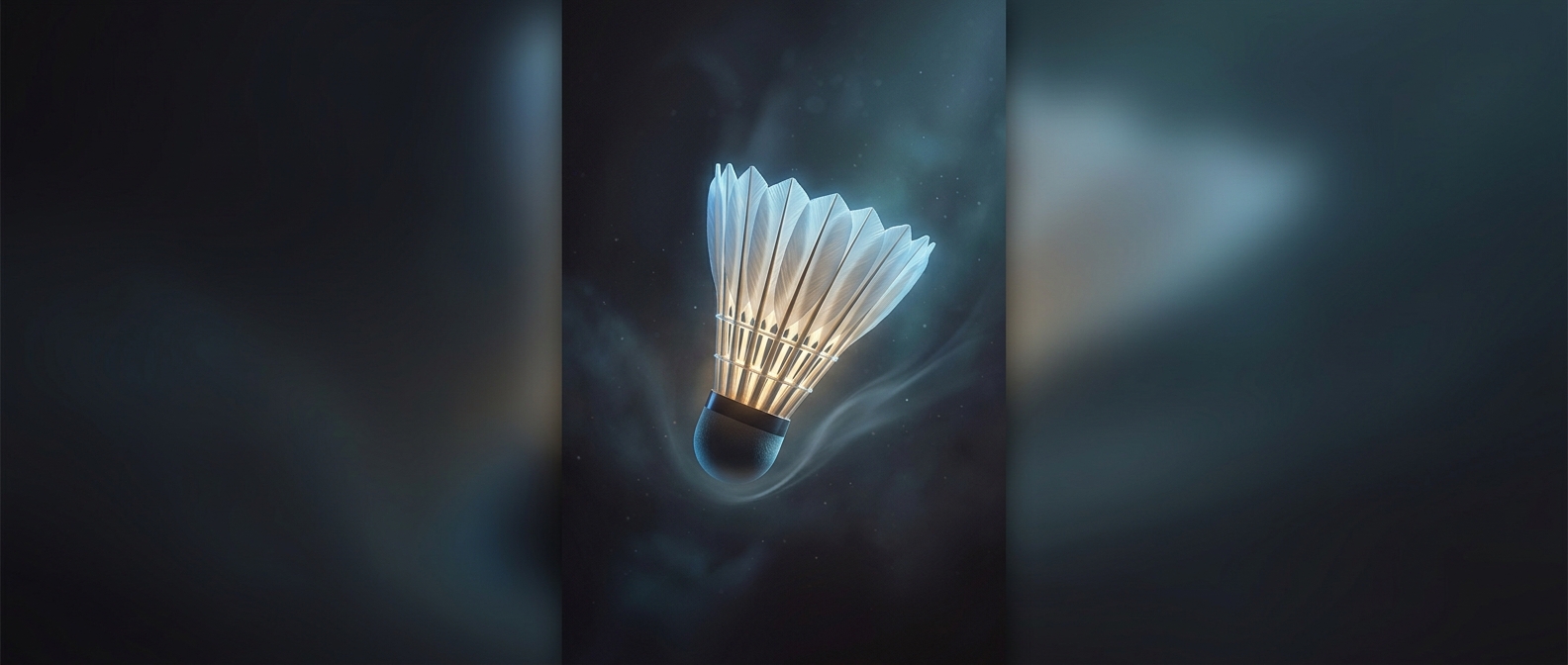
How a Shuttlecock’s Feathers Shape Its Flight
A feathered shuttlecock is built to rotate as it travels. Its skirt—the ring of overlapping feathers behind the cork—catches air, creating drag that slows the shuttle and helps keep the cork pointed forward. But the skirt works best when its feathers guide the air in a consistent way.
Why the Same Wing Matters
Feathers from a bird’s left and right wings curve in opposite directions. That curve affects how each feather meets the air. Arrange feathers from both wings together, and the skirt can produce competing aerodynamic forces: some feathers tend to turn the shuttle one way, while others tend to turn it the other.
Using feathers from the same side gives the skirt a more uniform curve. As air flows over it, the shuttle is more likely to spin steadily in one direction. That consistent rotation helps the shuttle’s flight remain predictable rather than wobbling unpredictably.
A Small Choice With a Practical Payoff
The cork leads the flight, while the feather skirt acts like a stabilizing brake. Its drag makes the shuttle slow rapidly, a defining feature of badminton rallies. Uniformly curved feathers help that skirt do its job without pulling the shuttle in conflicting directions.
So the 16 feathers are not just arranged for a neat, symmetrical shape. Their shared curve makes them act more like a coordinated aerodynamic surface, helping the shuttle spin and settle into a stable flight.