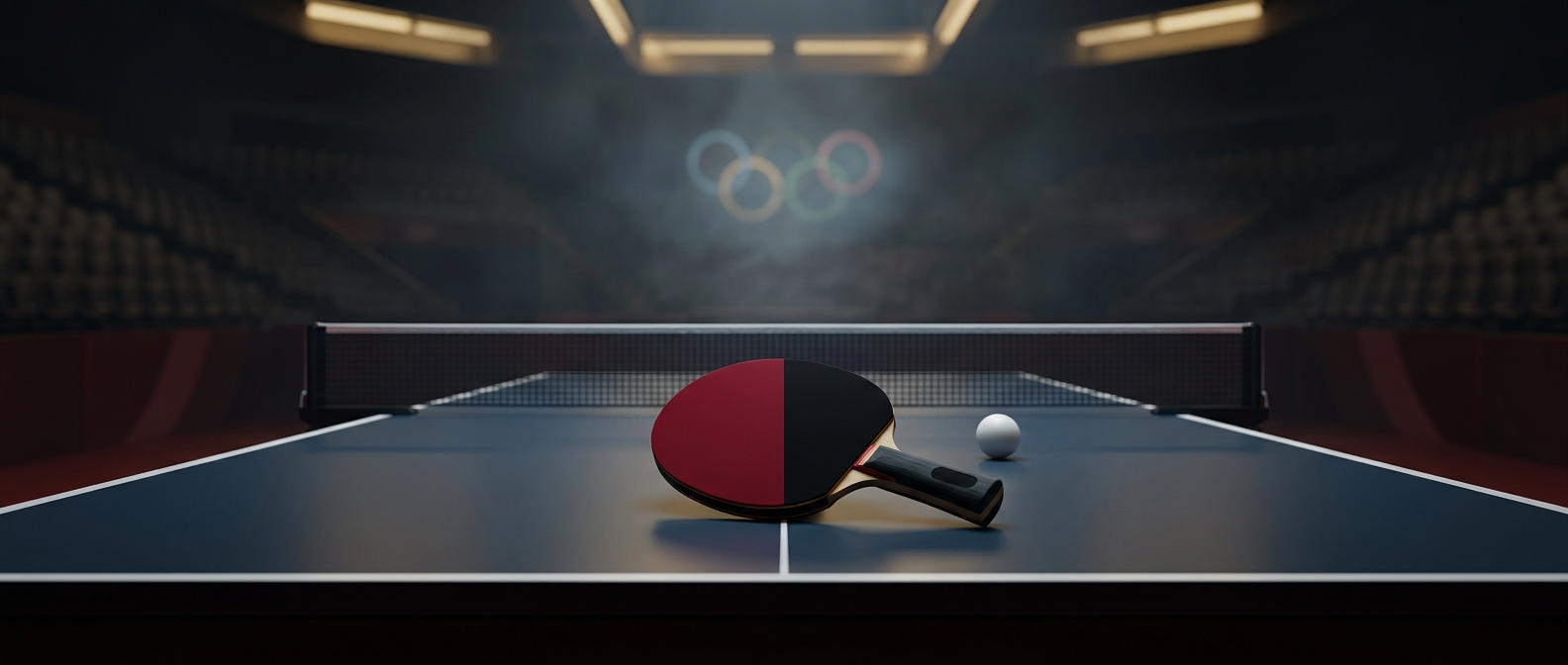
Why a Ping-Pong Paddle Has Two Different Colors
A table-tennis player can cover each side of a paddle with a different rubber. The rubbers may behave differently: one might grip the ball more strongly, while another may make it harder for an opponent to predict how the ball will rebound. If both faces looked alike, a player could turn the paddle during a stroke and conceal which rubber had made contact.
The contrasting colors solve that visibility problem. They let the opponent see which face is aimed toward the ball, giving them a clue about the kind of return to expect. The color does not reveal the exact shot, but it removes one useful piece of disguise.
The Rubber Makes the Spin
Spin comes from the contact between ball and paddle, not from the pigment. When a player brushes the ball sideways or upward, friction between the rubber and ball makes the ball rotate. The rubber’s surface and the angle and speed of the stroke all affect the result.
A player can still disguise a shot with body movement and racket angle. But when the ball meets one face, its color makes that choice visible. The opponent can then adjust their racket angle or position to handle the incoming spin.
That small flash of color turns a hidden equipment difference into information both players can use: the rubber may shape the return, but the color tells the opponent which rubber was involved.