A Line Made of Bubbles
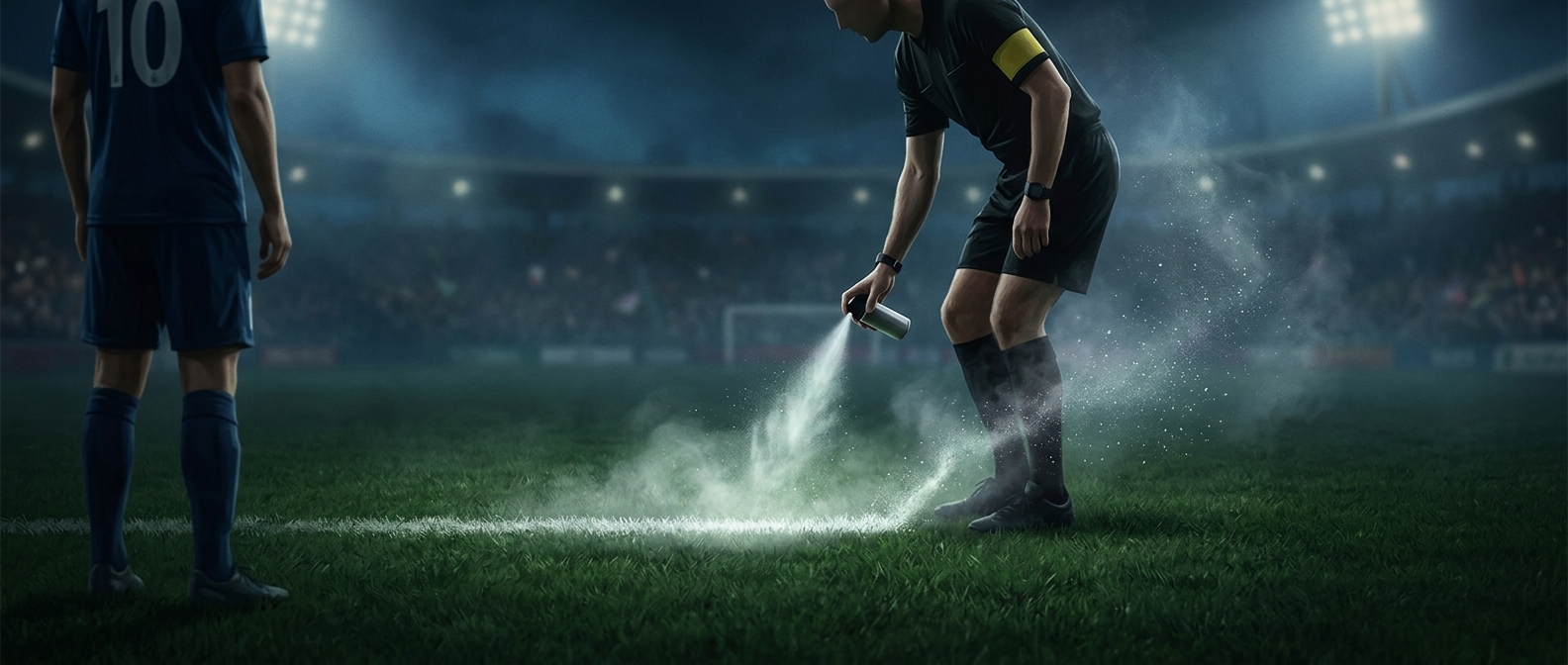
The spray works because foam is a temporary structure, not a permanent coating. A nozzle turns liquid into a mass of tiny bubbles: thin liquid films hold pockets of gas in place, making the mark visible on the grass. Unlike chalk, it does not need to leave solid particles behind to make a clear line.
That structure is unstable by design. The liquid films drain and thin, bubbles collapse, and the remaining moisture evaporates. The mark therefore fades without anyone having to brush or wash it away.
A Brief Boundary Changes the Restart
At a free kick, the referee has two positions to communicate: where the ball must be placed and how close the defending players may come. A visible mark makes those locations easier to judge in the moment. Players and officials can see the boundary on the field rather than relying only on spoken directions or memory.
The disappearing quality is part of the practical solution. A lasting stripe would remain after the restart and could clutter the playing surface; a mark that vanishes preserves a clear signal only while it is useful. Its short life is the point: the line settles a dispute about space, then the field returns to its ordinary appearance.