How DNA becomes a construction material
DNA is usually described as the molecule that stores genetic instructions. Its familiar double helix is built from two strands whose chemical “letters” pair in predictable ways: A with T, and C with G. Engineers can exploit that selectivity by designing strands whose sequences make them stick to chosen partners.
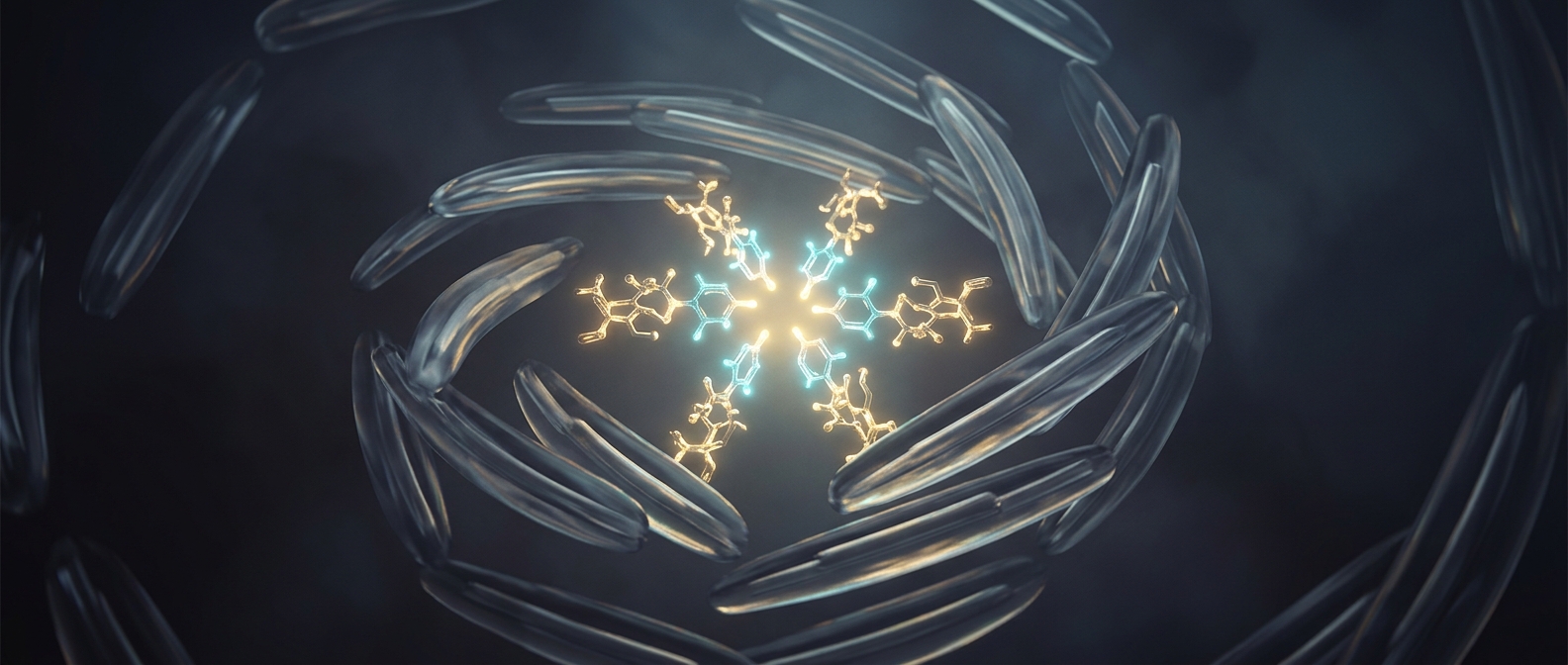
A long strand can serve as a scaffold, while many shorter strands—often called staples—bind to separate sections of it. Each staple may connect parts of the scaffold that are far apart along the strand. As those connections form, the scaffold bends and folds into a planned shape. The design is encoded in the sequences; the molecules assemble through ordinary base pairing rather than through a tiny mechanical hand.
From folded shapes to molecular devices
The same method can produce more than a static shape. A DNA structure can be designed with a movable section or a latch held shut by strands that respond to a particular molecular signal. In a drug-carrying design, the structure may hold its contents until the latch is displaced or the shape changes in the intended surroundings.
That is the logic behind experimental DNA boxes intended to open near cancer cells: the box is not “recognizing” cancer in a human sense. Its opening depends on molecular interactions built into the design, such as a target molecule binding to a matching DNA sequence. A successful design must make that response selective enough to avoid opening too readily elsewhere.
Why the trick is promising—and difficult
DNA’s predictable pairing makes it possible to specify connections with remarkable detail, but a programmed structure does not automatically behave reliably in the body. It must fold correctly, remain intact long enough, reach the right tissue, and release its cargo when and where intended. Those are substantial engineering challenges, which is why DNA nanomachines remain experimental rather than routine treatments.
The striking shift is that DNA can serve as both blueprint and building material: its sequence determines which pieces meet, and those meetings create the machine’s shape and action.