A shell built into the body
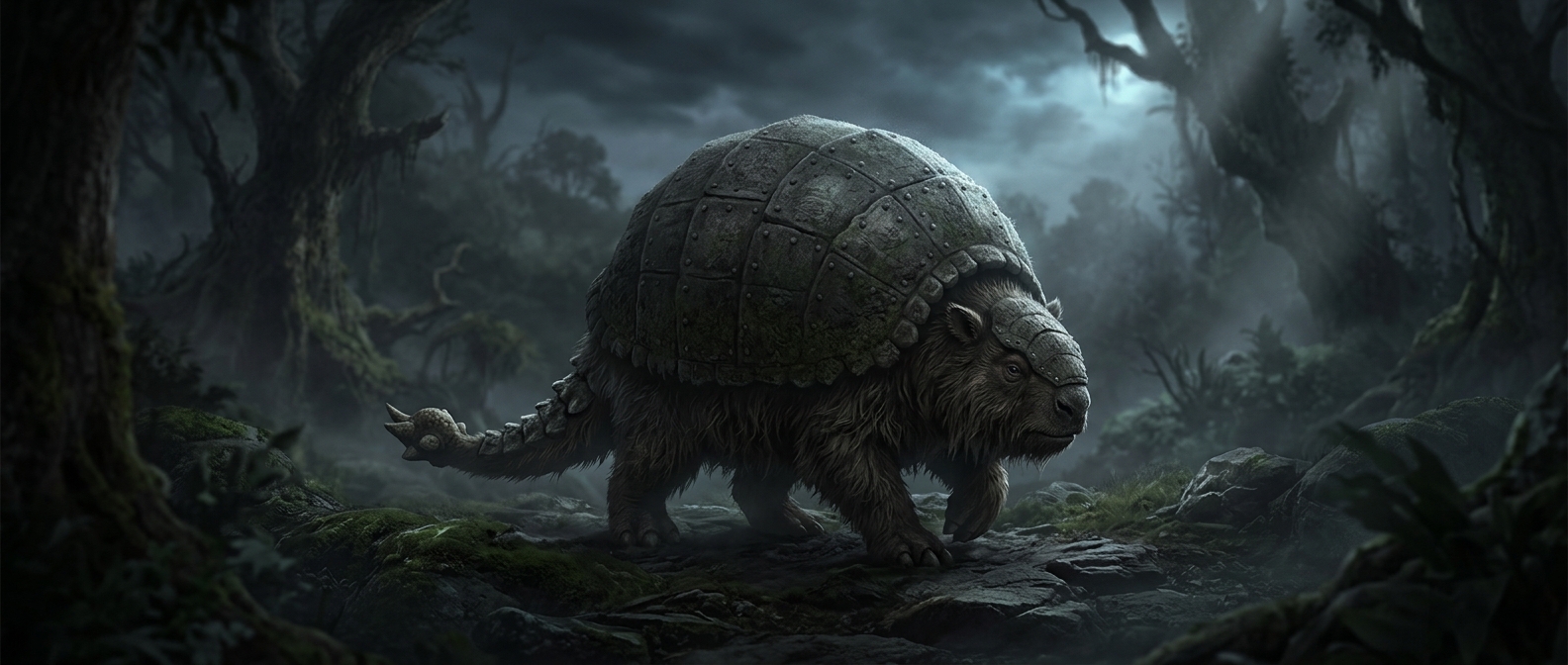
A glyptodont’s armor was not a set of loose plates the animal could take off or shift around. It was made from osteoderms—bony plates that formed within the skin—and, in many glyptodonts, those plates joined into a broad, rigid carapace over the back. The animal’s spine and ribs remained underneath; the shell was an outer layer of bone, covered by skin.
That construction made the body very different from the flexible, banded armor of many living armadillos. A rigid dome could resist blows, but it also limited how much the trunk could bend. The plates were part of the animal’s anatomy, so the protective shell came with a cost in mobility.
An armadillo relative on a larger scale
Glyptodonts belonged to the same broader mammal group as armadillos, though their lineage produced animals far more massive than any armadillo alive today. Their armor was not evidence of a reptilian ancestry: mammals can evolve bony structures in the skin, and these plates developed outside the skeleton proper.
The tail adds another variation to the picture. Some species had tails reinforced with bony rings and, in certain forms, a heavy club at the end. That equipment could have helped in defense or combat, though its precise use is difficult to establish from bones alone. Taken together, the shell and tail show how far one mammalian lineage could push the armadillo’s basic strategy: turn the body’s outer surface into protection, even when that meant carrying a remarkably rigid frame everywhere it went.