Why a burrowing mammal might grow horns
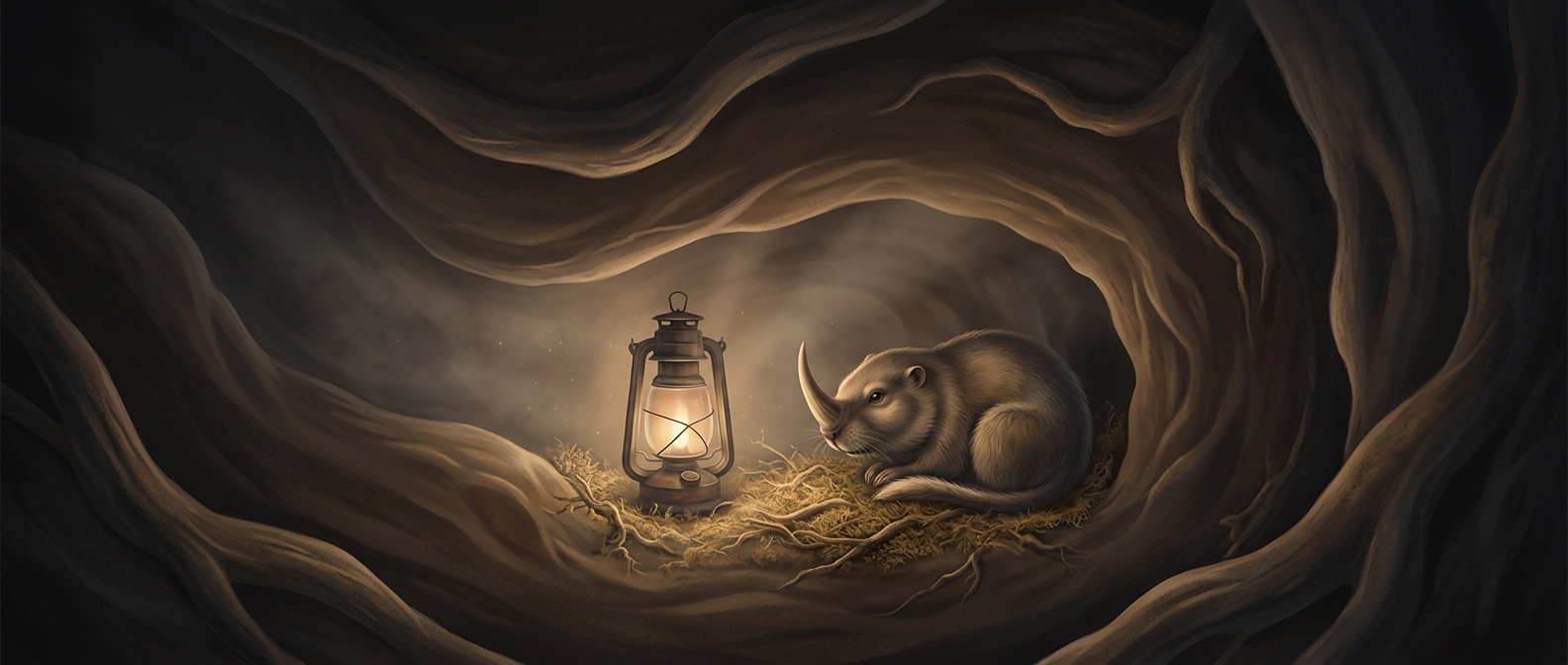
Epigaulus was an extinct rodent that lived underground and had two conspicuous bony projections on its snout. Those horns are visible in fossil skulls, but a fossil preserves shape, not behavior. It cannot show whether the animal used the projections to dig, defend itself, compete with others, or do something else entirely.
That gap matters because a feature’s appearance can make its purpose seem obvious when it is not. A shovel-shaped skull, for example, might suggest digging, but the same structure could also affect how an animal fought or moved through tight spaces. To identify a function, researchers would need clues beyond the horns themselves—such as how the bones were built, patterns of damage, or comparable structures in animals whose behavior is known. Even then, several explanations might fit.
What the fossils can—and cannot—tell us
The horns do establish that Epigaulus carried a substantial, unusual structure on its face. Their presence in an animal adapted to life underground makes the contrast especially striking: a feature that looks dramatic above ground could have mattered in the close quarters of a burrow, or it may have served a purpose unrelated to digging.
Without evidence that distinguishes among those possibilities, assigning one definitive job would go beyond what the fossils support. The horns are a reminder that evolution leaves behind anatomy more readily than instructions for using it. We can see what Epigaulus grew; the reason it grew it remains open.