How Arsinoitherium’s teeth reveal its diet
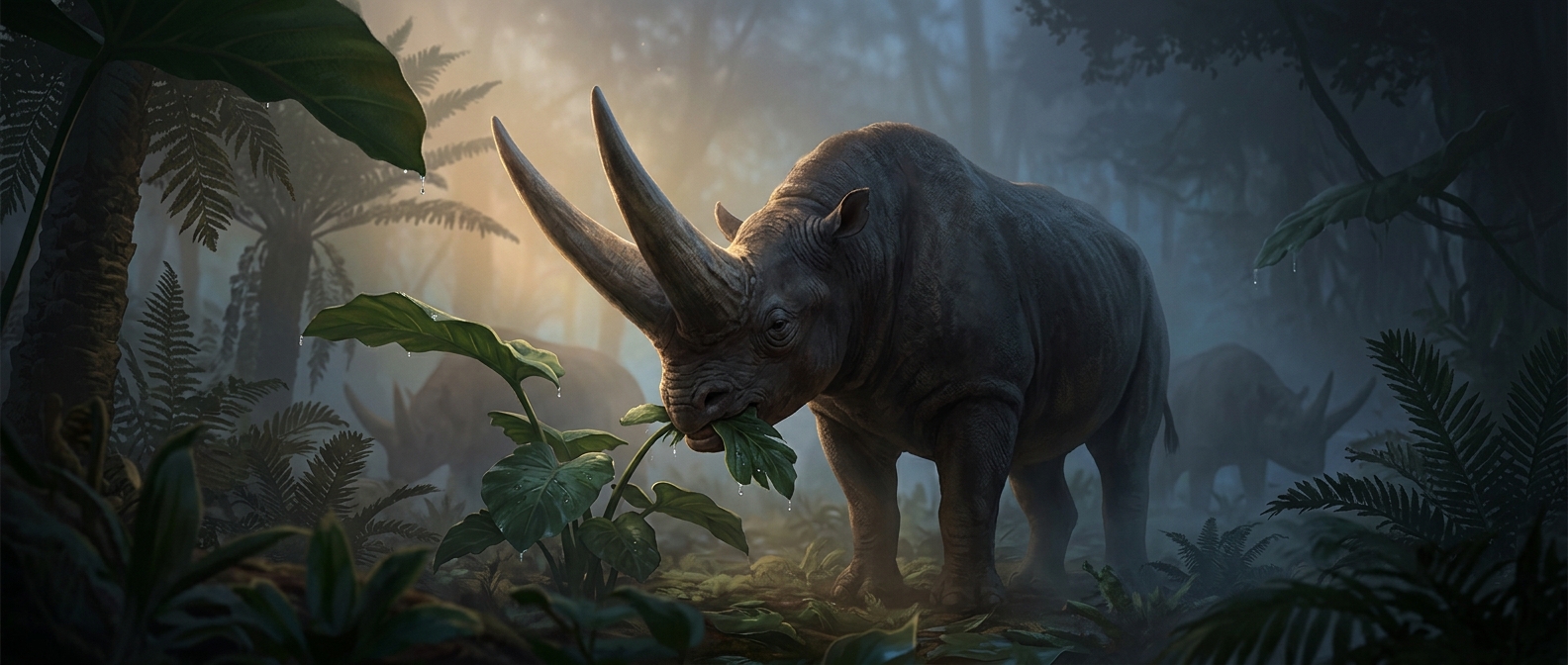
A dramatic skull can suggest a predator, but teeth preserve more direct evidence of what an animal did at mealtime. In Arsinoitherium, the teeth were built to break down plant food: broad chewing surfaces could crush and grind it, rather than the sharp, blade-like edges that are useful for slicing flesh.
That distinction matters because eating plants is mechanically demanding. Leaves and other vegetation can be fibrous, so an herbivore needs teeth that can repeatedly grind food into smaller pieces before swallowing. As teeth are used, their shapes and wear patterns can also record the kind of work they performed. Together, those clues make the mouth a more dependable guide to diet than a fearsome-looking head.
Horns were not a menu clue
Arsinoitherium’s paired horns make it easy to imagine a hunter, but horns alone do not establish what an animal ate. Structures that look like weapons can serve different roles, and appearance cannot tell us how an extinct animal behaved. Its teeth, by contrast, show a feeding system adapted for plants.
The contrast is a useful reminder when reconstructing prehistoric animals: dramatic features catch the eye, while less spectacular details often carry the stronger evidence. In this case, the best clue to the giant’s meals was not the pair of horns above its face, but the chewing surfaces inside its mouth.