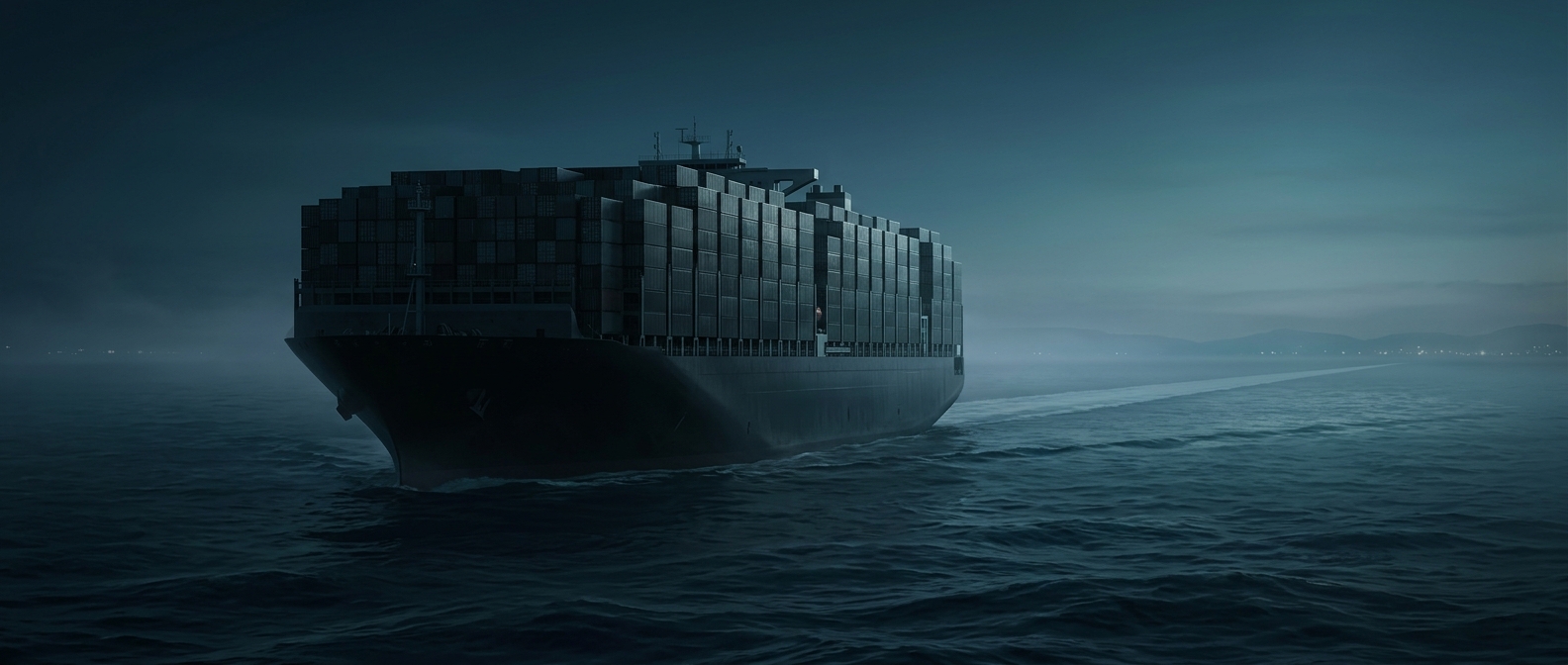
Why the ship keeps moving after the engines reverse
A container ship does not stop the instant its propeller begins pushing backward. The vessel’s enormous mass gives it momentum—the tendency of a moving object to keep moving—and the water does not provide enough resistance to cancel that motion quickly. The hull parts the water as it travels, but it is not pressing against a solid surface the way a car’s tires do when its brakes grip the road.
Reversing the engines changes the force acting on the ship; it does not erase the ship’s forward speed. The propeller must push water forward to produce backward thrust, and that thrust has to work against the vessel’s momentum over time. The ship continues to cover ground while it slows.
A braking maneuver has to begin far ahead
A ship’s bridge team therefore treats stopping as a planned maneuver, not an emergency-sized version of tapping a brake pedal. They account for the vessel’s speed, load, and conditions, then order a reduction in speed or reverse thrust early enough for the ship to lose momentum over a long stretch of water.
That long lead time matters in confined channels and near ports. A ship can be responding to a stop order while still moving fast enough to travel a substantial distance, so crews need room not only to slow down but also to avoid hazards along the way. The striking detail is that the ship’s stopping distance is part of navigation: the braking decision may have to come miles before the place where the vessel must finally be still.