How exercise can change the brain’s chemistry
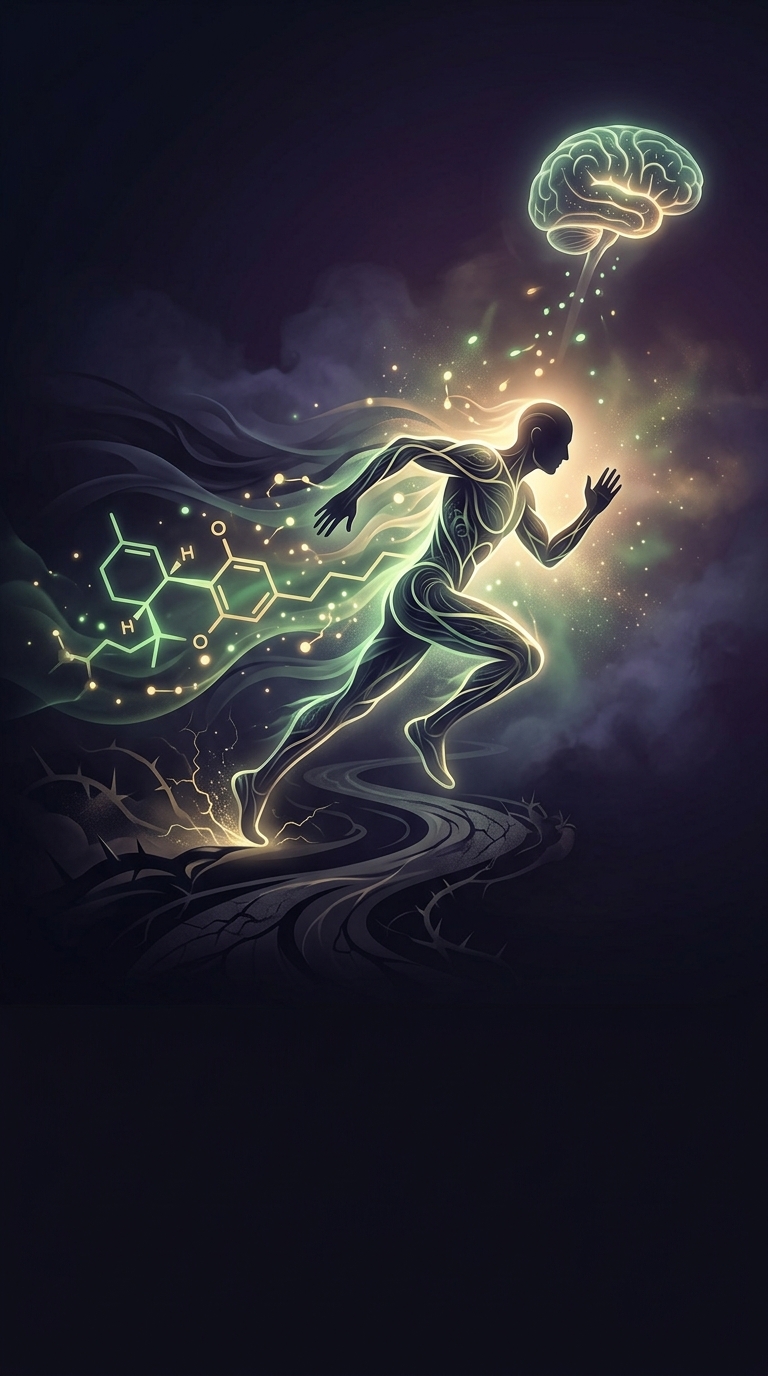
During sustained exercise, the body releases endocannabinoids: molecules it makes itself that act on some of the same receptors as compounds in cannabis. One endocannabinoid, anandamide, can pass from the bloodstream into the brain. There, endocannabinoid signaling can influence pain, stress, and mood.
That offers a biological route to some features of a runner’s high. As exercise continues, the brain may become less responsive to discomfort, while changes in mood can make the effort feel rewarding rather than merely punishing. The body is not producing cannabis; it is using its own signaling system, which has overlapping effects on certain receptors.
The feeling is not a guaranteed payoff
The familiar rush is not a precise reward that switches on after a set number of minutes. Its intensity varies, and not every workout produces euphoria. Endocannabinoids are part of the explanation, not a single chemical explanation for every sensation: the brain’s response to exertion involves multiple processes, and the experience depends on the person and the exercise.
That distinction helps explain why the same run can feel miserable one day and unexpectedly uplifting another. The chemical system may soften pain and shift mood, but it does not erase the physical cost of running. The body’s own cannabis-like signaling can make sustained effort feel better—not make the effort effortless.