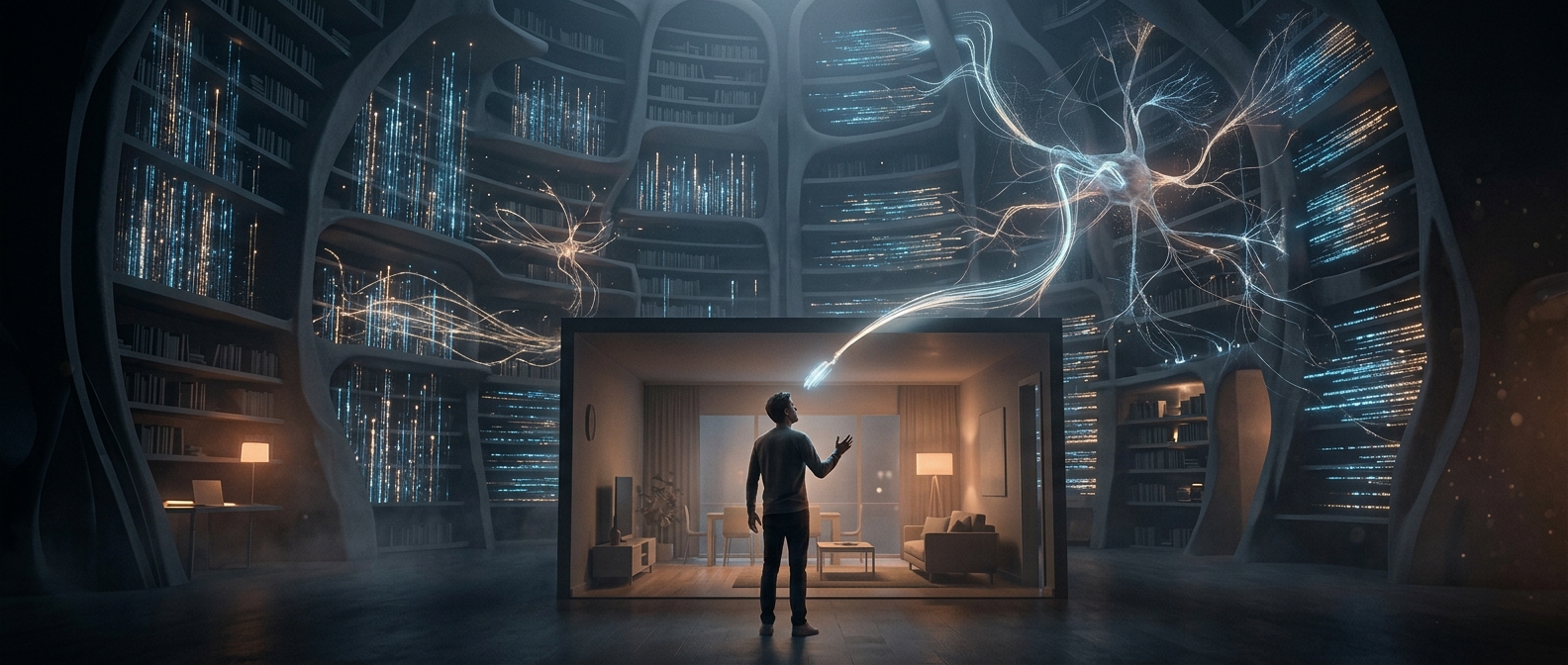
How the brain spends its small power budget
The brain uses about 20 watts of power at rest—a modest amount for an organ that continually processes signals, regulates the body, and supports thought. Most of that energy does not go toward deliberate reasoning. It keeps neurons ready to communicate and helps them restore their electrical balance after sending signals.
Neurons pass information partly by moving charged particles across their membranes. A signal briefly shifts that balance; afterward, cellular pumps use energy to reset it. The brain also spends energy on housekeeping: maintaining cells, processing chemicals that carry messages, and supporting the networks that remain active even when a person is not focused on a task.
A fixed budget, many competing demands
The brain cannot simply power every circuit at full intensity. Its activity is distributed across networks, with different regions becoming more or less engaged as circumstances change. When driving, for example, visual and motor systems help track the road and guide movement, while attention and memory contribute to decisions. The coordination feels effortless partly because many operations run without conscious calculation.
That does not mean every mental task has a separate, sharply defined power switch. Brain activity is ongoing, and demanding work changes patterns of activity rather than turning the whole organ from “off” to “on.” A brief lapse—such as forgetting why you entered a room—can arise because the intended action never became a durable memory, or because attention shifted before it could be stored. It is not a simple sign that the brain ran out of electricity.
Why low wattage is not low capability
Power measures energy used over time, not how much information a system can handle or how intelligently it can use it. The brain’s advantage lies in its densely connected living networks, which process many signals in parallel and adapt through experience. Its small energy demand is impressive precisely because that activity is continuous: even during sleep, the brain must maintain essential functions and keep its cells supplied.
So the useful comparison is not that thought runs on a household bulb’s budget, but that a compact, constantly active organ can coordinate perception, movement, memory, and the body’s vital controls without the energy demands of a room-sized machine.