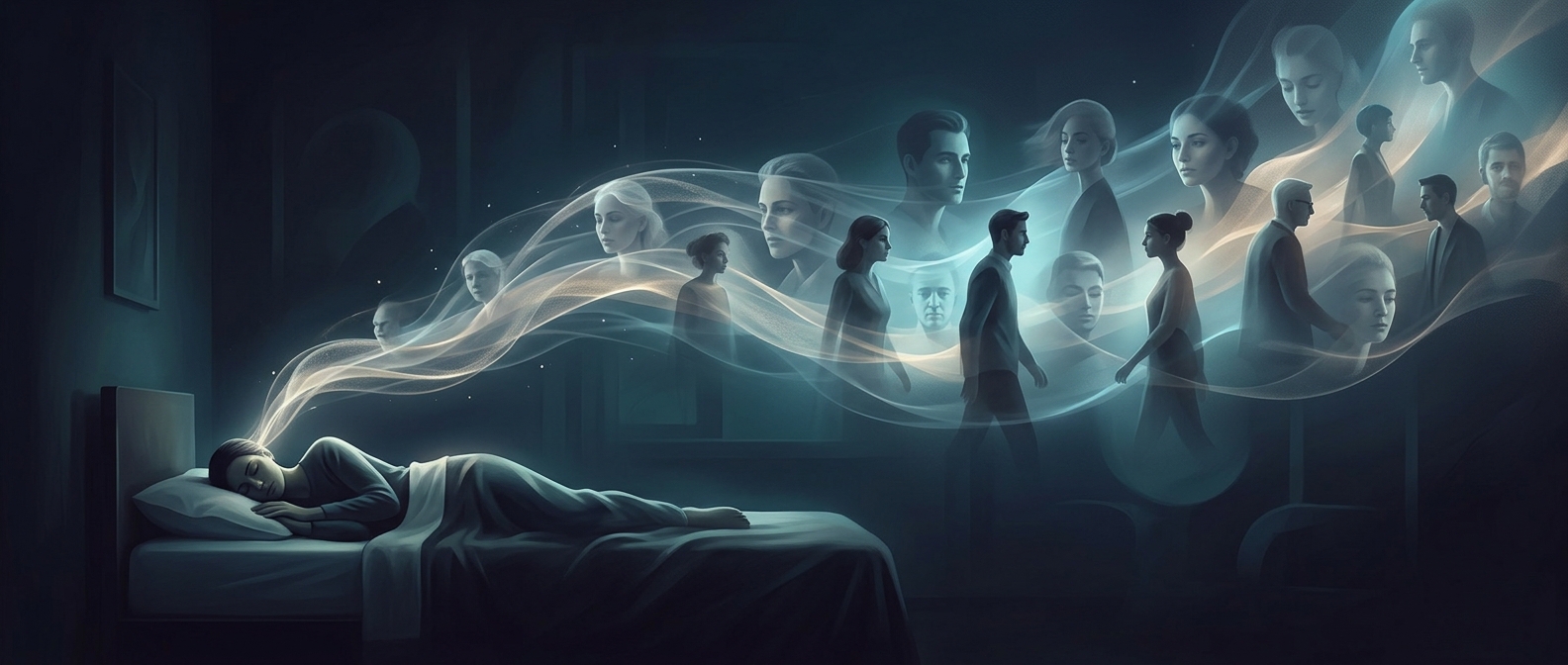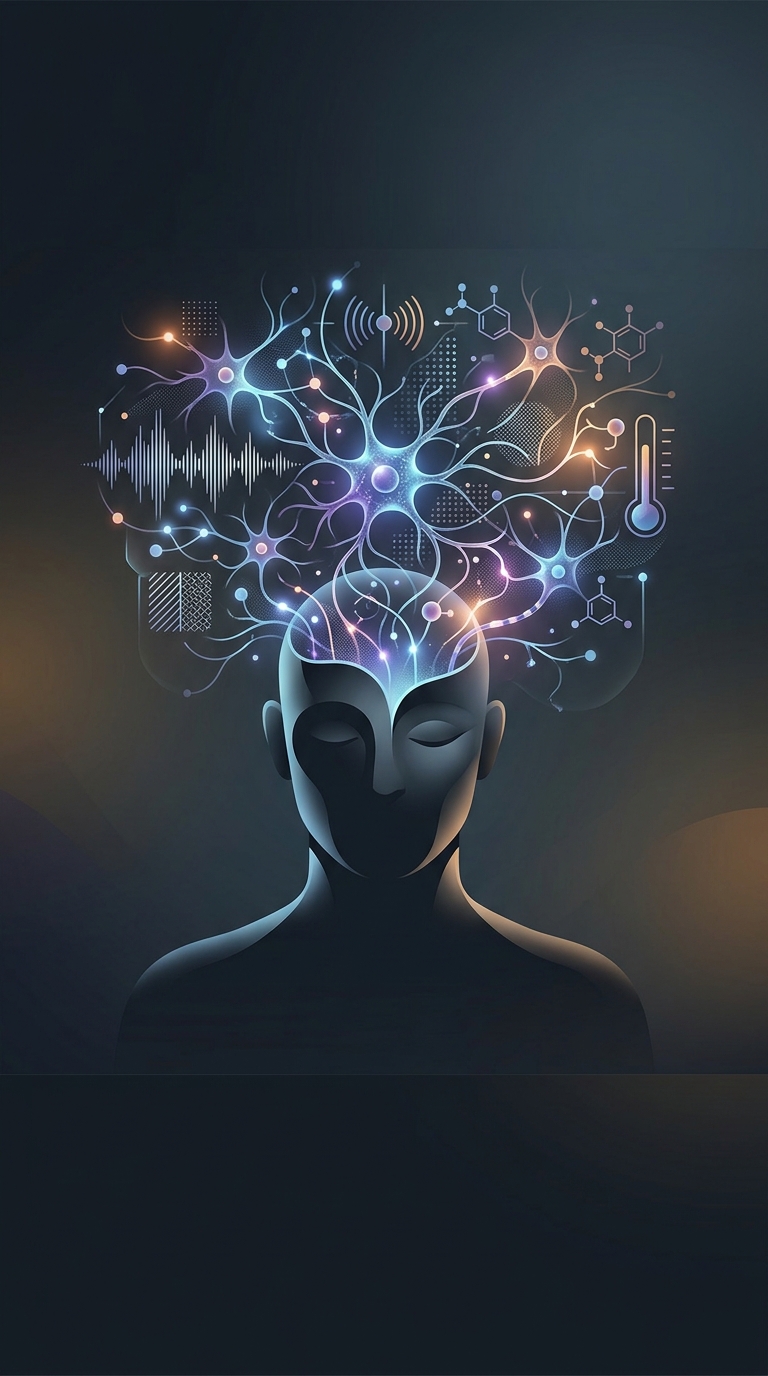
Dreams can be vivid without being visual
People who have been blind since birth usually dream through senses other than sight. A dream may be built from voices, footsteps, touch, smells, tastes, and a strong sense of where people or objects are. Someone might recognize a friend by their voice or navigate a familiar room by its layout, even though the dream contains no picture of it.
That does not make these dreams less vivid. Vividness can come from intense sound, emotion, or movement—not only from color and images. The mix varies from person to person, and blindness does not produce one standard kind of dream.
The brain builds dreams from experience
Dreams draw on the brain’s stored experiences and ways of interpreting the world. A person blind from birth has no visual memories to replay, so dreams generally do not contain visual scenes in the ordinary sense. Instead, the brain can combine familiar sounds, tactile impressions, and spatial knowledge into a dream environment.
Spatial knowledge is the understanding of how places and objects relate—for example, knowing that a doorway is across the room. It can guide a dream’s sense of movement or location without supplying a visual image. The result can feel like being somewhere, even when there is nothing to see.
A different sensory route to a dream
Sight is not required for the brain to make a scene feel real. For someone born blind, a dream’s “setting” may be conveyed by the echo of a hallway, the texture of a surface, or the position of familiar sounds. The dream can have a coherent world without having a visual one.