Why a dream face can feel familiar
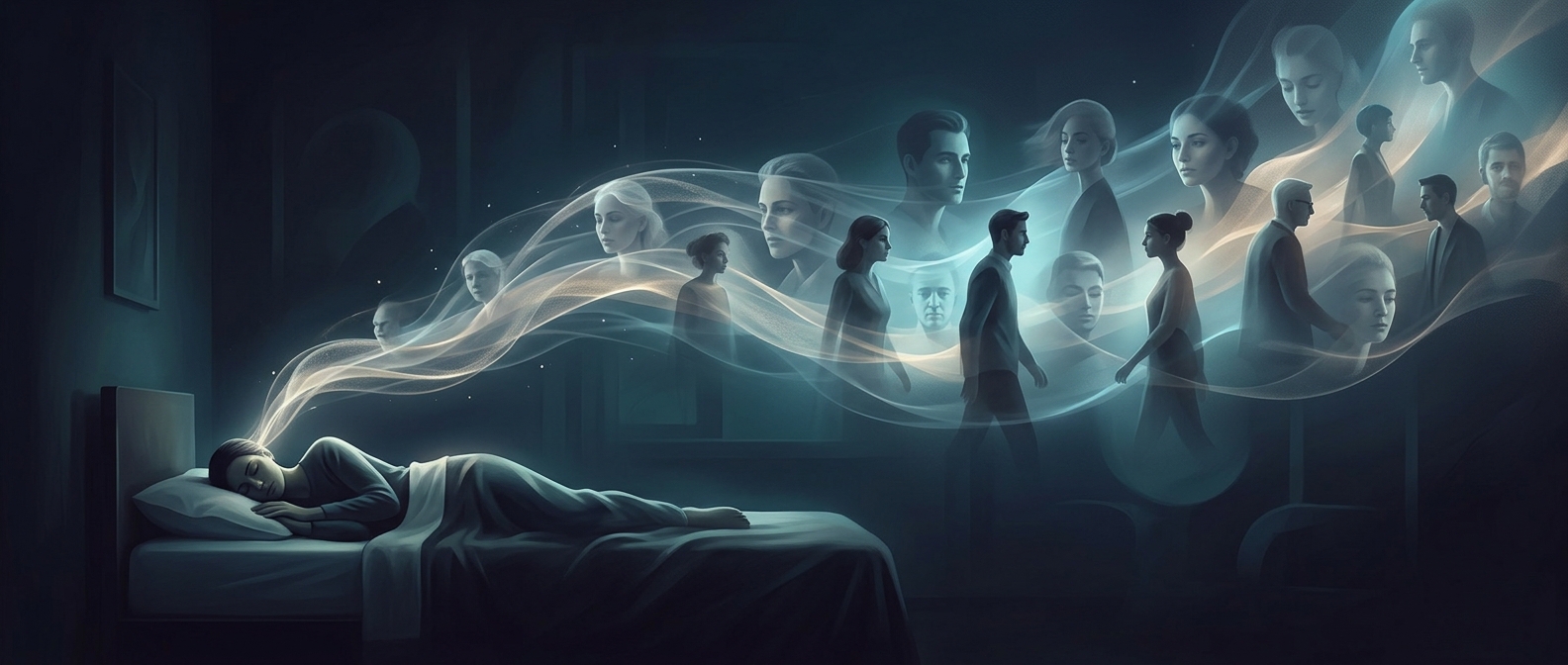
The brain does not switch off its visual memory during sleep. As it builds a dream, it can draw on fragments of faces encountered before—on a bus, in a shop, or in a crowd. Those memories may be too faint to recognize consciously, yet still leave visual traces the dreaming brain can reuse.
That does not mean a dream presents a faithful portrait of one specific stranger. A face can be assembled from features stored across multiple encounters, then altered as the dream changes. The result may feel like a distinct person even when it has no single real-world counterpart.
Memory is raw material, not a photo archive
Remembering a face is a constructive process: the brain rebuilds it from features and impressions rather than retrieving a perfect image. During dreams, that process can be especially loose. A familiar expression might appear on an unfamiliar face; details such as age, hair, or shape can shift without the dream seeming inconsistent.
This helps explain why a dream character can seem recognizable without being identifiable. The sense of familiarity may come from a blend of remembered details, not from a precise match to someone the dreamer once passed.
What the claim can—and cannot—show
People often report faces in dreams that seem new, but there is no reliable way to trace each one back to a particular waking encounter. Dreams can draw on visual memory, but the stronger claim that every face belongs to someone seen in passing is unproven.
A dream face is better understood as evidence that the mind can reuse and reshape visual material—not as a hidden record of every stranger encountered.