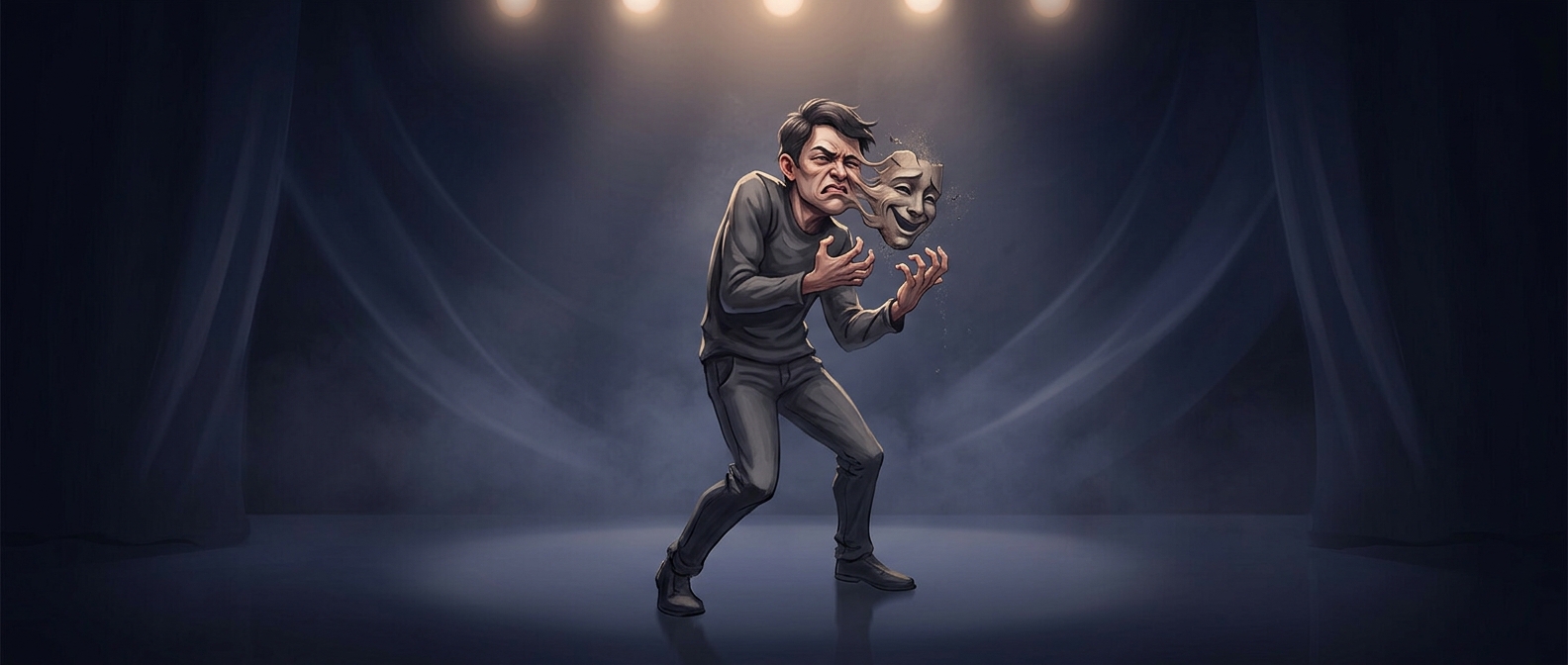
Disgust is more than a facial pose
A convincing expression of disgust has to look like a response to something unpleasant, not simply a set of facial features. The nose may wrinkle, the upper lip lift, and the mouth narrow as the person recoils. These movements fit together because they serve a practical purpose: pulling away from a possible contaminant and limiting contact with its smell or taste.
That purpose links the face to the rest of the reaction. Someone who finds a smell revolting may turn their head, hold their breath, lean away, or hesitate before approaching again. The face is only the most visible part of a broader pattern of attention and movement.
Why a performance can look off
People can deliberately wrinkle their noses or curl their lips. The challenge is coordinating those visible details with the timing and posture of a real reaction. A posed grimace may arrive too neatly, linger too long, or fail to match what the person does with their head and body. A genuine response often unfolds as the unpleasant stimulus is noticed and the person pulls back.
This does not make disgust impossible to fake, or make one facial expression a reliable test of honesty. It means the expression is harder to sell as a complete scene than a smile is: the audience is watching for a recoil, not just a face.