Why a painted face is hard to read
People judge emotion from more than a smile or frown. They also track changing details: the eyes narrowing, the mouth shifting, or one expression giving way to another. These movements help us decide whether a face is genuinely amused, tense, or merely pretending.
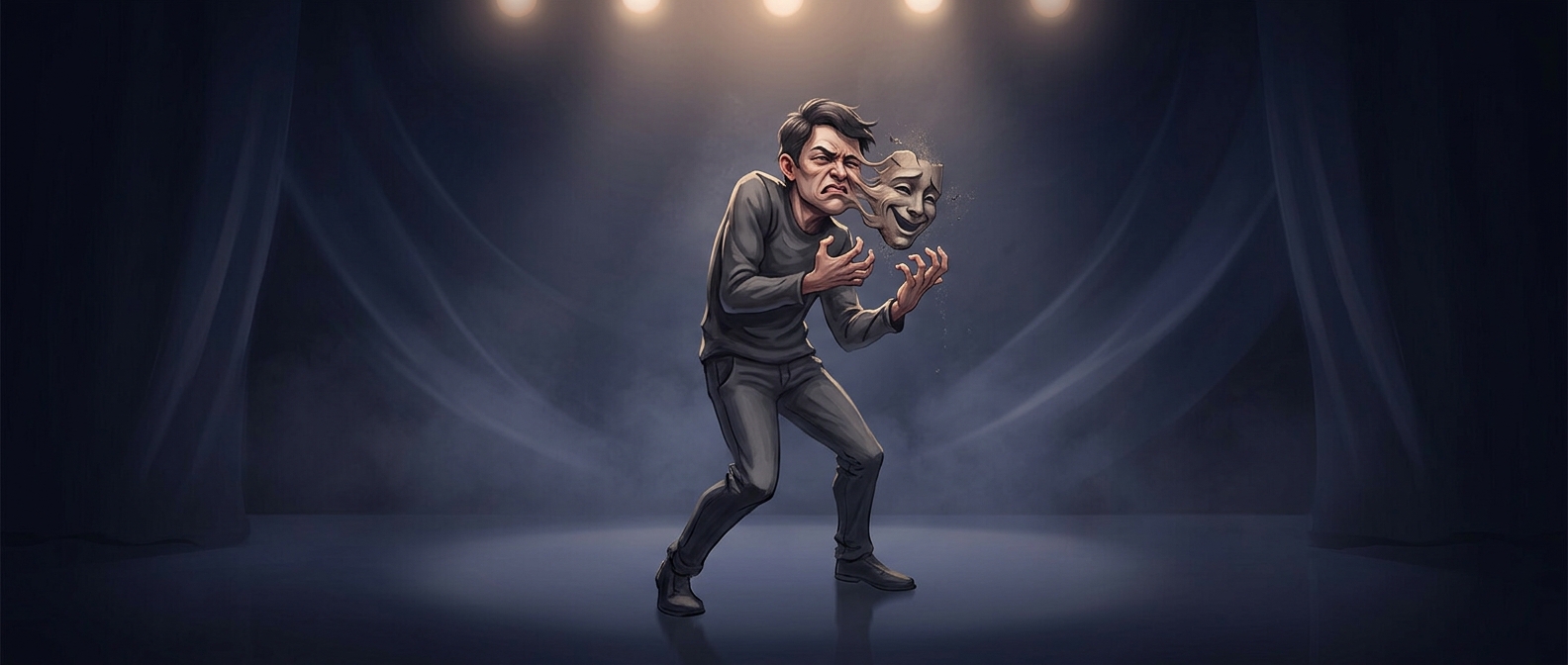
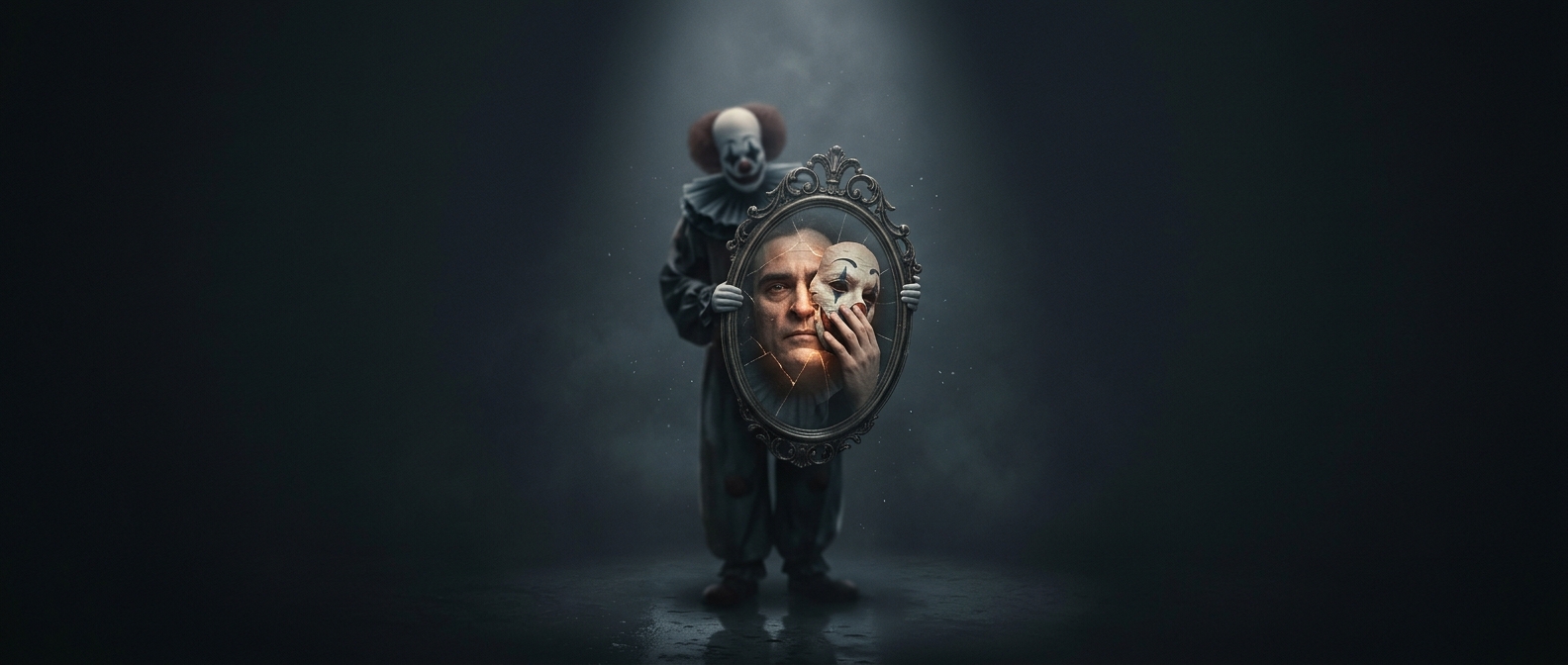
Clown makeup interferes with that reading. Thick color and sharply drawn features create a fixed, exaggerated expression, while the person’s real face continues to move underneath. The painted mouth may stay cheerful even as the eyes or brow signal something else. Instead of clarifying the emotion, the makeup gives the viewer conflicting clues.
Ambiguity keeps attention on the face
When cues disagree, there is no easy interpretation to settle on. A viewer may keep checking the face for a match between its painted expression and its actual movements. That repeated effort can feel uncomfortable: the face looks familiar enough to invite an emotional judgment, but its signals are unusually difficult to trust.
The effect depends partly on context. The same fixed grin can read as playful in a bright circus scene and more disturbing in a quiet, close-up encounter. The unsettling quality comes from the mismatch between a face that seems to announce an emotion and a person whose real feelings remain unreadable.