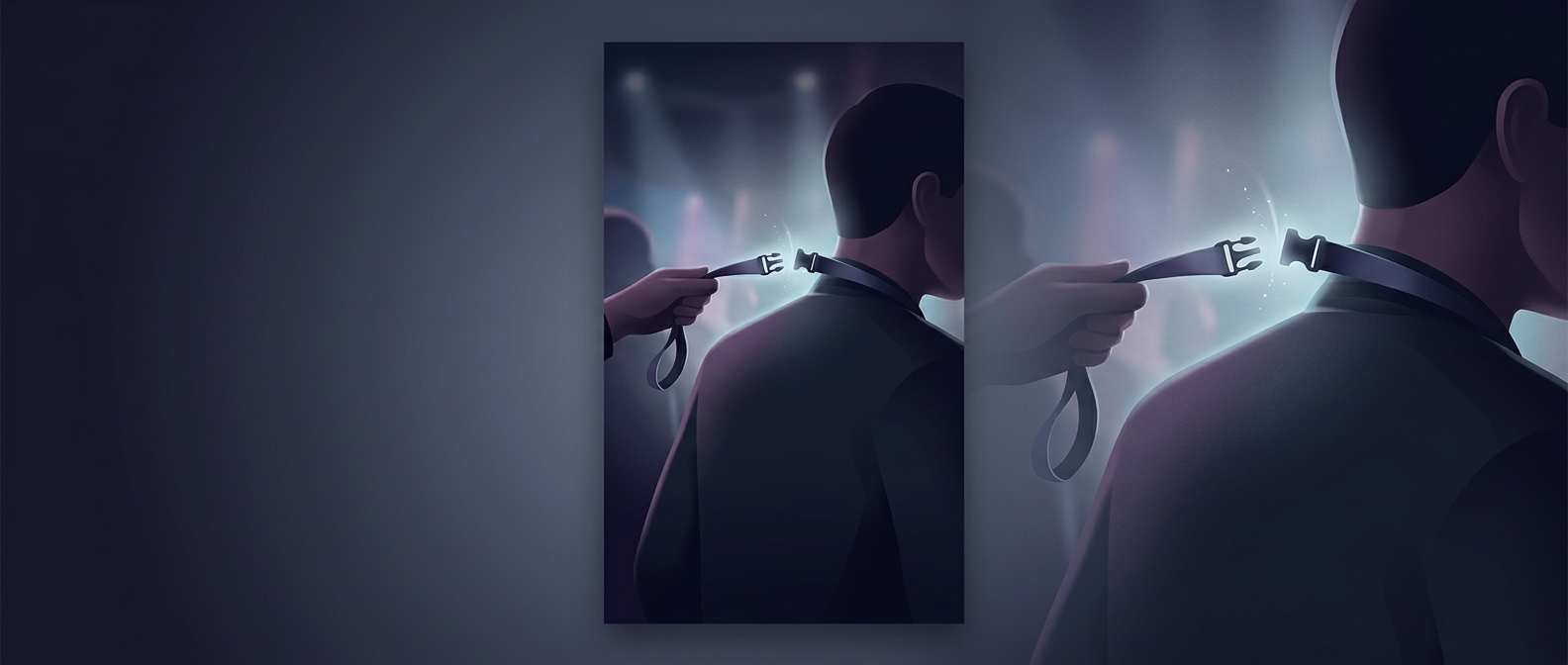
How a Breakaway Lanyard Lets Go
A breakaway clasp is a deliberately weak link in a cord worn around the neck. It is made to separate when the lanyard is pulled hard enough, so the cord can come free instead of continuing to tighten around the wearer. The release point depends on the clasp’s design; it is not meant to detach during ordinary movement, but no clasp can guarantee protection in every situation.
The connector may look like an ordinary buckle, but its two pieces are shaped to snap apart under tension. Once released, the badge or pass drops away with the cord. Many styles can be clicked back together, while others may need replacing if the clasp or cord is damaged.
A Small Tradeoff for Wearable Passes
At events, offices, and other workplaces, lanyards keep identification visible and easy to reach. That convenience also means a loose cord can catch on equipment, a door handle, or another object. A breakaway feature addresses that specific snagging hazard without making the badge disposable or requiring people to carry it in a pocket.
The clasp is one layer of precaution, not a reason to treat a lanyard as snag-proof. Its practical value is that, if a cord does catch, the connection is designed to give way before the wearer has to pull free by force.