A Mask Becomes a Character
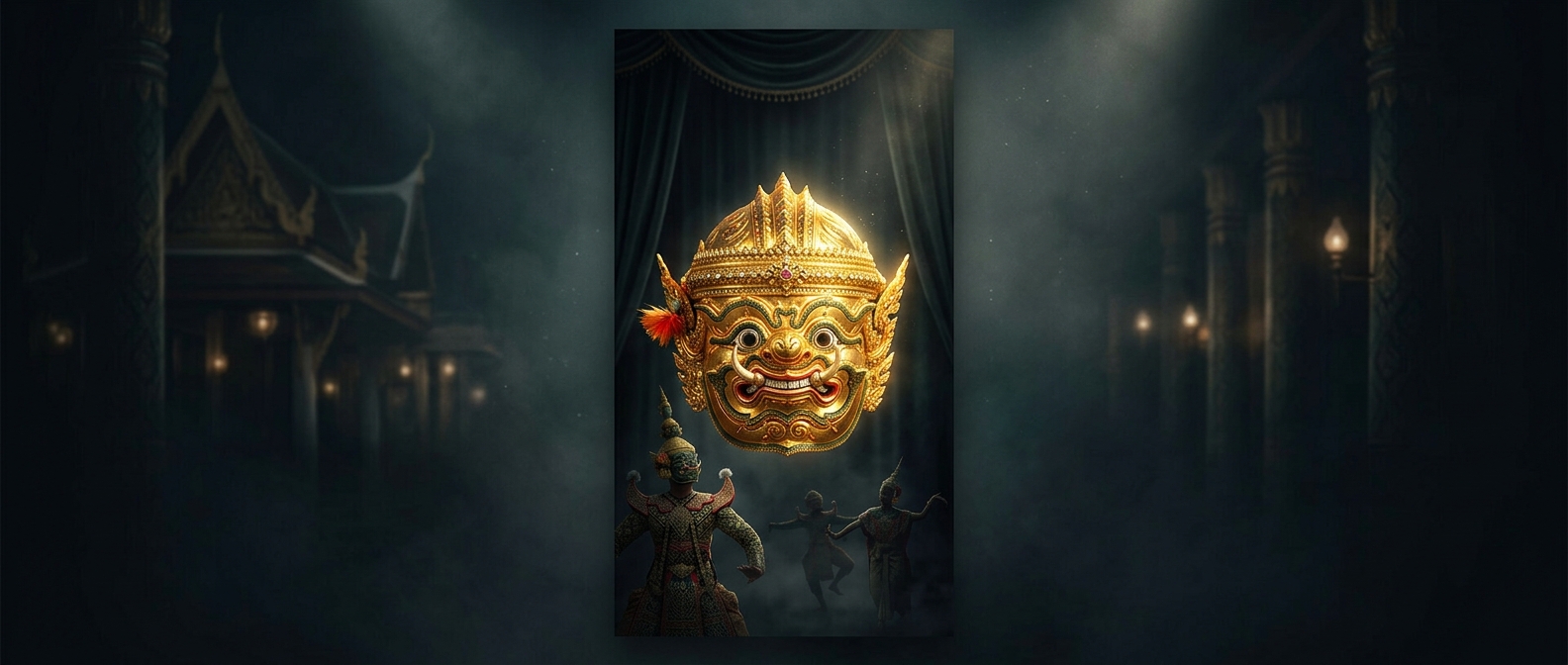
Khon is a Thai classical dance drama, often drawing on the Ramakien, Thailand’s telling of the South Asian epic known as the Ramayana. Its masks do more than decorate the stage: their colors, crowns, and facial features help audiences recognize which kind of character has entered the story. A finely worked mask can mark a divine figure, a monkey warrior, or a demon before the performer takes a step.
Because the mask’s expression stays fixed, it cannot change from a scowl to a smile as a scene unfolds. The performer must make the character’s changing intentions legible in other ways. A turn of the torso, the angle of the head, or a sharply shaped hand can signal pride, fear, anger, or deference. These movements are stylized rather than casual, so audiences learn to read them as part of the performance’s visual language.
Movement Has to Carry the Scene
That design shapes the acting itself. Performers cannot rely on small facial cues, and the mask can limit how freely they turn or look around. Choreography therefore gives gesture and posture a larger share of the storytelling: a held pose can establish authority, while a change in stance can reveal that a character’s resolve has shifted.
The result is a striking division of labor. The mask establishes who the figure is; the performer’s controlled movement shows what that figure is doing and feeling now. In Khon, a character’s face may remain unchanged throughout a scene, yet the body can make that unchanging face seem to command, threaten, or grieve.