A Ruined Tree Became a Hidden Observation Post
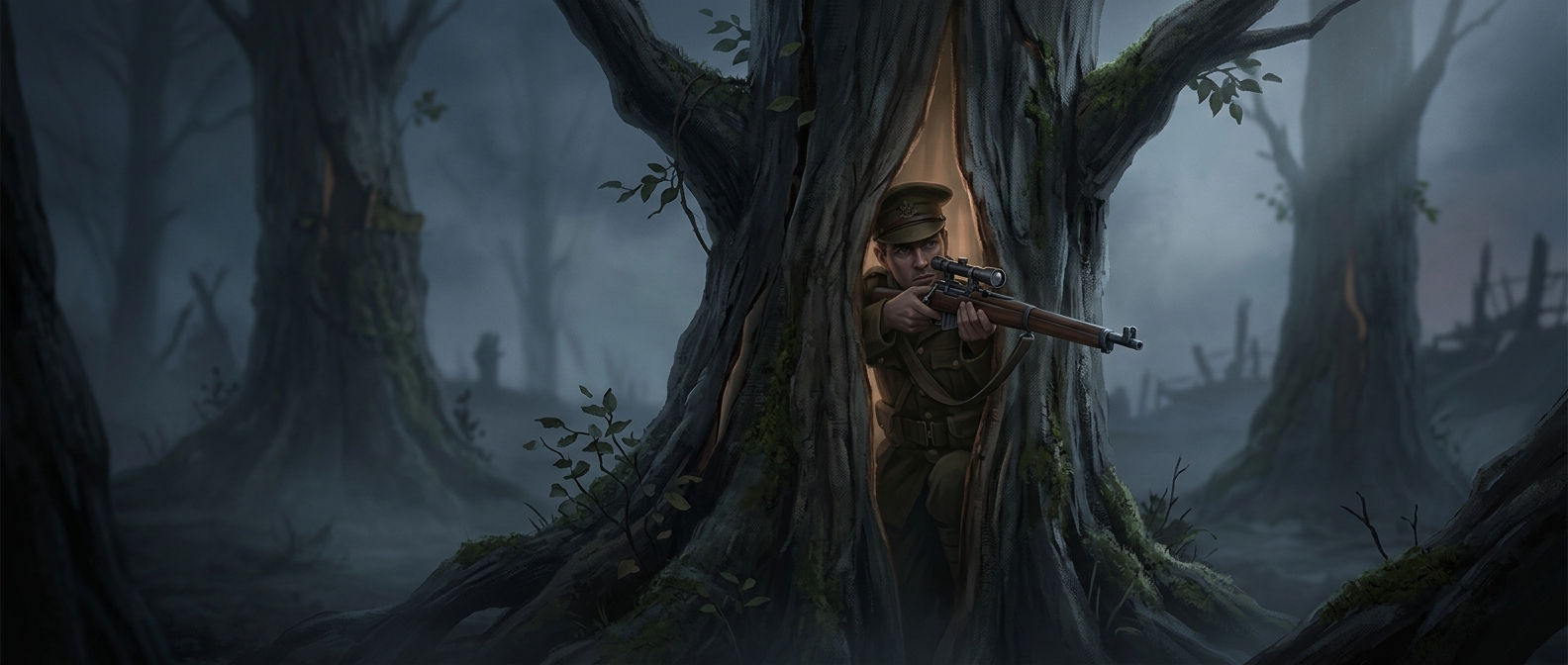
A shell-blasted tree could look like harmless wreckage: its trunk hollowed or splintered, its branches stripped away. In the First World War, British forces turned that appearance into cover. They secretly recorded the shape and position of a real damaged tree, then built a replica from steel and canvas that could pass for the original from a distance.
The disguise depended on a precise swap. Workers prepared the artificial tree behind the lines, matching the outline of the stump and its broken limbs. At night, they removed the real tree and put the replica in its place, when darkness made it harder for enemy observers to notice the change.
A Lookout Inside the Trunk
The replica was more than scenery. Its steel framework provided a protected space for an observation post, while the canvas exterior recreated the battered tree’s silhouette. From inside, a soldier could watch enemy positions through concealed openings without standing exposed in the open.
That vantage point mattered because seeing the battlefield could reveal movement and help direct action, but an observer in an obvious lookout was an easy target. A familiar-looking ruin offered a different kind of protection: the enemy had already seen the tree and had reason to treat it as a lifeless part of the landscape.
Why the Real Tree Had to Go
The trick worked only if the replacement seemed to belong. A newly placed structure might draw attention; a replica occupying the exact spot and shape of a known wreck could be overlooked. The documented tree gave the builders a model, and the nighttime exchange helped preserve the illusion.
Its cleverness lay in making concealment depend on recognition. Rather than hiding the lookout by making it invisible, the British hid it in plain sight as something the enemy believed it had already inspected.