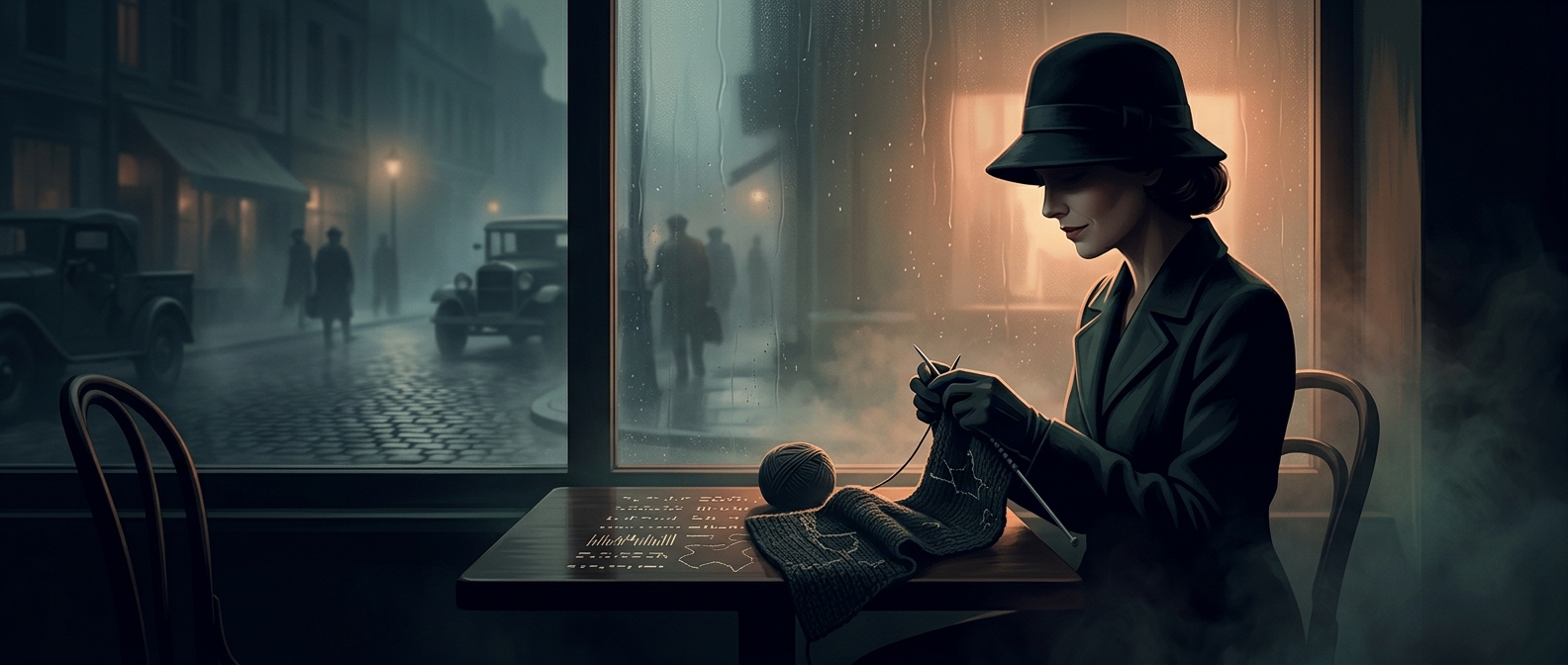
Knitting made observation look ordinary
Near a train station, watching who arrived, when they moved, or which way they went could attract attention. Knitting offered a believable reason to sit nearby and keep looking: the observer appeared absorbed in a familiar, useful task rather than monitoring the station. The work also kept her hands occupied, making prolonged waiting seem natural.
A pattern could carry information
The key was to turn observations into a code. Instead of writing a route down, the spy could represent it through an agreed sequence of stitches or other features of the knitting. To anyone else, the result looked like an ordinary garment; someone who knew the code could read the pattern as intelligence.
The exact code matters: a textile pattern does not explain itself, and it would only communicate useful details if sender and recipient shared a way to interpret it. But the basic advantage was simple—the message traveled in plain sight without looking like a message.
The cover and the courier were one
That disguise solved two problems at once. Knitting gave the spy a reason to remain in place long enough to observe troop movements, then provided a way to carry the resulting information away without an obvious note. The sweater was not merely camouflage for the work; it was also the container for what the work had revealed.