How a Cashew Forms Beneath Its “Apple”
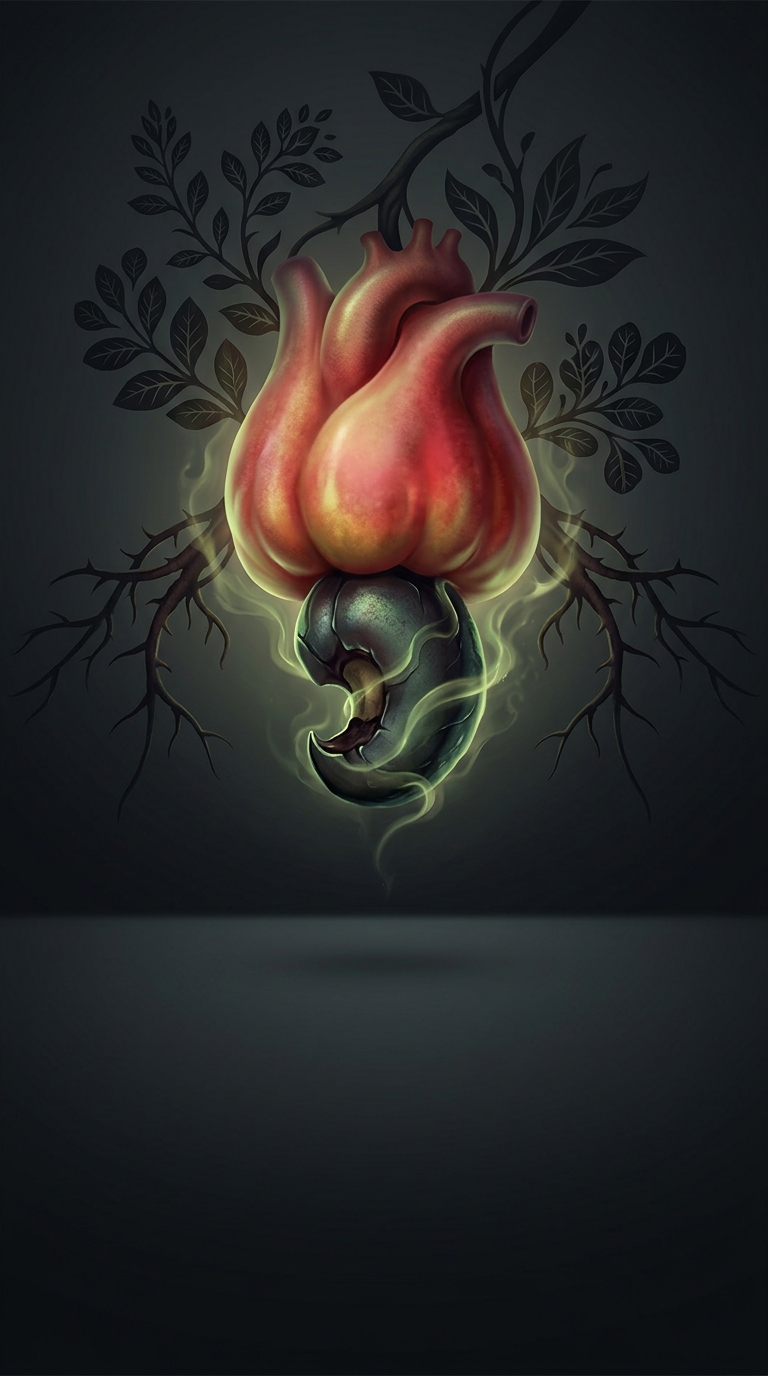
A cashew begins as a flower. After pollination, the flower’s ovary develops into the kidney-shaped fruit we call the cashew nut. At the same time, the stalk below it swells into a fleshy, brightly colored structure called the cashew apple. Botanically, the apple is not the fruit that contains the seed; it is an enlarged flower stalk attached to the actual fruit.
That is why the cashew appears to hang from the apple’s bottom. The hard shell around the edible kernel is the fruit’s outer wall, and the kernel inside is its seed. The two structures develop together, but they have different roles: the stalk becomes soft and juicy, while the fruit forms a protective shell around the seed.
Why the Shell Changes How Cashews Are Prepared
The shell contains an irritating oil, so a raw, unshelled cashew is not ready to eat like a raw almond. Processing has to separate the kernel from the shell while limiting contact with the oil. Heat is commonly used to make shelling safer and easier, though the exact method varies. The kernel is then removed and may be dried or roasted before it is sold.
This makes the familiar word “raw” a little misleading on a cashew package: it generally describes the kernel’s finished preparation, not a nut that was simply picked and eaten straight from its shell. The shell is part of the fruit’s protection, but it is also the reason cashews require careful processing.
The Apple Has Its Own Fate
The cashew apple is edible, but it bruises and spoils quickly, making it harder to transport than the durable seed. In regions where cashews are grown, it may be eaten fresh or used for drinks and other foods. Far from the harvest, however, shoppers are much more likely to encounter the kernel than the vivid stalk it grew beneath.