When a face had to become a voice
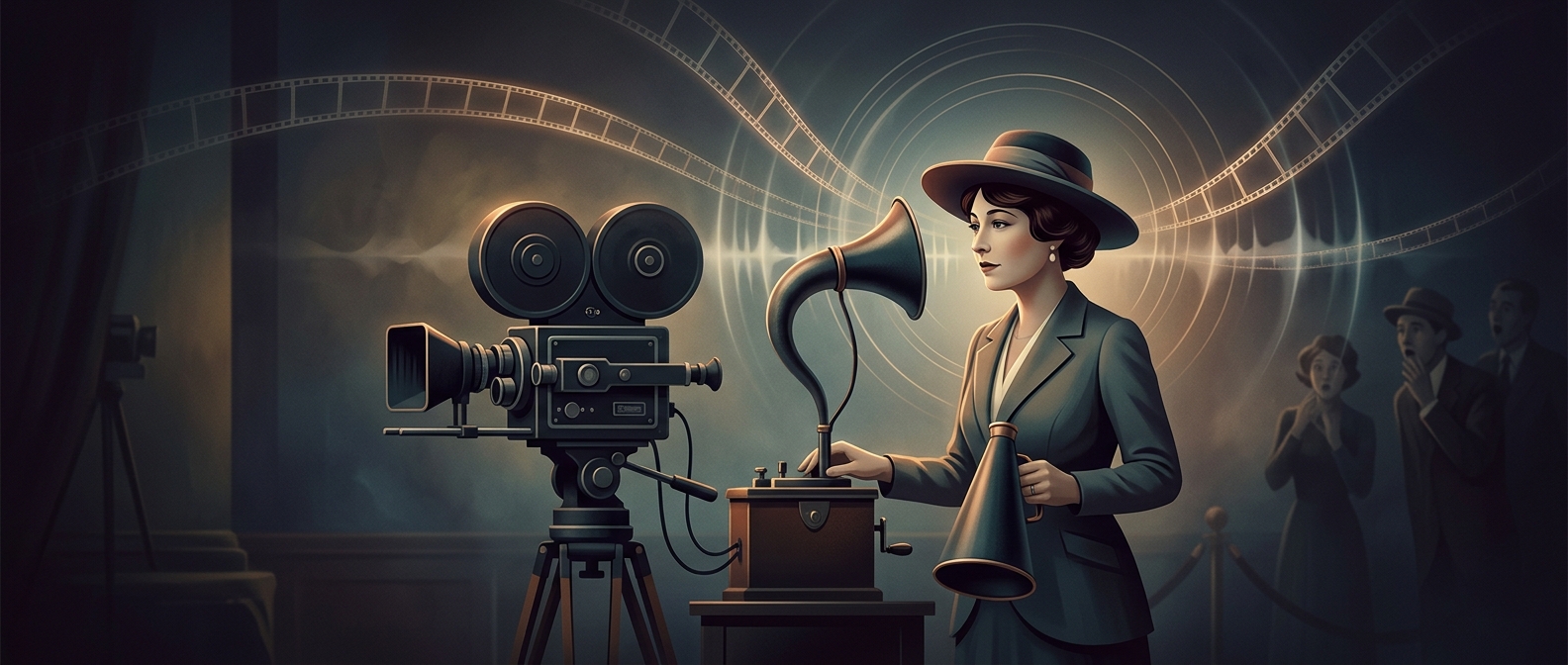
In silent films, a performer could build emotion through gesture, facial expression, and movement. Dialogue appeared on title cards, so audiences never had to judge whether an actor’s spoken words were clear or compelling. Synchronized sound changed that test: a star’s voice became part of the performance, and it had to carry the character as convincingly as the face did.
What elocution could prepare her for
Elocution is the practice of speaking clearly and expressively. Lessons can train a performer to shape sounds, control pace, and make words understandable—skills that matter when recorded dialogue, rather than a title card, delivers a scene’s meaning. The challenge was not simply to have a pleasing voice. Speech had to feel natural while remaining clear enough for an audience to follow.
For Bessie Love, preparing before the change gave her time to develop a skill silent-film work had not demanded in the same way. It did not guarantee that every established star would adapt: audiences and filmmakers now had another quality to assess. But it offered a practical way to meet the new medium on its own terms.
A career through a change in medium
The transition to talkies made an actor’s voice newly consequential, and Love’s preparation helped her continue working as films changed. Her example shows how a shift in technology can alter the definition of talent: a performer known through images had to become audible, too.