The soundtrack lived on a separate machine
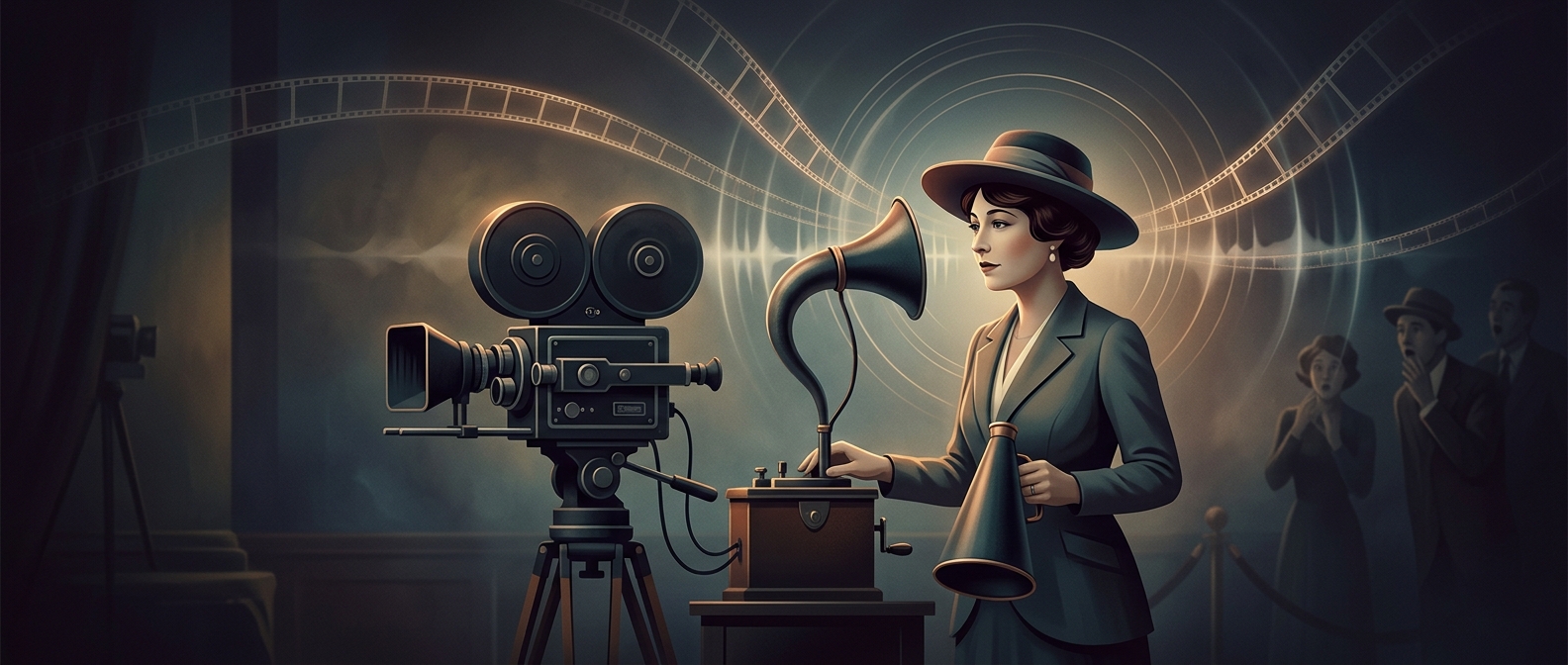
The Chronophone paired a film projector with a phonograph: the picture ran through one device while a disc played through another. The challenge was keeping them together. If the record started late, or the two machines drifted out of step, a singer’s mouth would no longer match the voice. The system was designed to coordinate their operation, but it still depended on careful setup and playback.
That arrangement shaped the films Alice Guy-Blaché made for Gaumont. A performer could sing or deliver comic lines for the camera while a recording supplied the sound in the theater. These were not silent scenes with live voices added spontaneously; they were performances built around a prepared recording, with timing and gestures planned to fit it.
A vivid effect, with a fragile chain
The format let audiences see a face and hear its voice together at a time when most motion pictures were shown without synchronized recorded sound. But every screening required both the film and its matching disc, played in coordination. A scratched record, a misplaced pairing, or a timing slip could disrupt the illusion. Sound-on-disc made synchronized movies possible, yet it also made them more complicated to exhibit than a film alone.
The key innovation was not simply putting music beside moving images. It was organizing a performance so that a recorded voice could seem to come from the person on screen—a small theatrical illusion that depended on two machines staying in time.