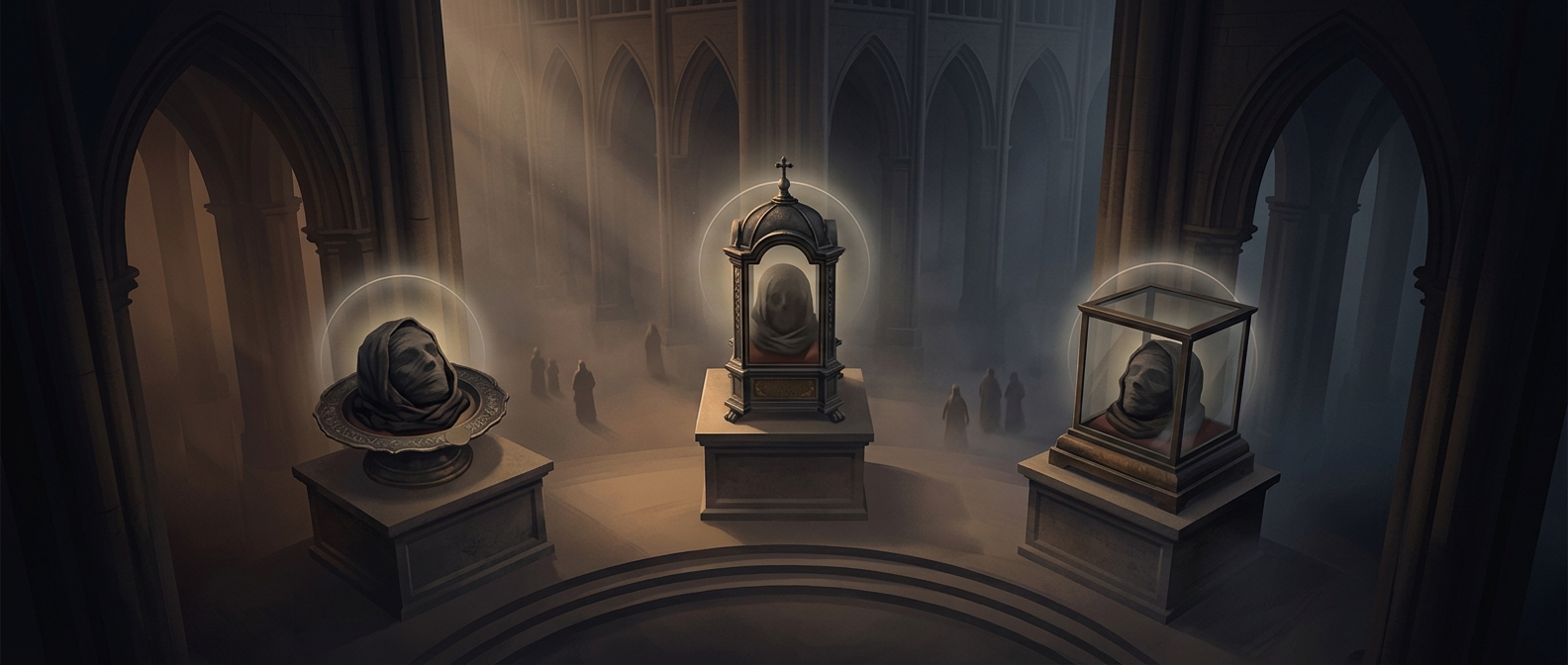
How One Saint Acquired Several “Heads”
The claims are not necessarily stories of three complete skulls being found at once. Relics—the physical remains or objects associated with a holy person—were often divided, moved, and enshrined in different places. A fragment could be honored as part of a saint’s body, while a shrine’s tradition might identify a skull or head relic as the saint’s own.
Among the best-known claims are those associated with Amiens Cathedral in France, San Silvestro in Capite in Rome, and the Umayyad Mosque in Damascus. Each has its own history and devotional setting; the existence of several claims reflects how relics circulated and acquired local significance, not a single agreed account of where John the Baptist’s remains went.
What a Relic Meant to Its Keepers
For medieval Christians, a relic was more than a historical curiosity. It made a holy figure’s presence tangible: pilgrims could travel to a shrine, see the object, pray nearby, and connect a distant biblical story to a particular community. Possessing a revered relic could also make a church an important destination and give its city religious prestige.
That meaning helps explain why competing traditions could endure. A shrine’s claim was carried by local worship and inherited accounts, even when other places preserved their own claims. The skulls themselves cannot establish their identities merely by being displayed, and the surviving traditions do not settle the matter for modern historians.
The striking result is that a single biblical execution became attached to several places on the map. Each shrine preserves not only a claim about John’s remains, but also a record of how communities made sacred history present in their own churches and cities.