The Grail in Chrétien’s unfinished romance
In Chrétien de Troyes’s Perceval, the graal appears during a mysterious procession at the castle of the wounded Fisher King. A young woman carries it past Perceval, and a single consecrated wafer—a small piece of bread used in the Christian Eucharist—is inside. The wafer is brought to the king’s father, who is being kept alive by it.
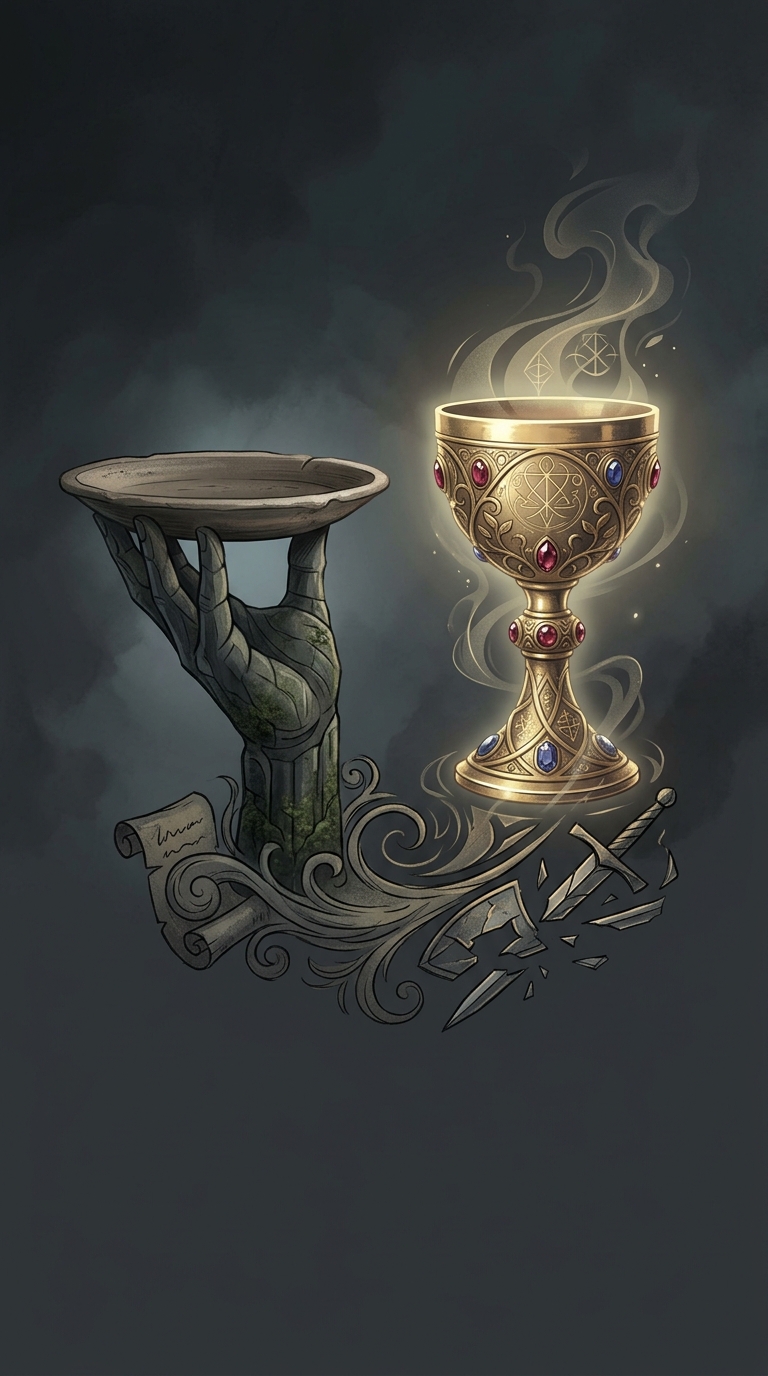
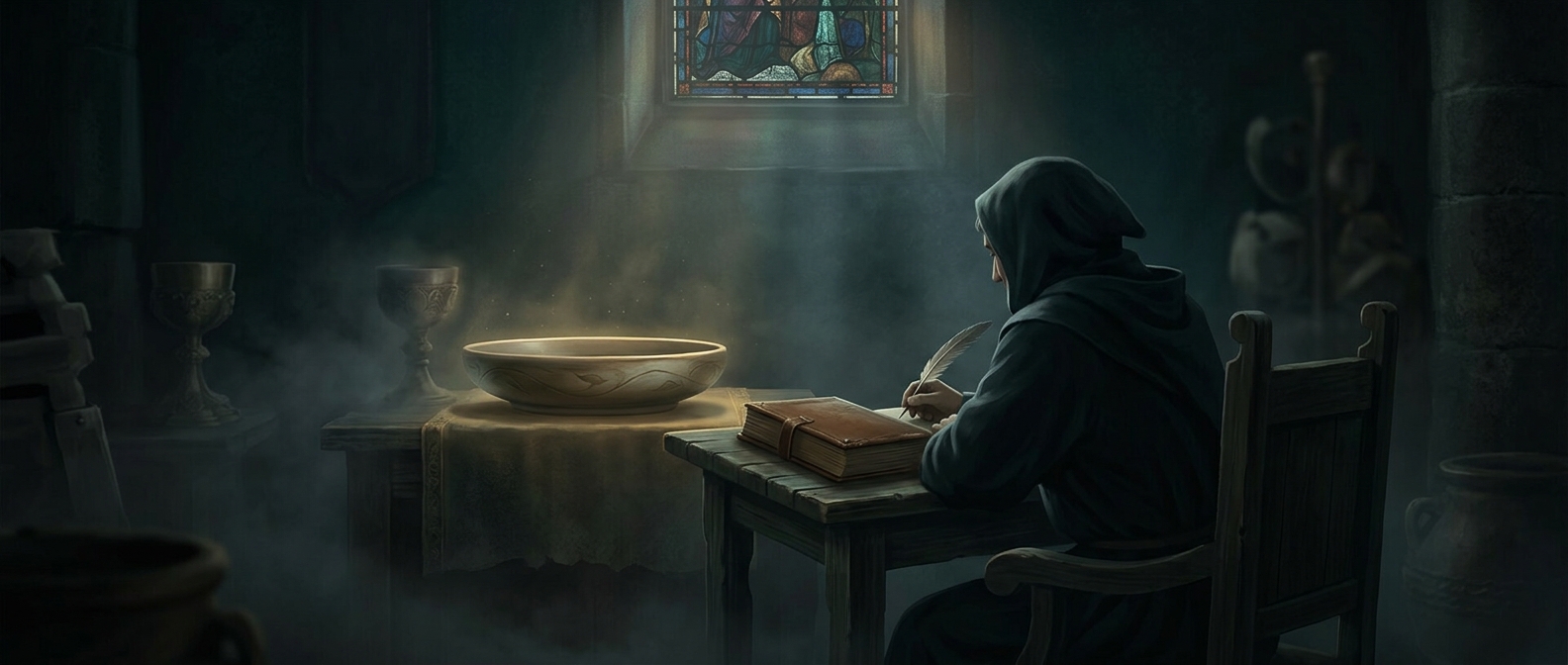
The scene makes the object important, but Chrétien never explains its full significance. The Old French word graal referred to a kind of serving vessel, and the poem’s description suggests a broad, fairly deep dish rather than the familiar drinking cup. Its power in the story comes less from its shape than from the strange ritual around it and the question Perceval fails to ask.
How a serving vessel became a sacred relic
Chrétien’s poem was left unfinished, leaving later writers room to continue the story and explain the graal. In subsequent medieval romances, it became more explicitly Christian: writers connected it with the cup used at the Last Supper and with Joseph of Arimathea, who was said to have carried it to Britain. That tradition helped establish the Grail as a sacred relic and, eventually, as the object sought by Arthurian knights.
The change reshaped the story’s central mystery. In Chrétien, the graal belongs to an enigmatic scene whose meaning Perceval must learn to understand; in later versions, it has a clearer sacred identity and history. A vessel carried through a castle procession thus became one of medieval literature’s most enduring symbols of spiritual quest.