A ski cabin shaped by the factory
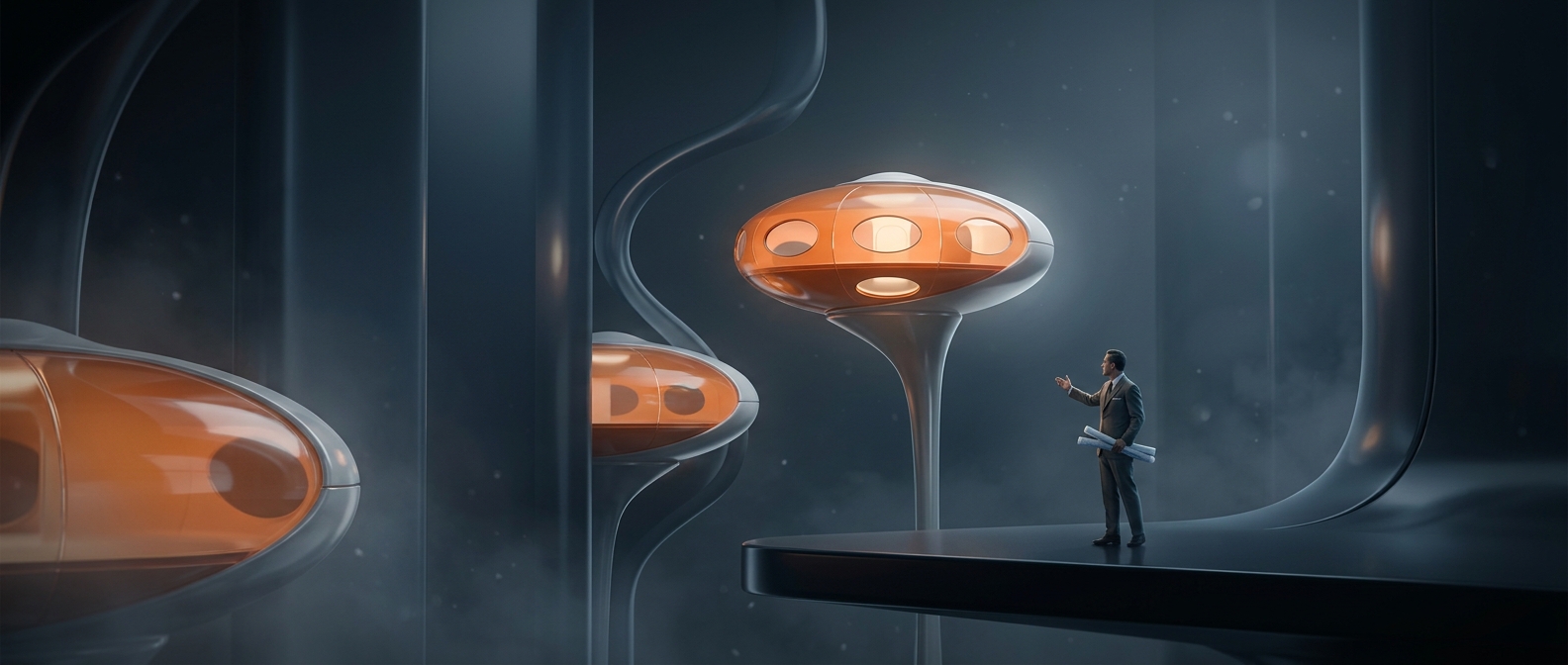
Matti Suuronen’s Futuro was conceived as a small retreat that could be made in a factory and set down where a conventional building was awkward to construct. Its rounded shell was formed from fiberglass-reinforced plastic—a lightweight material made by embedding glass fibers in resin—rather than from the timber and masonry used in ordinary cabins.
The shell’s saucer shape was more than a visual gimmick. It enclosed a compact interior with relatively little exterior surface for its usable space, while the lightweight components made the cabin easier to transport and assemble at a remote site. That suited the original purpose: a getaway near ski slopes, where access and construction could be difficult.
The oil shock changed the calculation
The same material choice that made the design distinctive also tied its economics to petroleum. The resin used in plastic products depended on oil-derived chemicals, so the 1973 oil crisis affected more than fuel: it made key materials costlier and less predictable. A cabin that relied on molded plastic could not compete as easily when that input became expensive.
This was a problem of scale as much as appearance. Futuro needed specialized molds and manufacturing, while conventional cabins could be built with familiar materials and methods. When the price advantage of a lightweight prefabricated shell weakened, the unusual production system became harder to justify.
The result was a striking design with limited practical reach. Its surviving cabins show how a building can be engineered around one promising material—and how quickly a change in the material’s supply and cost can turn that promise into a luxury.