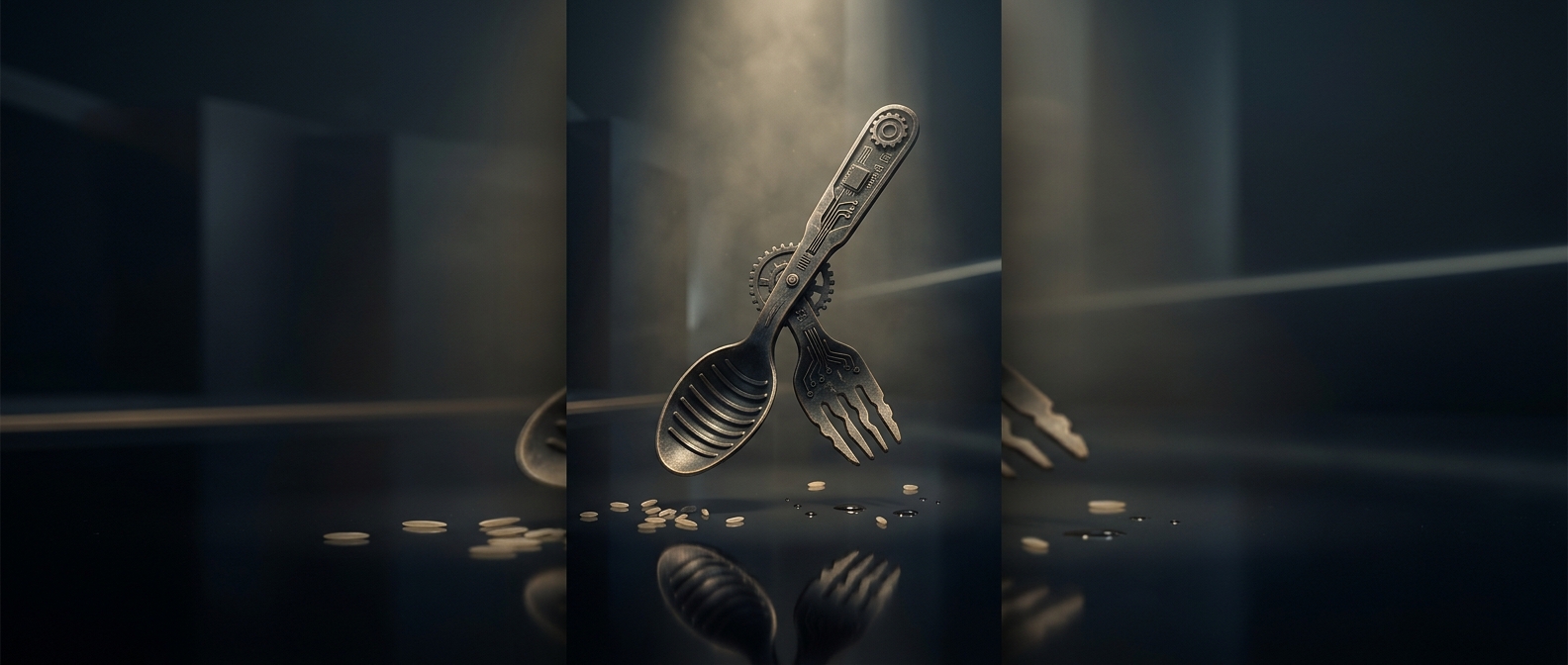
Why a Spoon-Fork Hybrid Has a Narrow Sweet Spot
A spoon and a fork solve different problems. A spoon’s curved bowl holds liquid; a fork’s separated tines slip between pieces of food and grip them. Combining the two means sharing one small working end between shapes that favor opposite tasks.
The design has to divide its surface: add more bowl and the tines become less useful; make the tines longer and more prominent, and the utensil holds less liquid. That tradeoff is built into the geometry, not simply a matter of poor workmanship.
Useful When One Tool Is Better Than Two
The hybrid works best when a meal calls for both actions only lightly—for example, picking up soft food and scooping up small amounts of sauce. It is also practical when carrying or washing separate utensils is inconvenient. But when a task demands a deep scoop or a firm grip, the specialized tool has the advantage because its shape can be optimized for that job.
That makes the utensil less a universal replacement than a compact compromise: handy across a mixed meal, but most effective when neither soup nor salad is the main challenge.