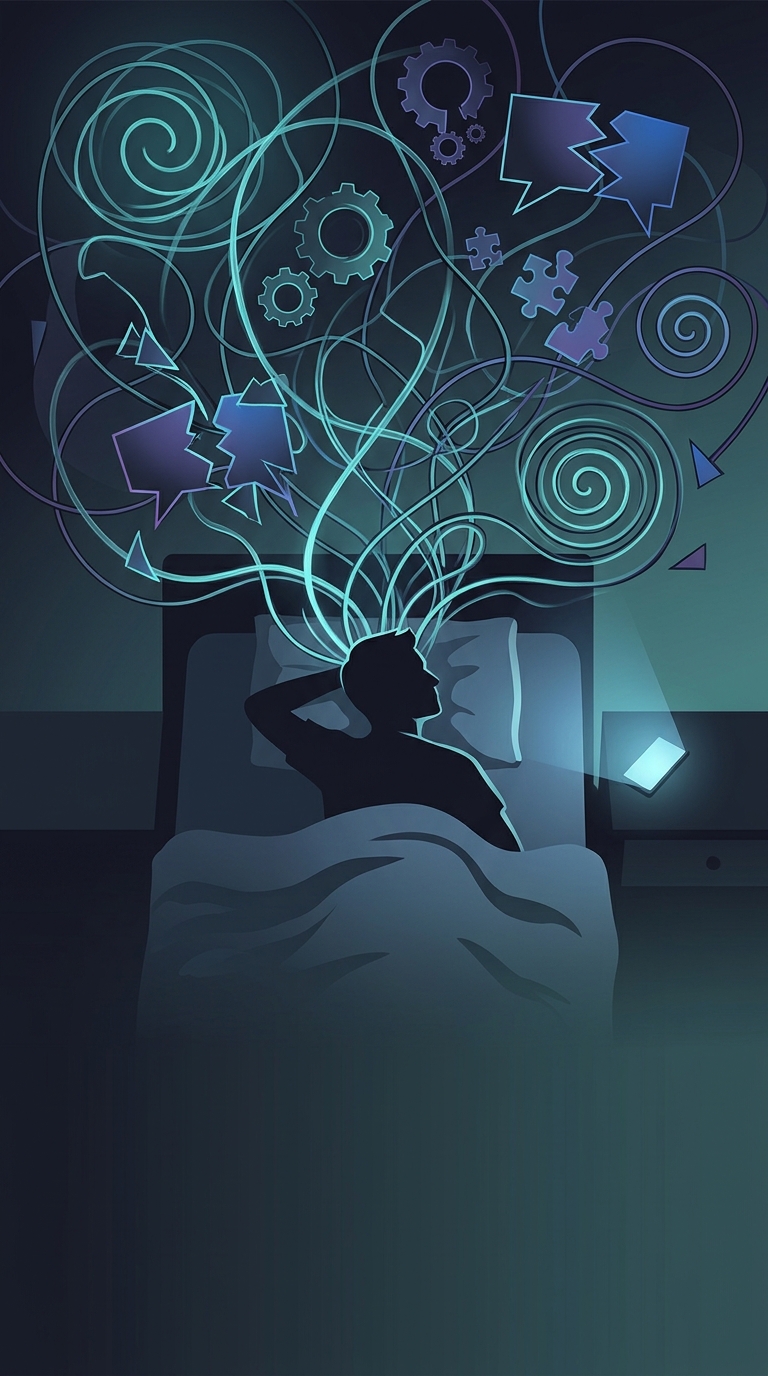
How attention can turn a heartbeat into an alarm
Your brain does not simply receive a heartbeat like a neutral signal. It continually interprets sensations from inside the body—an ability called interoception. When a beat feels unusually strong or fast, the mind tries to explain why. If it settles on “something is wrong,” that interpretation can make the sensation feel more threatening.
The feedback loop
A frightening interpretation activates the body’s stress response. Stress hormones prepare you to act, and the heart may beat faster or harder. That change gives your attention something new to detect, which can seem to confirm the original fear. The cycle can run quickly: sensation, danger interpretation, arousal, stronger sensation.
Attention matters because a heartbeat that might otherwise fade into the background can become the focus of repeated checking. Each check keeps the signal prominent, while uncertainty about what it means encourages more checking. The sensation is real; the conclusion that it signals immediate danger does not automatically follow from it.
Why the sensation can feel so convincing
The loop is persuasive because the body’s response and the mind’s fear arrive together. A racing heart is both a result of alarm and, when noticed, a possible trigger for more alarm. Recognizing that two-way link can help explain why panic may intensify even when no new external threat has appeared: the body’s echo can be mistaken for fresh evidence.