Why an unfinished problem keeps resurfacing at night
An unresolved argument or half-finished task can feel mentally louder than something already settled. One reason is that your mind is still tracking what remains to be done: apologize, get an answer, send the message, finish the report. The situation has no clear ending, so it stays available for attention and planning.
Psychologists often connect this pattern to the Zeigarnik effect, the tendency for interrupted or incomplete tasks to be more memorable than completed ones. It is not a rule that every unfinished task will dominate your thoughts. But when something matters, your brain may keep bringing it back because it has not yet registered a clear stopping point.
Why the thoughts get louder at 2 a.m.
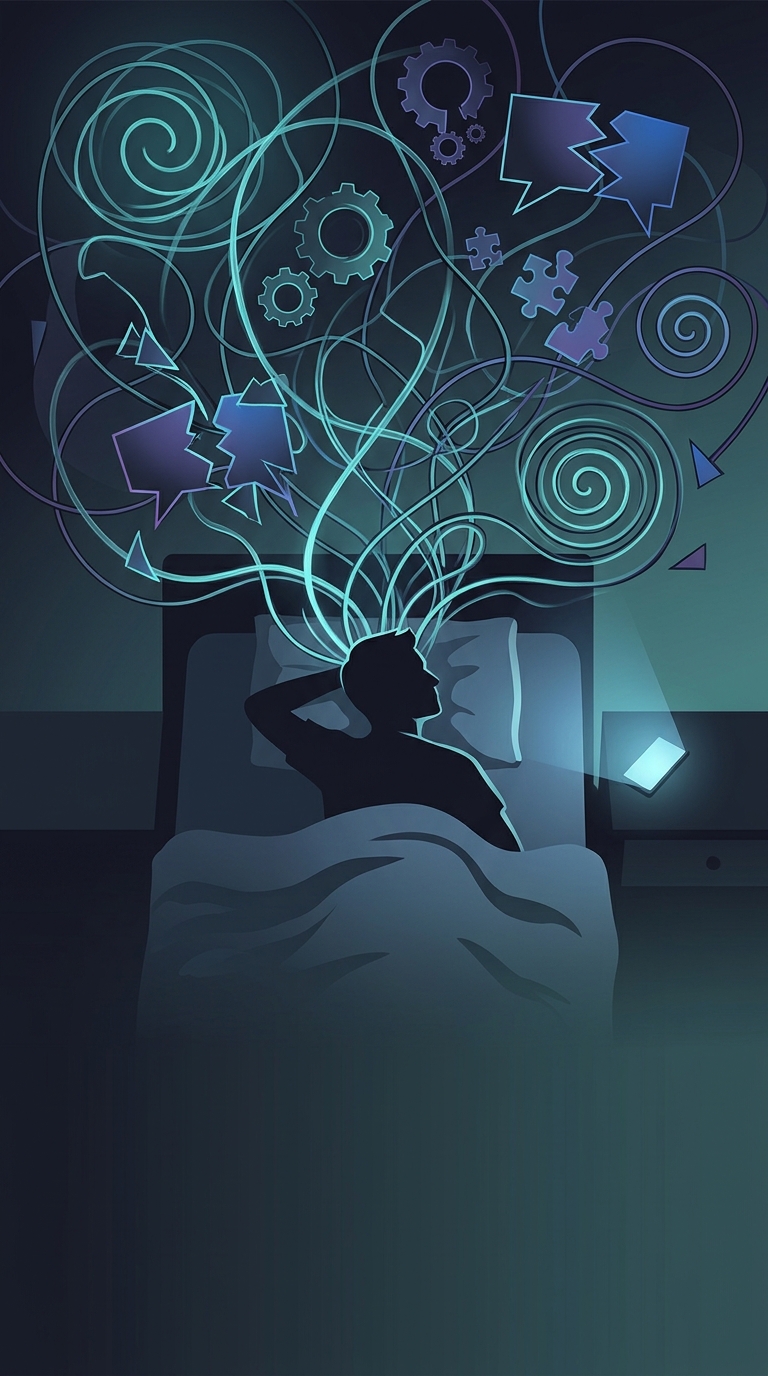
During the day, conversations, chores, and incoming messages compete for attention. At night, those distractions fall away. A worry that was easy to postpone can become the most prominent item left in your mind. And because sleep offers little opportunity to act—no useful conversation to have, no email to send—the brain can cycle through the problem without moving it forward.
Arguments are especially sticky because they combine an unfinished outcome with uncertainty about another person: what they meant, how they feel, and what might happen next. Replaying the exchange can feel like problem-solving, but repeating the same possibilities is not the same as reaching a decision.
Give the open loop a next step
A practical way to quiet an unfinished task is to make its next action concrete. Write down what needs doing and when you will do it; for an argument, that might mean noting one question to raise tomorrow. This does not resolve the conflict, but it gives your mind a plan to return to instead of requiring it to keep rehearsing the whole situation.
The useful distinction is between unfinished and unplanned. A task can remain open while no longer needing to occupy every quiet moment, if you have recorded a realistic next step.