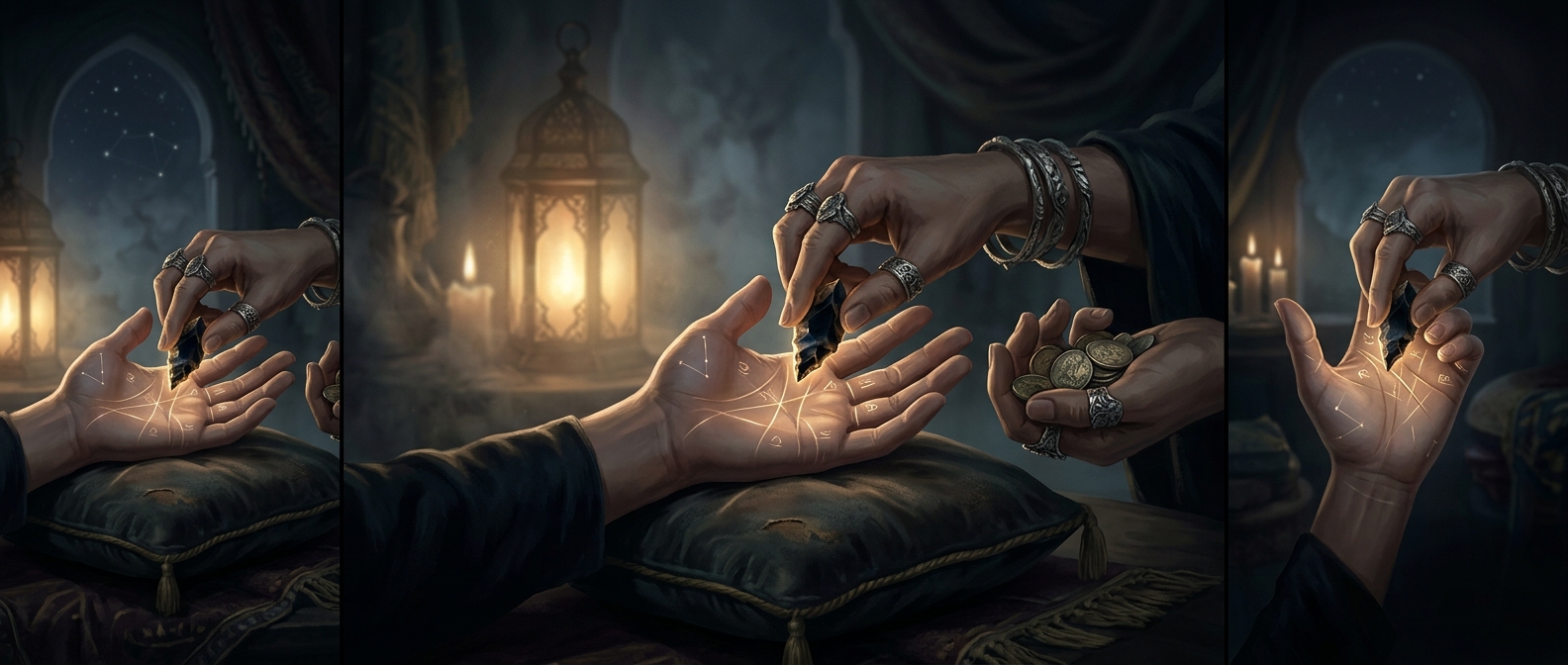
A Hand Meant to Turn Harm Away
The Hamsa is more than a hand-shaped charm: it gives a visible form to the hope that misfortune can be kept at a distance. In traditions that use it, the “evil eye” is the harmful influence thought to come from another person’s envy or ill will. The symbol is worn or displayed as protection, not because its shape has a universally fixed meaning, but because people have used it to make protection tangible in daily life.
The name hamsa comes from a word for “five,” referring to the hand’s five fingers. Some versions place an eye in the palm, joining two protective signs: the hand as a barrier and the eye as a watchful counter to harmful attention.
Shared Shape, Different Traditions
The symbol appears in both Jewish and Muslim communities, with meanings shaped by local practice. It may be called the Hand of Miriam in Jewish contexts or the Hand of Fatima in Muslim ones; those names connect it to revered women in each tradition. These associations are not identical everywhere, and the Hamsa is also part of a wider history of protective hand symbols across the Middle East and Mediterranean.
That flexibility helps explain why the same outline can feel at home in a doorway, on jewelry, or in a decorative object. For one person it may express religious tradition; for another, family inheritance or a general wish for safety. Its enduring appeal lies in making an invisible concern—the fear of envy or bad fortune—something people can carry or place at the threshold.