The air pressure does the pushing
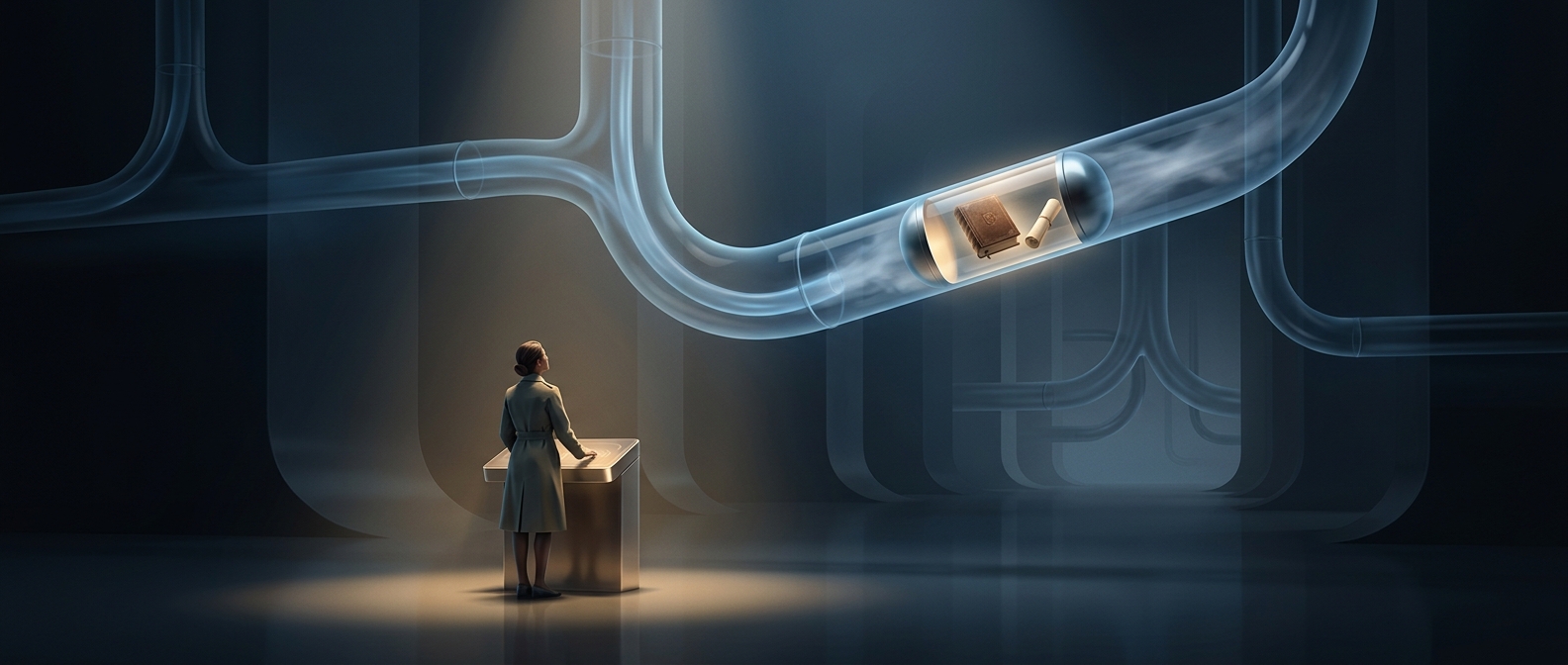
A pneumatic tube moves a capsule by creating a pressure difference across it. At the receiving end, a fan removes some air from the tube. The pressure behind the capsule remains higher, so air pushes the capsule toward the lower-pressure end.
That distinction matters: the fan does not need to grab or pull the capsule. It changes the conditions around it, and the surrounding air supplies the force. The tube’s seal helps preserve that pressure difference long enough to move the carrier.
A small pressure gap can move a solid load
The capsule fits closely enough inside the tube for the air to push on its rear, while still leaving room to travel. As the fan continues lowering pressure ahead, the capsule moves along the route. Its speed depends on the pressure difference and on resistance from the tube and air; the system has to control the trip so the carrier can arrive without striking the end too hard.
The same principle can send a capsule in the opposite direction if the airflow and pressure difference are arranged accordingly. In either direction, the tube provides a confined path, and air—not a cable attached to the item—transmits the force.
The tube turns air into a delivery mechanism
This is why a lightweight capsule can carry a physical item through a building without a person transporting it along the route. The useful trick is not a powerful vacuum, but a controlled imbalance in air pressure: higher pressure behind, lower pressure ahead, and a sealed passage between them.