A prison escape built from what the cell contained
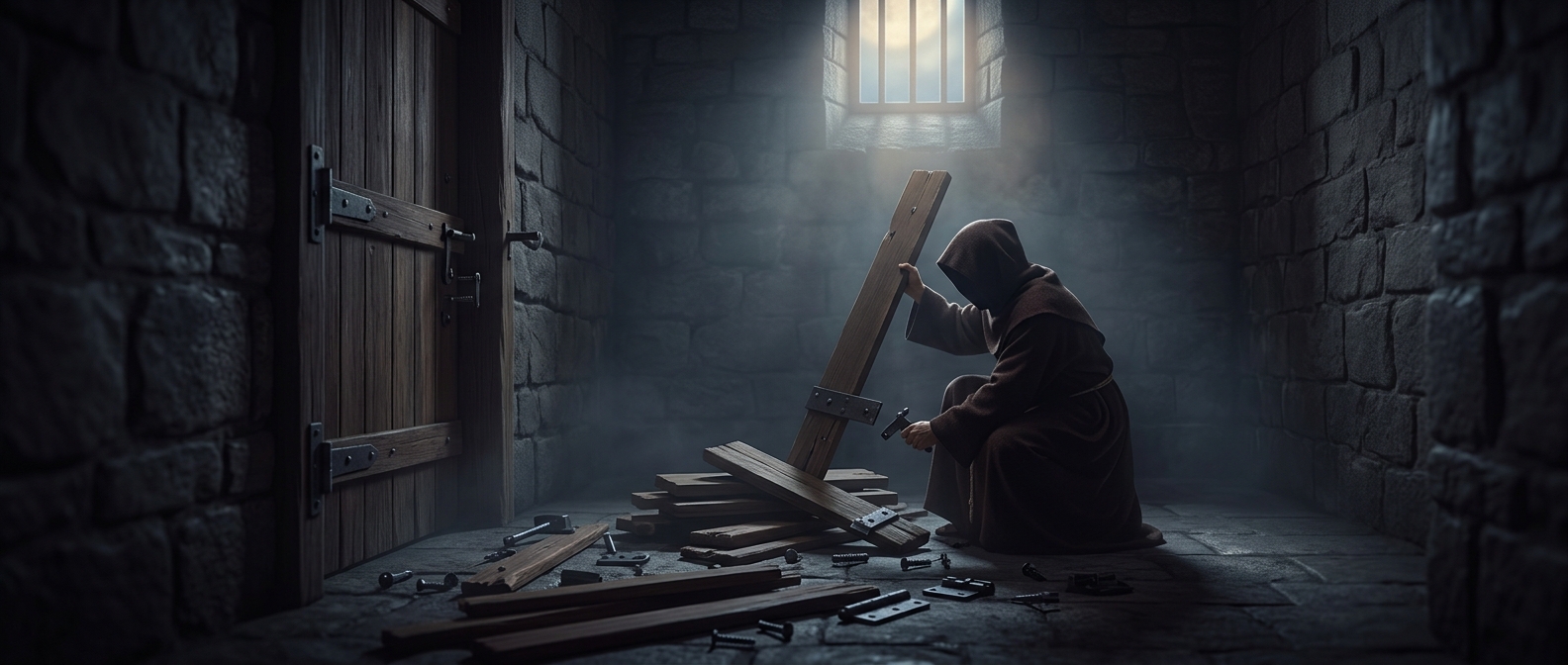
John of the Cross was held in Toledo in 1577 by members of his own Carmelite order, amid a bitter dispute over religious reform. His escape depended not on a hidden key or outside rescue, but on turning the cell’s ordinary fixtures into tools.
Loosening the door hinges mattered because it could weaken a barrier designed to keep him contained. The blankets served a different purpose: cut into strips and tied together, they became a makeshift rope. Each step solved a separate problem—getting past the cell’s confinement and finding a way to move beyond it.
The difficult part came after the improvisation
A blanket rope is not a purpose-built climbing line. Its tied sections could shift or strain, and lowering himself by it demanded grip, balance, and control in the dark. The escape was therefore physically taxing as well as risky: a failure during the descent could leave him injured or exposed before he was clear of the prison.
That practical sequence makes the story more than a dramatic break from confinement. The escape depended on patience and careful adaptation: first alter the barrier, then use the limited materials at hand to make a route out. A door hinge and a set of blankets—objects meant for confinement and comfort—became part of the means of escape.