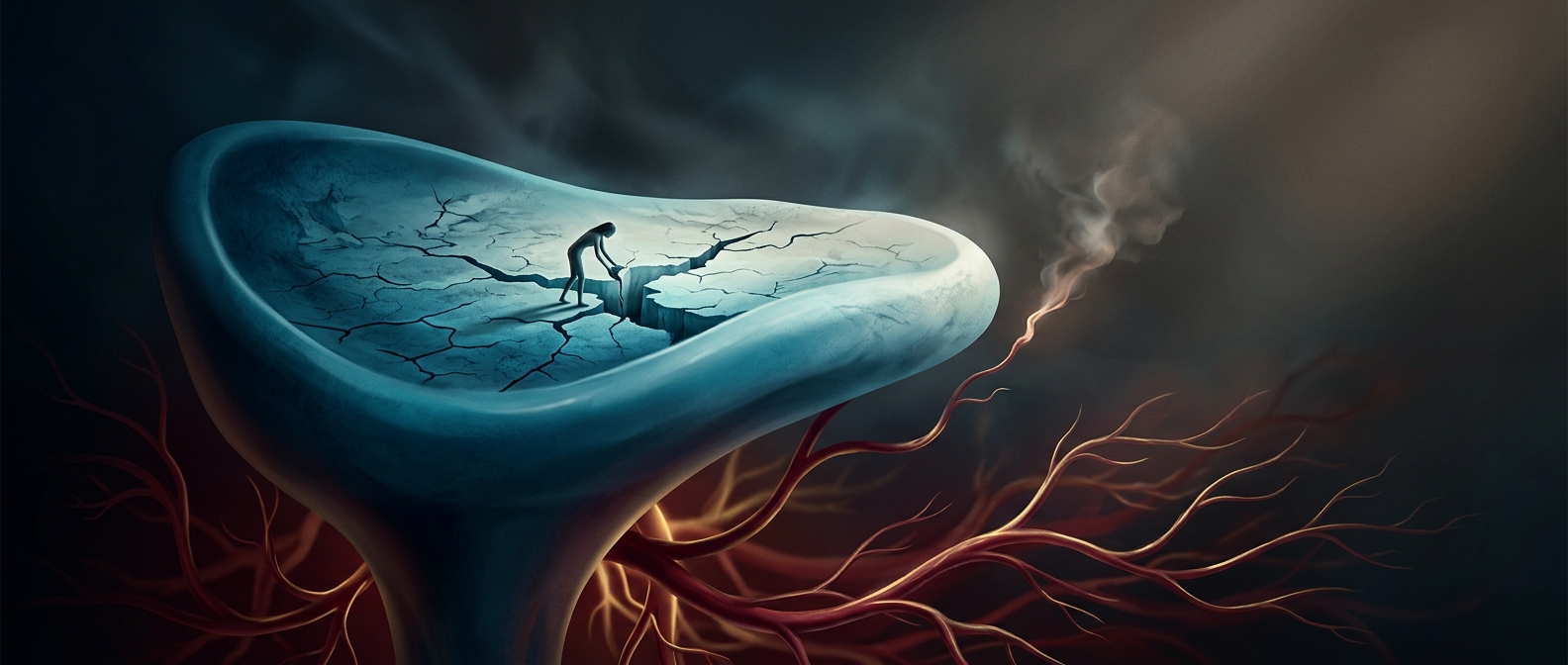
A ligament heals by laying down a temporary patch
A sprain damages a ligament—the tough band of connective tissue that helps hold bones together at a joint. The injury may stretch its fibers or tear some of them. Once damaged, the tissue triggers inflammation: blood vessels widen, and repair cells move into the area to clear damaged material and begin rebuilding.
Ligaments receive less blood than tissues such as muscle, so that repair work gets fewer supplies delivered quickly. The body must also rebuild the ligament’s collagen fibers, the strands that give it strength. Early replacement fibers are laid down in a rough arrangement; they do not immediately restore the organized structure needed to resist a joint’s pull.
Strength returns in stages
Over the following weeks, the new tissue is remodeled. Collagen fibers gradually become better aligned with the forces placed on the ligament, and the repair tissue gains strength. That is why feeling less pain does not necessarily mean the ligament is ready for a sudden twist or heavy load: discomfort can ease before the tissue has regained its ability to stabilize the joint.
The timeline varies with the extent and location of the injury and the demands placed on the joint. A mild sprain may recover sooner than a substantial tear, while returning too quickly to strenuous activity can stress tissue that is still rebuilding. A sprain is not just a painful moment; it is a structural repair process, and the weeks are part of how the joint’s internal support is rebuilt.