Why a puncture wound can be dangerous
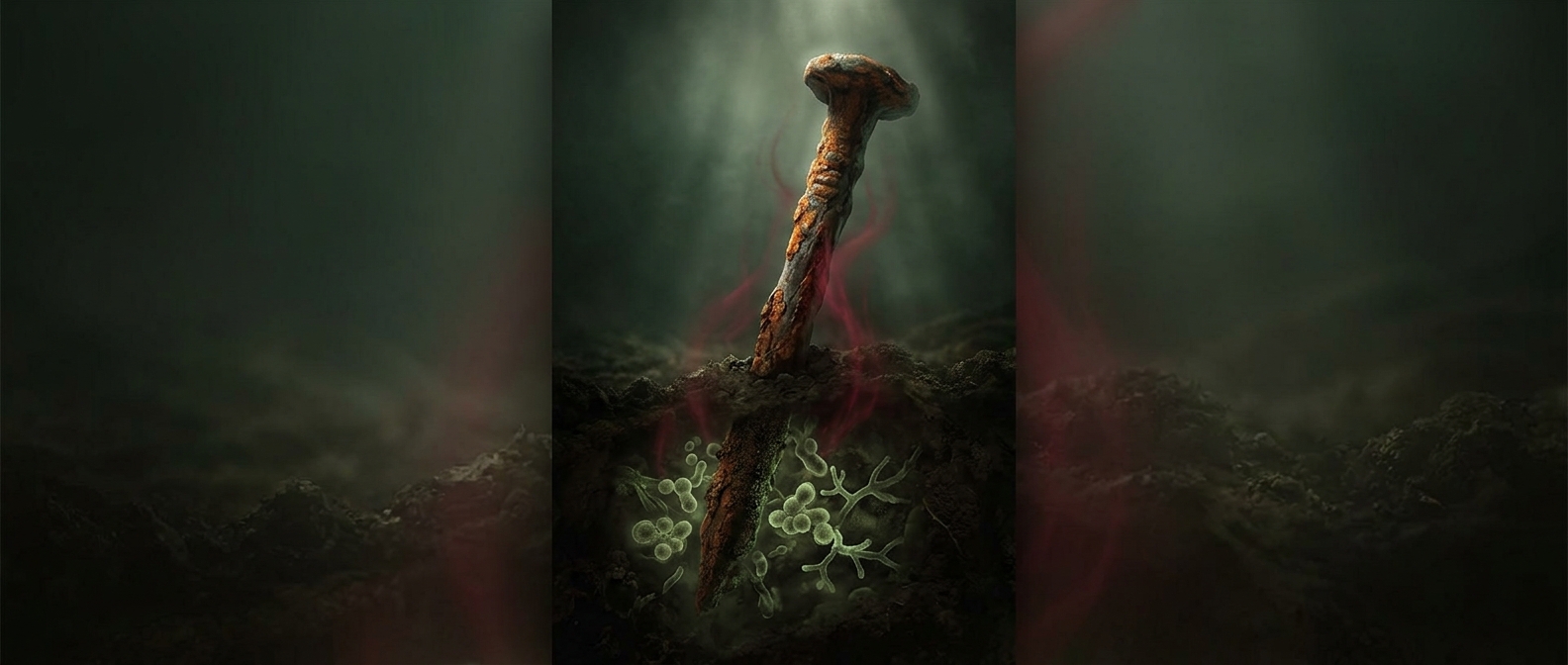
The rusty-nail warning is really about how a wound is made. A narrow puncture can carry dirt and bacterial spores below the skin, then close over at the surface. That may leave damaged tissue with little oxygen—conditions in which Clostridium tetani spores can germinate and begin producing toxin. Rust is a clue that an object may have been outdoors and dirty, not the cause of tetanus; a clean-looking object can also carry spores.
How the toxin affects the body
Tetanus does not usually spread from person to person. The danger begins when the bacterium’s toxin travels from the wound into the nervous system. It disrupts signals that normally relax muscles, so muscles contract uncontrollably. Jaw stiffness—the source of the name “lockjaw”—can be an early sign, followed by painful spasms that may affect the neck, trunk, or breathing muscles.
Why vaccination matters
Tetanus vaccination trains the immune system to neutralize the toxin before it can cause serious harm. Protection can weaken over time, so clinicians consider vaccination history as well as the kind of wound when deciding whether a booster or other preventive treatment is needed. Thorough wound cleaning also helps remove dirt and damaged tissue, but it does not replace vaccination.
The practical lesson is that a puncture’s depth and contamination matter more than its color: after a deep or dirty wound, getting medical advice promptly is safer than judging risk by whether the object looked rusty.