Why a sealed ear canal changes the balance
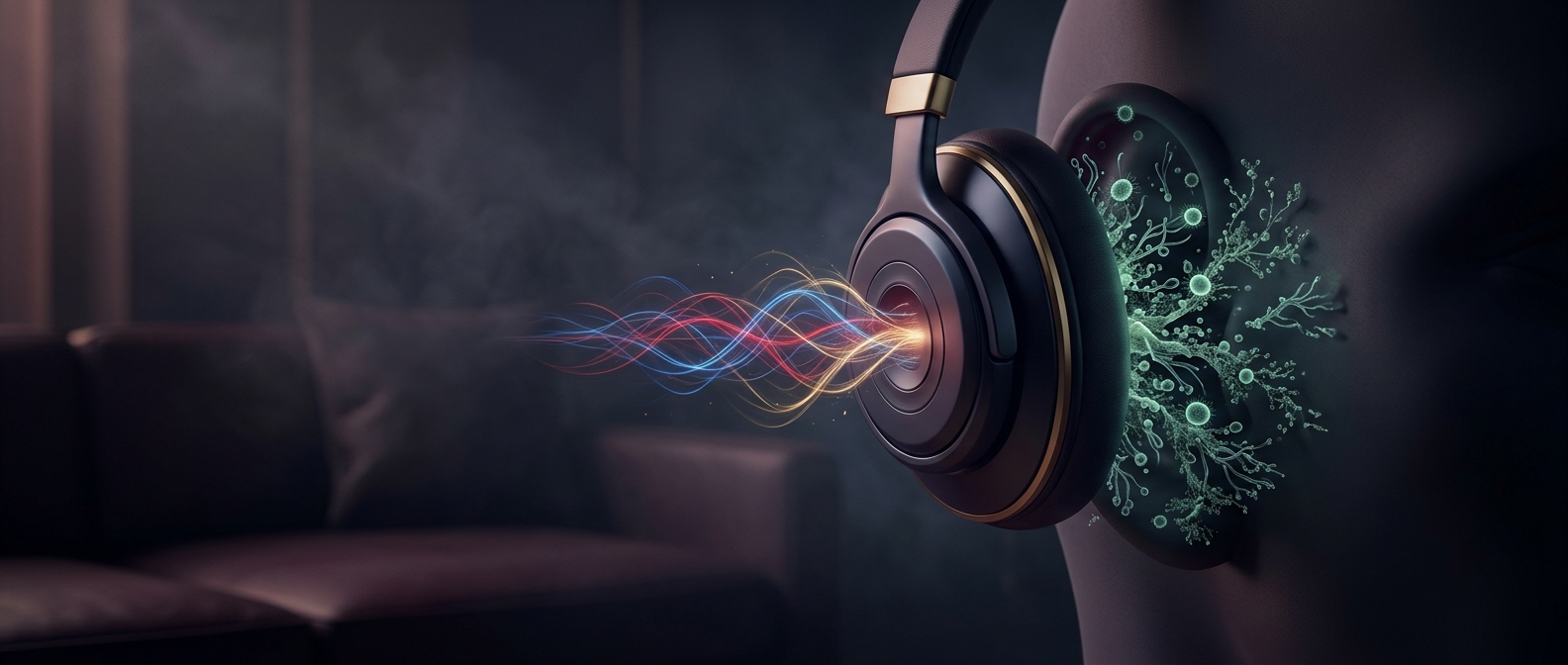
The outer ear canal is not sterile: bacteria normally live on its skin without causing trouble. Its environment usually stays relatively dry, and the canal’s skin gradually moves outward, helping carry wax and shed cells toward the opening. An earbud can interrupt that routine by covering the opening and limiting air exchange.
With less ventilation, warmth and moisture can linger. Damp skin is softer and more easily irritated, while the earbud’s contact can rub the canal lining. Those changes may give resident microbes more opportunity to grow—but the presence of more bacteria alone does not mean the ear is infected.
When growth becomes a problem
An infection is more likely when the canal’s protective skin barrier is disrupted or persistently irritated. Scratching, inserting earbuds deeply, or using a poorly fitting tip can contribute to irritation; moisture from sweat or water can add to the conditions. If the skin becomes inflamed, bacteria that were previously harmless may cause an outer-ear infection, often called swimmer’s ear.
That distinction matters: bacterial counts describe how many microbes are present, not whether they have invaded tissue or caused symptoms. Pain, increasing tenderness, discharge, or a feeling of blockage calls for medical attention rather than an assumption that ordinary earbud use has caused an infection.
The practical consequence
Taking earbuds out gives the canal time to air out, and keeping the tips clean helps avoid transferring grime between the device and the ear. The key is not to scrub inside the canal: its skin and wax are part of its defenses. A small change in ventilation can shift the local environment, but it does not automatically turn normal skin bacteria into disease.