Why the tunnels glow
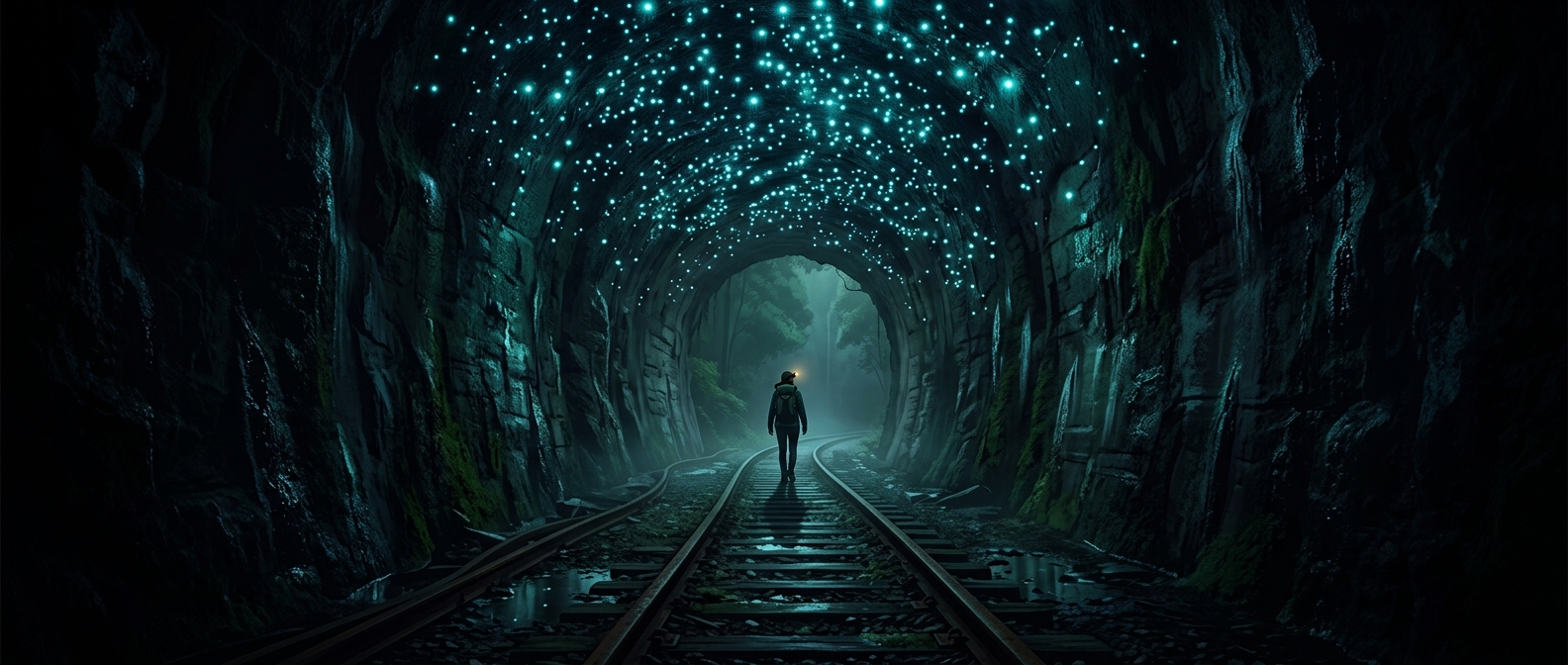
In the abandoned railway tunnels at Helensburgh, the points of blue-green light come from glowworms: the larvae of fungus gnats. Their glow is not decoration. Each larva hangs from a damp surface and produces light in a chemical reaction, while dangling sticky silk threads below it. The light helps attract small flying insects; prey that blunders into the threads can then be pulled up and eaten.
The tunnel’s darkness makes this hunting strategy unusually visible. Outside, daylight would wash out the faint glow, and competing lights could make it harder for insects to find the larvae. In a pitch-black passage, thousands of tiny lights appear far brighter than they are.
A railway structure becomes habitat
The tunnels were built for trains, but after the railway closed, their sheltered interiors offered a different set of advantages: little daylight, high humidity and surfaces where larvae could hang their threads. Those conditions allow a small predator that usually goes unnoticed to turn an old piece of infrastructure into a nighttime spectacle.
The railway’s original problem was smoke collecting in the tunnels and making travel dangerous. The same enclosed spaces now seem almost purpose-built for glowworms, though the effect depends on preserving their darkness and dampness. Bright torches and disturbance can disrupt the delicate scene—and, more practically, uneven or flooded ground makes a tunnel a place to move cautiously, not simply a dark room to explore.