How attention recruits a muscle
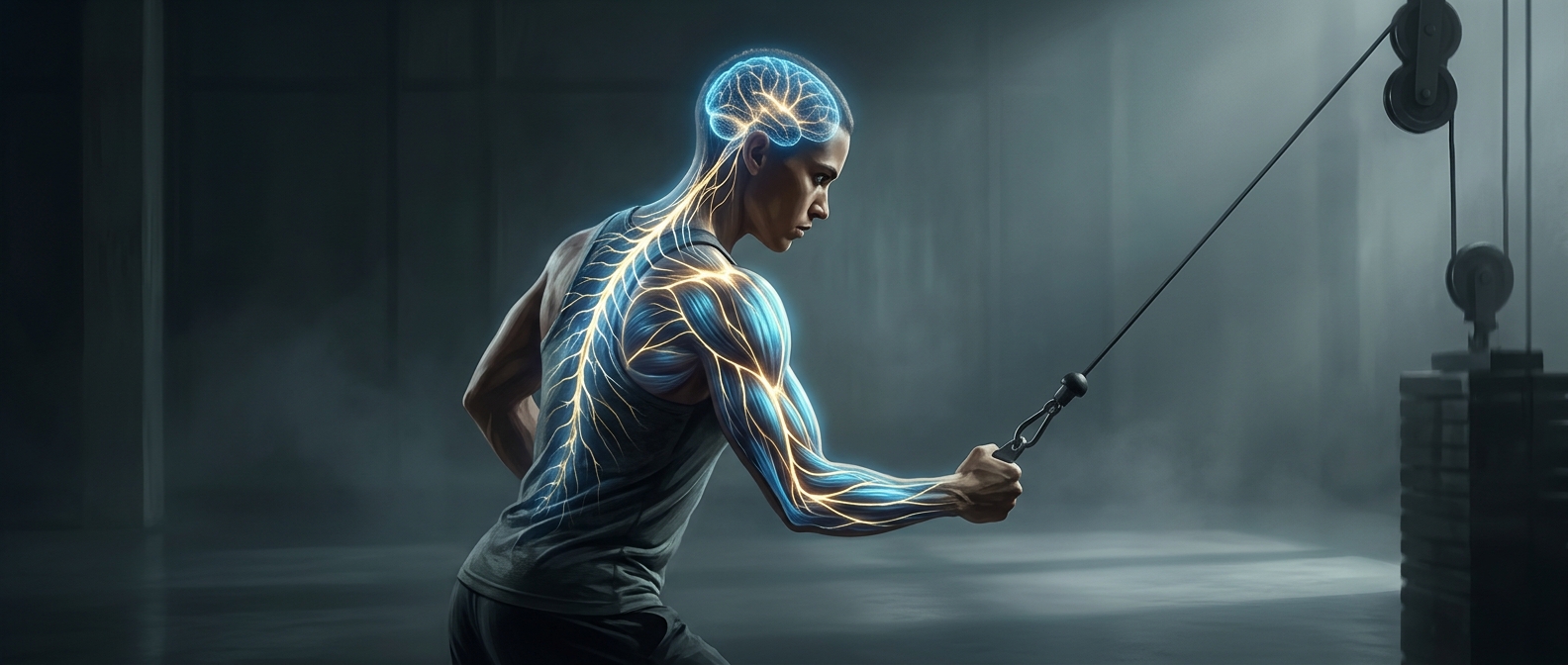
A repetition is not just a weight moving through space. Your brain coordinates signals to muscles, and where you place your attention can influence how that effort is distributed. If you focus on the muscle you mean to train—such as your chest during a press—you may recruit it more strongly than if you think only about moving the bar.
That focused effort is often called the mind-muscle connection. It can be useful when an exercise involves several muscles: a deliberate cue may help the intended muscle contribute more instead of letting stronger or more practiced muscles take over. The effect is most practical when you can maintain the cue without disrupting your form.
More activation is not the whole result
Greater muscle activation during a repetition means the muscle is being called on more in that moment. It does not, by itself, guarantee greater strength or growth. Those outcomes also depend on consistent training, sufficient challenge, recovery, and other factors. Attention is a way to guide a set, not a substitute for doing the work.
Try it on a controlled set: move at a pace that lets you notice the target muscle working, and keep your technique steady. If concentrating on the muscle makes the movement awkward or distracts you from safe control, focus instead on performing the exercise well. The useful connection is the one that helps the intended muscle take part without sacrificing the rep.