Why a coil can run hotter
An extension cord warms whenever current flows through it. The copper wire has electrical resistance, so some of the energy moving through it becomes heat. More current means more heating, and a long or thin cord has more resistance than a short, thick one.
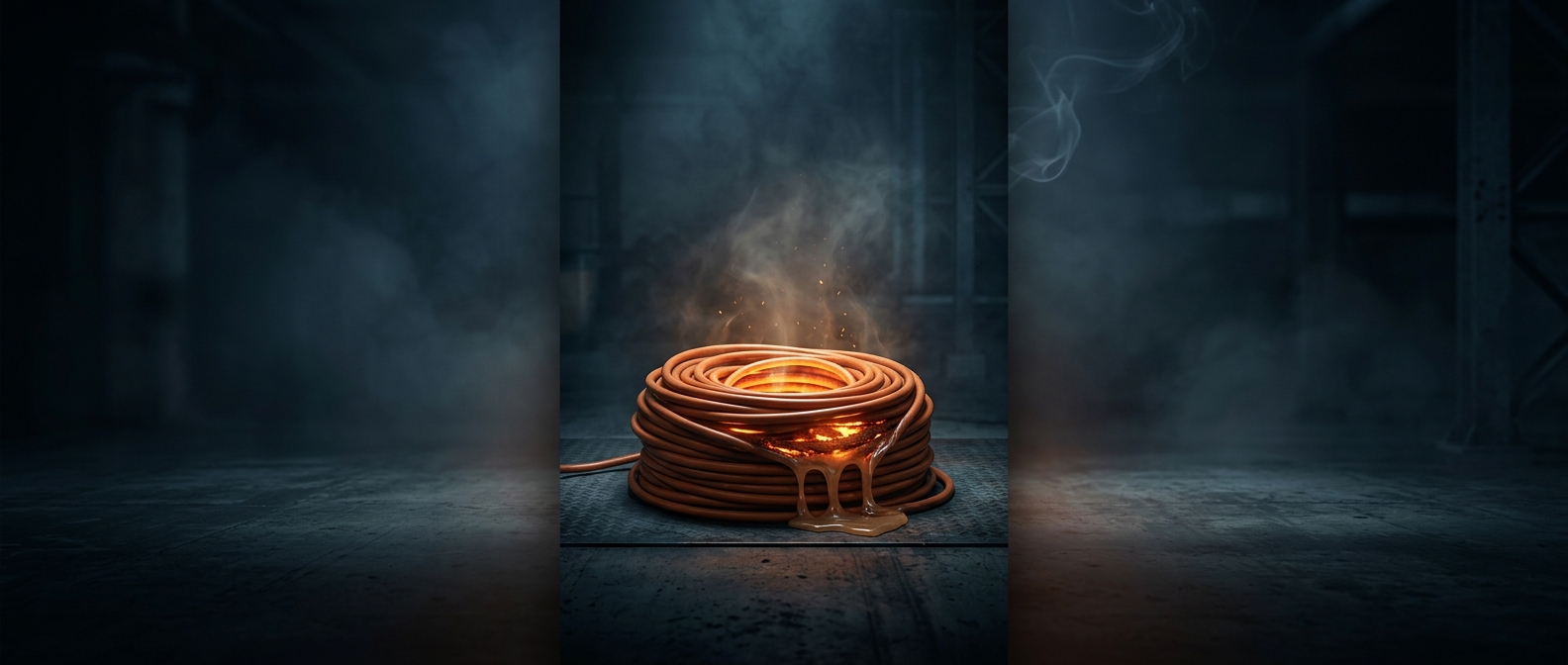
A cord spread out in open air can shed that heat. When it is wound into a tight bundle, neighboring loops warm one another and less of the cord’s surface is exposed to cooler air. The coil does not create extra current; it makes it harder for the heat produced by the current to escape.
When insulation becomes the weak point
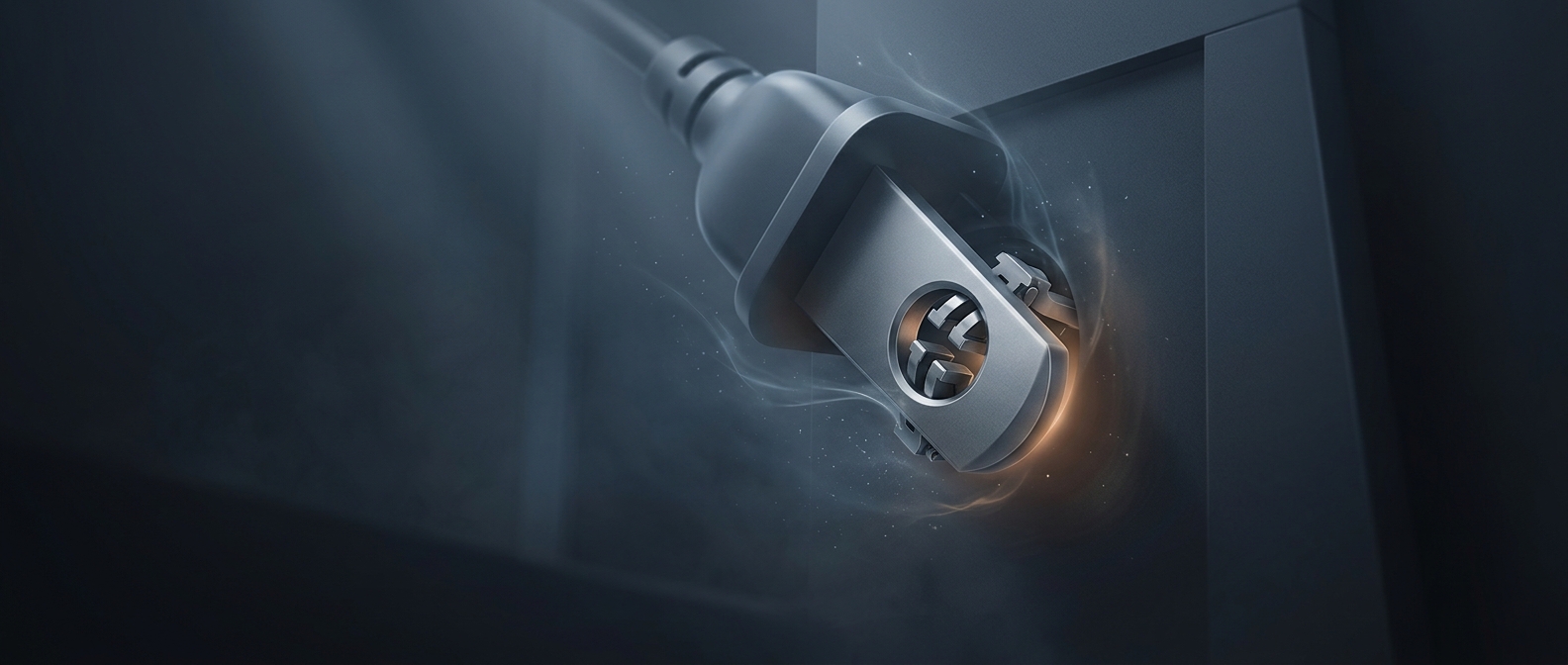
If the cord carries a heavy load for long enough, its temperature can rise beyond what its plastic insulation is designed to tolerate. The plastic may soften, deform, or melt. Damaged insulation can expose conductors, allowing them to touch and cause a short circuit—or create a path for electrical arcing that can ignite nearby material.
The risk depends on the load, cord size and condition, and how tightly it is bundled. A coiled cord carrying a small load may stay cool; a heavily loaded one can overheat. Uncoil an extension cord before using it for a high-power appliance, and stop using it if it feels unusually hot or shows melted or cracked insulation. Once the insulation has failed, the cord is no longer just a heat problem—it can become an electrical fire hazard.