A small feature for a firmer fit
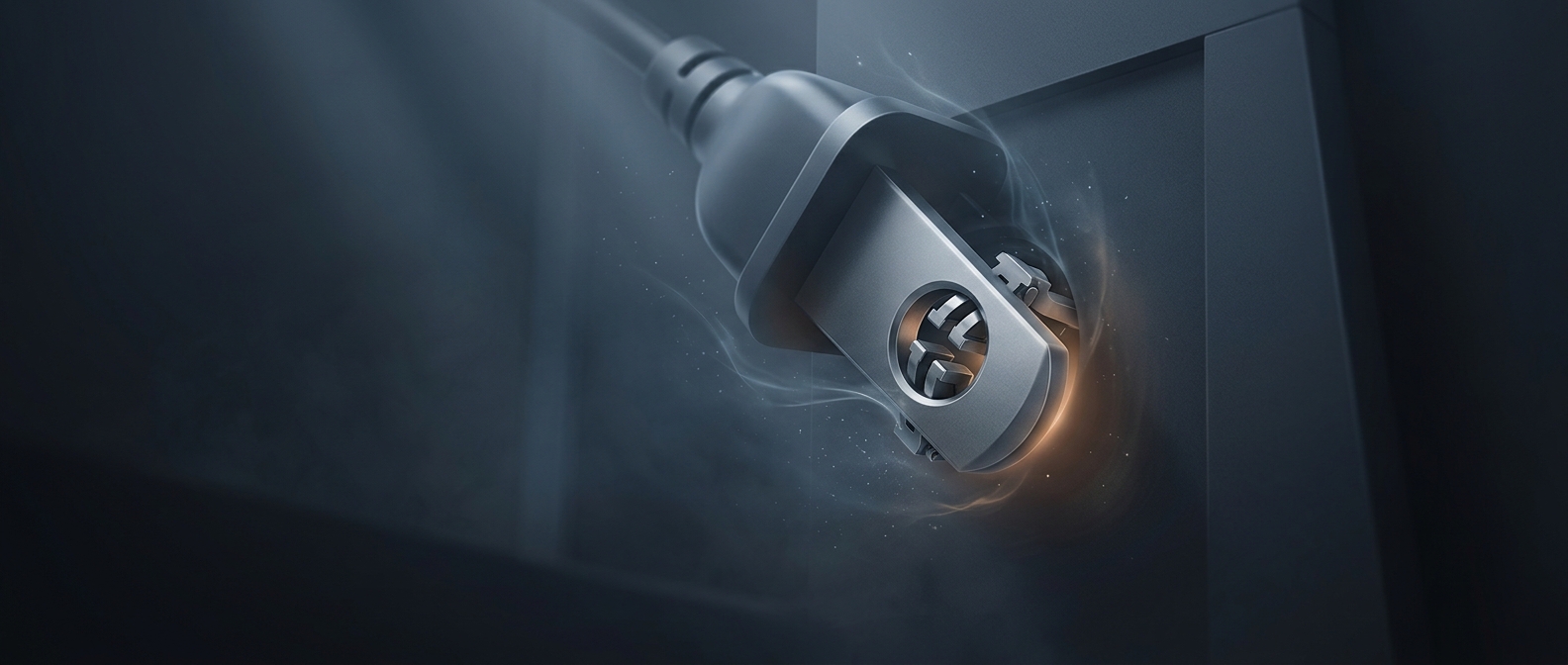
The holes in the flat blades of many North American plugs can work with raised detents inside a compatible outlet. As the plug is pushed in, springy metal contacts in the outlet press against the blades; on some designs, a detent seats in each hole. That added grip helps resist a plug slipping out when its cord is tugged.
The holes do not carry electricity or make the connection by themselves. Electrical contact comes from the outlet’s metal contacts pressing against the blades. The holes are a way for certain outlet designs to add mechanical retention to that connection.
Why not every plug feels the same
Not all outlets use detents, and many hold plugs through pressure against the sides of the blades alone. So the holes may do little in an outlet without matching bumps. How firmly a plug stays put also depends on the outlet’s internal spring contacts and their condition; worn contacts can make even a plug with holes feel loose.
The practical payoff is modest but useful: a small tug on a lamp cord is less likely to pull a plug free when the outlet and plug are designed to engage this feature.