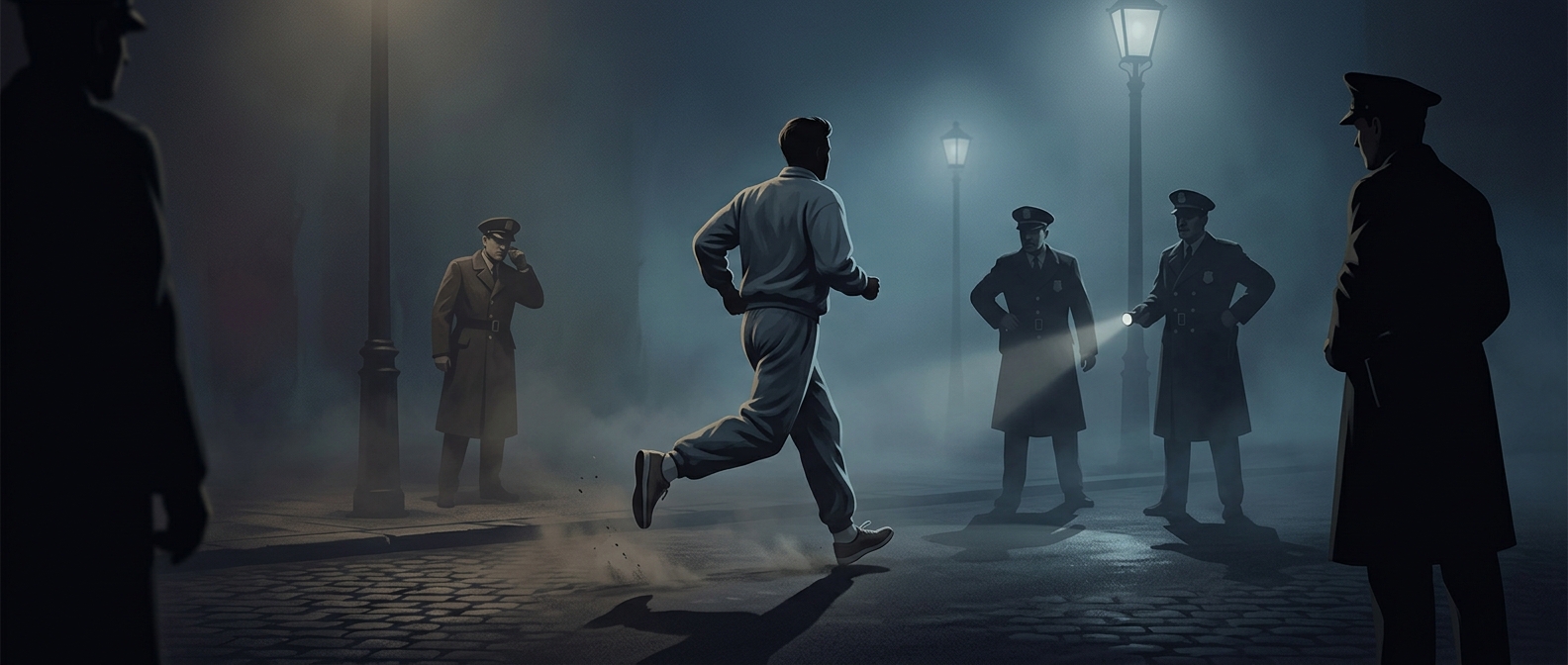
Why a runner could look out of place
Jogging is now an ordinary way to exercise, but that familiarity had to be learned. Before running became a common public fitness habit, someone moving quickly down a street in casual clothes did not fit the usual picture of either a pedestrian or an organized athlete. Sweatpants offered little explanation: unlike a uniform or a race number, they did not tell onlookers why the person was running.
The same movement, a different social signal
People interpret behavior partly through context. A person hurrying along a sidewalk might be exercising, late, fleeing, or heading toward trouble; without a familiar explanation, observers can treat the unusual action as suspicious. Police, called to investigate a concern, might therefore question a jogger even when the runner was simply following a workout.
As jogging became more visible, the scene acquired a ready-made meaning. Athletic clothes, steady pacing, and repeated sightings helped turn running on public streets into a recognizable routine. The activity itself had not changed nearly as much as the expectations around it.
How a habit becomes ordinary
That shift shows how public space is governed not only by written rules but by shared assumptions about what people normally do there. Once enough people began running for exercise, a person in sweatpants moving down the sidewalk no longer needed to explain the sight. The notable change was not the runner’s speed, but the neighborhood’s ability to recognize it as a workout.