How a Flintlock Could Make Fire Without Firing a Shot
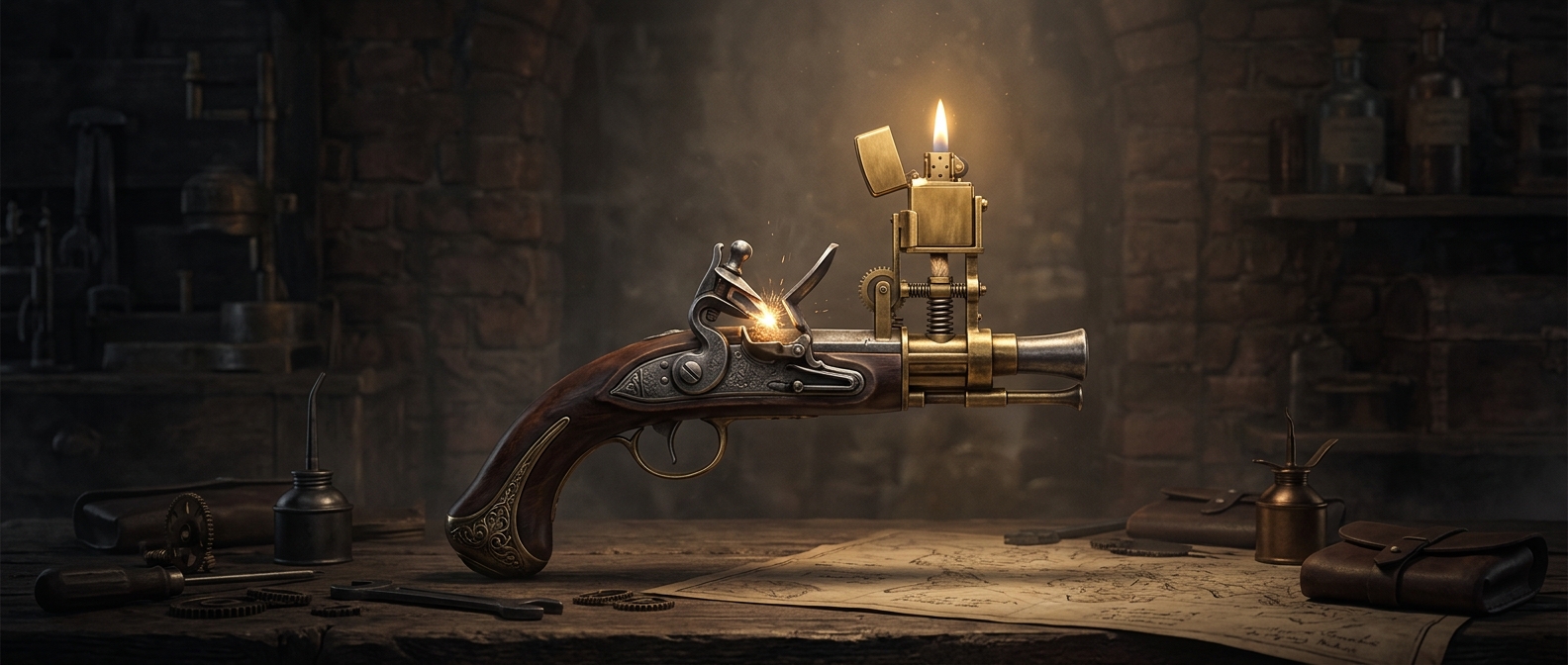
A flintlock pistol already contained the essential parts of a spark-maker. When its trigger was pulled, a piece of flint clamped in the hammer struck a steel plate. The impact produced sparks that fell into a small pan, where gunpowder would normally catch fire and ignite the charge in the barrel.
To turn the mechanism into a lighter, its purpose changed: instead of sending flame into a loaded gun, the sparks were directed toward tinder, easily ignited material that could hold a small ember. That ember could then be used to light a candle. The basic trick was to use the pistol’s firing action to start a fire rather than propel a projectile.
A Familiar Mechanism, a Different Job
The change was more than cosmetic. A firearm had to manage a powerful explosion safely; a fire-starting device needed to catch and preserve a comparatively small spark. Tinder made that possible because it could smolder after the brief flash had passed, giving the user time to coax the ember into a flame.
The result was a strikingly direct solution: squeeze a trigger, make sparks, and transfer the resulting ember to a candle wick. What looks like an odd repurposing is also a clear example of how an existing mechanism could serve a new everyday need—using the familiar action of a flintlock while leaving its most dramatic purpose, firing a shot, behind.